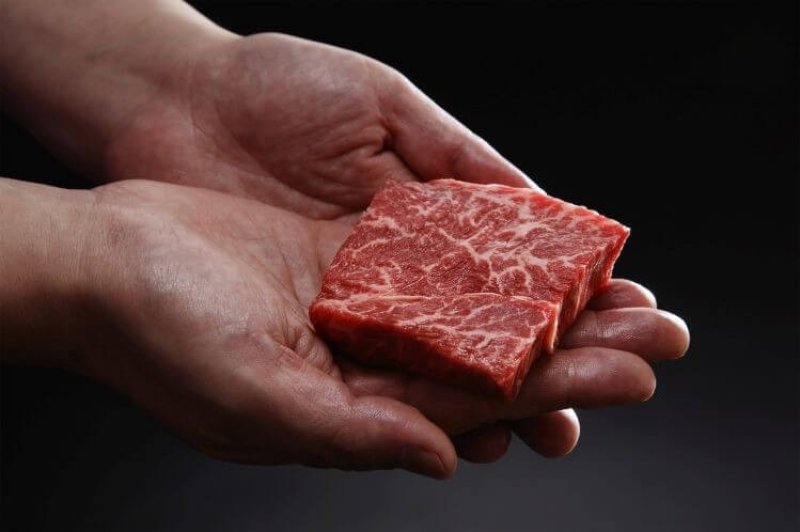
‘Regenerative medicine’ could help produce synthetic meat that mimics the texture and mouthfeel of steak

Credit: JUST
Credit: JUST

Tissue engineering of cultured meat is under development at several centers worldwide. However, most biosynthetic meat products are amorphous or granular-like minced meat, lacking the grain and texture of real animal flesh. Mai Furuhashi, lead author, explains their novel process. The work was published in the journal Nature.

“Using techniques developed for regenerative medicine, we succeeded in culturing millimeter-sized chunks of meat wherein alignment of the myotubes help mimic the texture and mouthfeel of steak,” Furuhashi said.

“For this, myoblasts drawn from commercial beef were cultured in hydrogel modules that could be stacked allowing fusion into larger chunks. We determined the optimal scaffolding and electrical stimulation to promote contractility and anatomical alignment of the muscle tissue to best simulate steak meat.”

Follow the latest news and policy debates on sustainable agriculture, biomedicine, and other ‘disruptive’ innovations. Subscribe to our newsletter.

“Our method paves the way for further development of larger portions of realistic cultured meat that can supplement or replace animal sources,” claims Shoji Takeuchi, senior and corresponding author.

“However, there is a long way to go before lab-grown meat is indistinguishable from the real thing and hurdles concerning consumer acceptance and cultural sensibilities are overcome. Nevertheless, this innovation promises to be a green and ethical alternative to animal slaughter in meeting our need for dietary meat.”


Read the original post

{{ reviewsTotal }}{{ options.labels.singularReviewCountLabel }}
{{ reviewsTotal }}{{ options.labels.pluralReviewCountLabel }}
{{ options.labels.newReviewButton }}
{{ userData.canReview.message }}

Related Articles

Infographic: Global regulatory and health research agencies on whether glyphosate causes cancer

Infographic: Global regulatory and health research agencies on whether glyphosate causes cancer

Does glyphosate—the world's most heavily-used herbicide—pose serious harm to humans? Is it carcinogenic? Those issues are of both legal and ...

Most Popular

ChatGPT-Image-May-7-2026-12_16_37-PM-2
Viewpoint: Are cancer rates ‘skyrocketing’ as RFK, Jr. and MAHA claims? The evidence says mostly the opposite
Screenshot-2026-04-13-at-1.39.26-PM
Viewpoint: ‘Safer for children?’ Stonyfield yogurt under fire for deceptive organic marketing
Screenshot-2026-04-22-at-10.46.29-AM
Viewpoint: How to counter science disinformation? Science journalist offers 12 practical tips
png-pill-omega-Supp-fish-oil
Millions take omega-3 fish oil for brain health. New research suggests it may do the opposite.

Sorry. No data so far.

glp menu logo outlined

Get news on human & agricultural genetics and biotechnology delivered to your inbox.