Our ‘evolutionary superhighway’: How the brain connects smells and memories

Credit: Merlin
Credit: Merlin

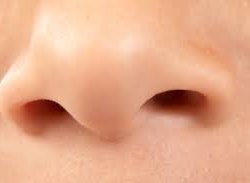
Whereas other sensory systems are thought to have been re-routed during human evolution, [a new] study suggests that olfactory-hippocampal functional connectivity was preserved and not re-routed. “We show that [the] human primary olfactory cortex—including the anterior olfactory nucleus, olfactory tubercle, and piriform cortex—has stronger functional connectivity with hippocampal networks at rest, compared to other sensory systems,” the authors write in the paper’s abstract.

For this study, senior author Christina Zelano and colleagues in the Northwestern Human Neuroscience Lab used functional neuroimaging (fMRI) combined with intracranial electrophysiology (iEEG) to directly compare the functional connectivity of hippocampal networks across a wide range of human sensory systems (e.g., auditory, touch, visual, and smell).

Zelano and her lab members speculate that olfaction was not re-routed during mammalian evolution; therefore, we have especially robust functional connectivity between our olfactory system and memory hub. “It’s like a superhighway from smell to the hippocampus,” the authors note.

Mis- and disinformation are distorting science and public policy. Subscribe to our Daily and Weekly Digests for incisive coverage of ‘disruptive’ innovations in AI, agricultural biotechnology, food, chemicals, nuclear energy, vaccines, and other disruptive innovations.

“Nearly everyone has been transported by a whiff of an odor to another time and place, an experience that sights or sounds rarely evoke. Yet, we haven’t known why. The study found the olfactory parts of the brain connect more strongly to the memory parts than other senses. This is a major piece of the puzzle, a striking finding in humans.”


Read the original post

Related Articles

Infographic: Global regulatory and health research agencies on whether glyphosate causes cancer

Infographic: Global regulatory and health research agencies on whether glyphosate causes cancer

Does glyphosate—the world's most heavily-used herbicide—pose serious harm to humans? Is it carcinogenic? Those issues are of both legal and ...

Most Popular

Screenshot-2026-11-17-at-12.18.09-PM
Challenging glyphosate fear-mongering: Statewide Nebraska study finds no link between weedkiller use and non-Hodgkin lymphoma
Screenshot-2026-11-16-at-2.37.32-PM
30 years of GMO farming: Is the boom in glyphosate and glufosinate use harming the environment? Data show they’re the most sustainable choice
Soybean Harvest in Cupped Hands
30 years of GMO farming: Defying cynics, we’ve had larger harvests, lower costs, and $385 billion in added global farmer income
ChatGPT-Image-Mar-10-2026-01_39_01-PM
Viewpoint—“Miracle molecule” debunked: Why acemannan supplements don’t work
Stormlit Portrait Over Golden Mountains
Searching for life where no one thought to look: A renowned astrophysicist’s seemingly quixotic quest to explore Venus’s clouds
Screenshot-2026-11-19-at-7.54.57-PM
European General Court sides with scientists, dismisses activist claims that glyphosate is toxically dangerous
Screenshot-2026-11-13-at-10.02.02-AM
Viewpoint: Why it’s such a big deal that under Trump-RFK Jr., the U.S. has lost its ‘measles-free’ status  
Screenshot-2026-11-09-at-3.01.19-PM
Are Texas data centers killing calves? Debunking viral AI claims
Prescription Capsules Scattered on Twenty-Dollar Bills
Facts & Fallacies podcast: America's health care system is broken. A doctor explains how to fix it, Part 2
glp menu logo outlined

Get news on human & agricultural genetics and biotechnology delivered to your inbox.