


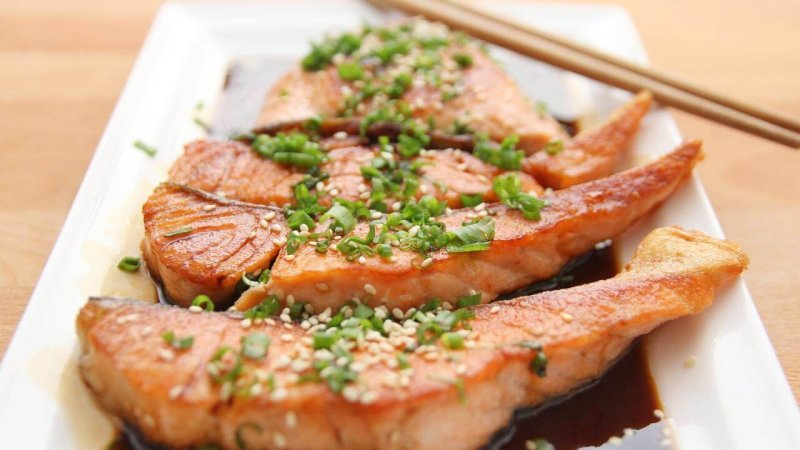

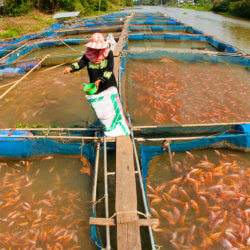
From 1961 to 2015, according to the UN Food and Agriculture Organization, global fish consumption grew from 9kg to 20.2kg per capita; this consumption is expected to increase precipitously into the 2030s. But the world cannot produce fish at the pace we eat it. Populations of marine species have halved since 1970, due to overfishing and climate change, and microplastics and mercury contaminate the fish in our oceans.
[Lou] Cooperhouse wanted to catch both of these waves, and co-founded BlueNalu in San Diego in 2017, to produce cell-based seafood.
The company calls its process cellular aquaculture. Cells are extracted from the tissue of fish and placed in a kind of microbrewery: large stainless steel vessels where a nutrient bath grows them into fish fillets.



BlueNalu, which secured $20 million (£15 million) in series A financing in February 2020, says it is one year away from launching its first product. It is building a 12,000 square metre factory to produce both saltwater and freshwater fish, including red snapper, mahi-mahi, Chilean sea bass and bluefin tuna. These species were chosen specifically not to compete with the local fish industry. “We can work on species that are typically imported,” Cooperhouse says. “We can displace imports, create jobs and build factories – our strategy is a win-win all round.”





















