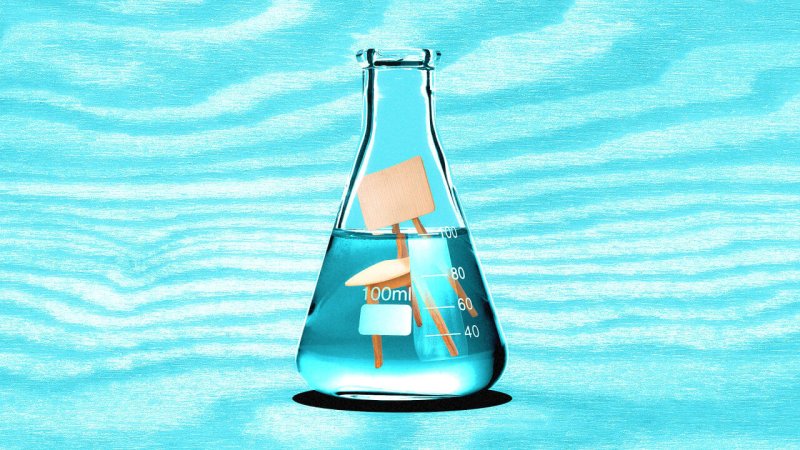
Could lab-grown wood halt deforestation around the world?

Credit: Tarasov_vl/Pattonmania/iStock

[P]lant cells that have similar properties on mass to wood can be used to create materials that could be used to create everyday furniture items that appear to be fashioned from wood.

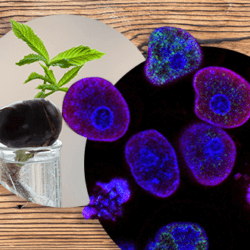
Early experiments, undertaken at the Massachusetts Institute of Technology, have shown how the plant tissue can be cultured indoors in conditions free from soil or sunlight. The starting material are cells derived from a flowering plant of the genus Zinnia, which grows in Mexico. By applying plant hormones, the cells can be combined to create a rigid structure.

By using technologies similar to 3D printing (bioprinting and injection molding), the cell mass can be altered into almost any shape. In the longer term, this could lead to the formation of a folding table without the need for any nails, screws, or wood glue. 

Follow the latest news and policy debates on sustainable agriculture, biomedicine, and other ‘disruptive’ innovations. Subscribe to our newsletter.

According to lead researcher Professor Luis F. Velásquez-García: “Plant cells are similar to stem cells in the sense that they can become anything if they are induced to.”
He adds that: “The way we get these materials hasn’t changed in centuries and is very inefficient”, with reference to the proportion of land lost and trees felled across the past one hundred years.

“This is a real chance to bypass all that inefficiency”, Velásquez-García concludes.

Read the original post

{{ reviewsTotal }}{{ options.labels.singularReviewCountLabel }}
{{ reviewsTotal }}{{ options.labels.pluralReviewCountLabel }}
{{ options.labels.newReviewButton }}
{{ userData.canReview.message }}

Related Articles

Infographic: Global regulatory and health research agencies on whether glyphosate causes cancer

Infographic: Global regulatory and health research agencies on whether glyphosate causes cancer

Does glyphosate—the world's most heavily-used herbicide—pose serious harm to humans? Is it carcinogenic? Those issues are of both legal and ...

Most Popular

ChatGPT-Image-Mar-10-2026-01_39_01-PM
Viewpoint—“Miracle molecule” debunked: Why acemannan supplements don’t work
ChatGPT-Image-Jun-25-2026-12_23_17-PM
No, Bill Gates did not secretly engineer ticks to promote veganism
ChatGPT-Image-Jul-7-2026-12_01_35-PM
Viewpoint: 21 worthless wellness trends inspired by RFK, Jr.’s ill-informed MAHA followers that can harm or even kill you.
Screenshot 2026-07-08 at 10.13
What happens when a pro-life congresswoman needs an abortion?
ChatGPT-Image-Jul-1-2026-03_33_49-PM
‘Alternative’ cancer treatments that could kill you
Screenshot-2026-07-06-at-12.30.23-PM
2,300 endangered species: Controversial de-extinction company Colossal Biosciences joins U.S. effort to preserve their DNA
Screenshot 2025-10-15 at 1.00
What you probably don’t know: For most fast-food fans, bioengineering isn’t a choice — it’s the norm

Sorry. No data so far.

glp menu logo outlined

Get news on human & agricultural genetics and biotechnology delivered to your inbox.