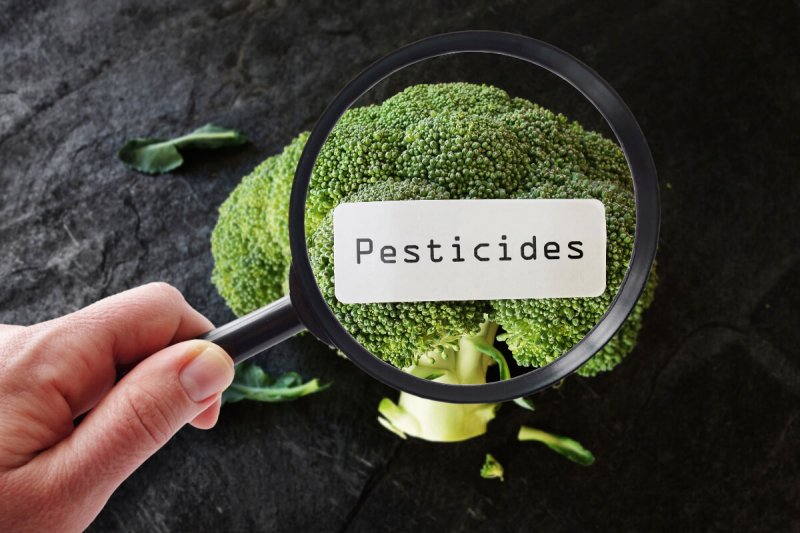
The latest report on pesticide residues in food in the European Union is now available, giving a snapshot of residue levels found in a basket of products widely consumed in the territory.
A total of 96,302 samples were analysed in 2019, 96.1% of which fell within legally permitted levels. For the subset of 12,579 samples analysed as part of the EU-coordinated control programme (EUCP), 98% were within legal limits.
The EUCP analysed samples randomly collected from 12 food products – apples, head cabbages, lettuce, peaches, spinach, strawberries, tomatoes, oat grain, barley grain, wine (red and white), cow’s milk and swine fat. Of those samples analysed:
6,674 or 53% were found to be free of quantifiable levels of residues.
5,664 or 45% contained one or more residues in concentrations below or equal to permitted levels.
241 or 2% contained residues exceeding the legal maximum of which 1% led to legal actions.
The coordinated programme covers similar baskets of products on a three-year rotation, which means upward or downward trends can be identified for specific goods. So, compared to 2016, the exceedance rate fell for peaches (from 1.9% to 1.5%), lettuce (2.4% to 1.8%), apples (2.7% to 2.1%) and tomatoes (2.6% to 1.7%).

Exceedances rose for strawberries (1.8% to 3.3%), head cabbages (1.1% to 1.9%), wine grapes (0.4% to 0.9%) and swine fat (0.1% to 0.3%). As in 2016, no exceedances were found in cow’s milk.
The results of the coordinated programme are available on EFSA’s website as browsable charts and graphs, making the data more accessible to non-specialists.
As well as the harmonised, comparable data collected under the coordinated programme, EFSA’s annual report also includes data collected as part of the national control activities carried out by individual EU Member States, Norway and Iceland.
The national control programmes are risk-based, targeting products that are likely to contain pesticide residues or for which legal infringements have been identified in previous years. These programmes give important information to risk managers but – unlike the data from the EUCP – they do not provide a statistically representative picture of the levels of residues that one would expect to find in food on the shelves in shops across Europe.
EFSA carried out a dietary risk assessment as part of its analysis of the results. This suggested that the food commodities analysed in 2019 are unlikely to pose a concern for consumer health. However, a number of recommendations are proposed to increase the efficiency of European control systems, thereby continuing to ensure a high level of consumer protection.