Revamped regulations could accelerate Kenya’s GM, insect-resistant, Bt cotton approval

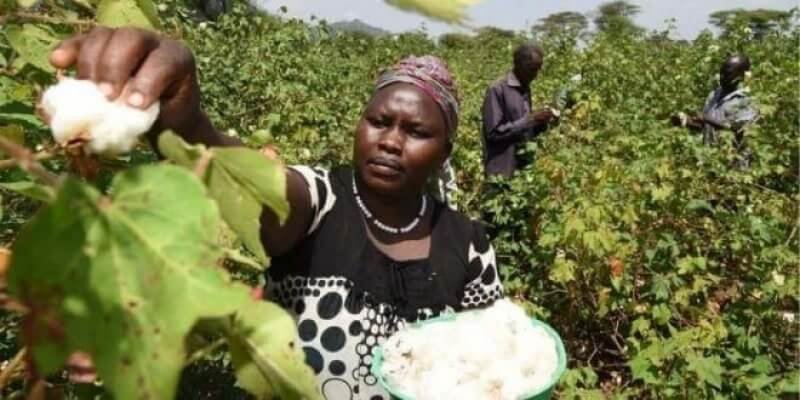
Credit: Kohan Textile Journal

Radical reforms in Kenya’s agricultural sector are set to inject fresh impetus to Bt cotton farming in the country, should a fibre crops legislative Bill pass into law. The Government shall be mandated to promote and market fibre crops and products locally and internationally, a development that will invigorate Bt cotton production.

The Bill, technically referred to as Fibre Crops Development Authority Bill, seeks to provide for the development, regulation, and promotion of cotton and sisal industries. This is expected to introduce focus and clarity in the management of the cotton value-chain as the Government banks on Bt cotton to revitalize the textile and apparel industry by increasing the crop production from the current 20,000 bales to 200,000 bales by 2022. 

Follow the latest news and policy debates on sustainable agriculture, biomedicine, and other ‘disruptive’ innovations. Subscribe to our newsletter.

Kenya is currently rolling out commercial farming of Bt cotton with farmers in cotton-growing counties in eastern and western Kenya having already planted the GM crop. During the 2020’s October-November season, farmers in ten cotton-growing counties in the eastern region planted 16.3 metric tons of Bt cotton on 10,000 acres (4,047 hectares). 

Read the original post

{{ reviewsTotal }}{{ options.labels.singularReviewCountLabel }}
{{ reviewsTotal }}{{ options.labels.pluralReviewCountLabel }}
{{ options.labels.newReviewButton }}
{{ userData.canReview.message }}

Related Articles

Infographic: Global regulatory and health research agencies on whether glyphosate causes cancer

Infographic: Global regulatory and health research agencies on whether glyphosate causes cancer

Does glyphosate—the world's most heavily-used herbicide—pose serious harm to humans? Is it carcinogenic? Those issues are of both legal and ...

Most Popular

Screenshot-2026-05-01-at-1.29.41-PM
Viewpoint: What happens when whole grains meet modern food manufacturing? Labels don’t tell the whole story.
S
As vaccine rejectionism spreads, measles may be taking a more dangerous turn
ChatGPT-Image-Apr-13-2026-02_20_22-PM
Viewpoint: Misinformation infodemic? Why assessing evidence is so challenging 
Screenshot-2026-04-20-at-2.26.27-PM
Viewpoint — Food-fear world: The latest activist scientists campaign: Cancer-causing additives
ChatGPT-Image-Mar-27-2026-11_47_30-AM-2
FDA’s expedited drug reviews are hailed in some quarters but other approval practices are problematic
Screenshot-2026-03-13-at-12.14.04-PM
The FDA wants to make many popular prescription drugs OTC—a great idea. Here’s why it’s unlikely to happen
bigstock opioids on chalkboard with rol
GLP podcast: 'Safe injection sites': enabling drug addiction or saving lives?
circular-bioeconomy-should-focus-on-sustainable-wellbeing
GLP podcast: What's wrong with 'doomsday' environmentalism? It's false.
Farmers can talk to plants
Farmers are a major source of misinformation—about farming
Screenshot-2026-04-12-135256
Bixonimania: The fake disease scam that AI swallowed whole

Sorry. No data so far.

glp menu logo outlined

Get news on human & agricultural genetics and biotechnology delivered to your inbox.