Viewpoint: Here’s one key thing the Biden administration can do to seriously address climate change

Credit: Jean-Paul Pelissier/Reuters

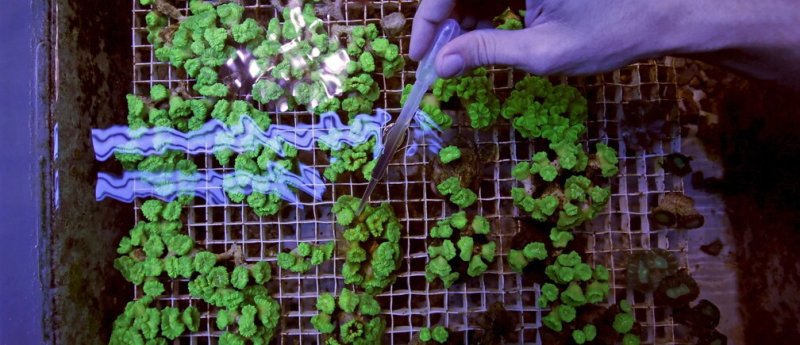
President Biden and his administration need to take concerted actions to advance an area of research that could prove decisive in battling climate change: biotechnology.

In recent years, scientists have found a host of surprising and innovative ways that biotechnology can be used to reduce emissions, capture carbon from the atmosphere, and make the ecosystem more resilient to changing temperatures. These strategies could revolutionize how humans adapt to climate change. 

Plants have been removing carbon dioxide from the air since long before humans walked the earth. Much of it is released back into the atmosphere once a plant dies. Now, though, researchers at the San Diego-based Salk Institute have identified a molecule, suberin, which enables plants to retain more carbon dioxide in their roots even as they decompose.

Through gene editing, the scientists could create plants that produce higher levels of suberin, and thus store more carbon for longer. Combined with efforts to promote more substantial root systems, this could lead to a huge reduction in the amount of carbon dioxide entering the atmosphere.

Follow the latest news and policy debates on sustainable agriculture, biomedicine, and other ‘disruptive’ innovations. Subscribe to our newsletter.

[B]iotechnology is on the cusp of delivering climate innovations that were unthinkable just a few years ago. As we devise new strategies for preserving our planet, this burgeoning field of research deserves to play a central role.


Read the original post

{{ reviewsTotal }}{{ options.labels.singularReviewCountLabel }}
{{ reviewsTotal }}{{ options.labels.pluralReviewCountLabel }}
{{ options.labels.newReviewButton }}
{{ userData.canReview.message }}

Related Articles

Infographic: Global regulatory and health research agencies on whether glyphosate causes cancer

Infographic: Global regulatory and health research agencies on whether glyphosate causes cancer

Does glyphosate—the world's most heavily-used herbicide—pose serious harm to humans? Is it carcinogenic? Those issues are of both legal and ...

Most Popular

Screenshot-2026-04-20-at-2.26.27-PM
Viewpoint — Food-fear world: The latest activist scientists campaign: Cancer-causing additives
Screenshot-2026-05-04-at-12.54.32-PM
How Utah became the country’s supplement capital  — and a haven for unregulated, ineffective and fake products
Screenshot-PM-24
Viewpoint: The herbicide glyphosate isn’t perfect. Banning it would be far worse.
Screenshot-2026-03-13-at-12.14.04-PM
The FDA wants to make many popular prescription drugs OTC—a great idea. Here’s why it’s unlikely to happen
Screenshot-2026-04-12-135256
Bixonimania: The fake disease scam that AI swallowed whole
ChatGPT-Image-May-1-2026-02_20_13-PM
How RFK, Jr.’s false vaccine claims are holding up $600 million to fight diseases in poor countries
Screenshot-2026-05-01-at-11.56.24-AM
‘Science moves forward when people are willing to think differently’: Memories of DNA maverick Craig Venter
Screenshot-2026-04-03-at-11.15.51-AM
Paraben panic: How a flawed study, media hype, and chemophobia convinced the public of the danger of one of the safest classes of preservatives
bigstock opioids on chalkboard with rol
GLP podcast: 'Safe injection sites': enabling drug addiction or saving lives?
glp menu logo outlined

Get news on human & agricultural genetics and biotechnology delivered to your inbox.