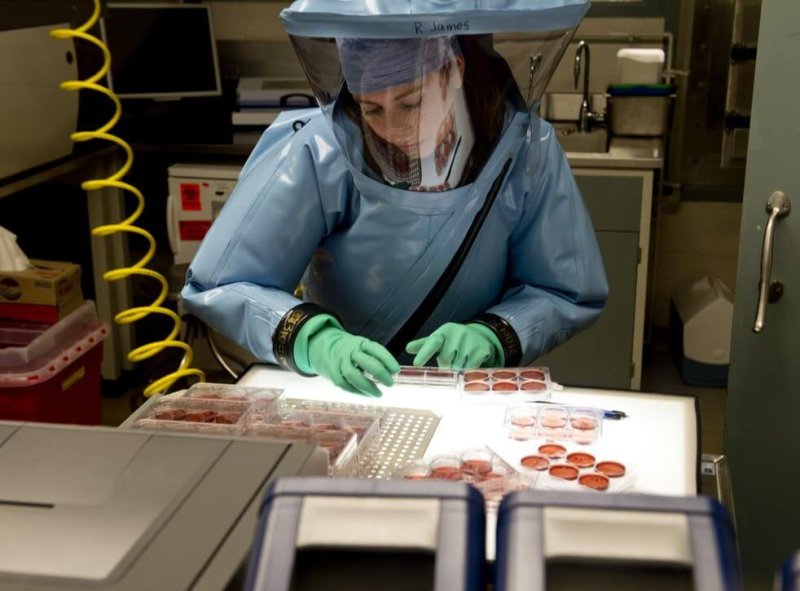
If COVID-19 resulted from a Chinese lab leak, it wouldn’t be the country’s first biohazard accident. Here’s a history

Credit: Independent
Credit: Independent

In the aftermath of a small outbreak of the original SARS virus, well after the main outbreak that ended in summer 2003, a WHO investigation concluded that the Beijing Centers for Disease Control made critical errors in handling samples of the virus, [resulting in two cases and one death].

“Clearly there was a link to the [Beijing, not Wuhan] Institute of Virology, and our investigations are still ongoing, but we haven’t found a single incident that links the two cases of laboratory workers at the institute, so it appears to be two separate breaches of bio-safety, and we can’t find any single incident or accident that explains either case,” said Dr. Julie Hall, WHO’s coordinator in China of communicable disease surveillance and response. “It has raised real concerns about bio-safety in general, how bio-safety guidelines are implemented, and how that is supervised and monitored.”

Follow the latest news and policy debates on sustainable agriculture, biomedicine, and other ‘disruptive’ innovations. Subscribe to our newsletter.

Subsequent investigations concluded a “batch of supposedly inactivated SARS virus that was brought from a high-containment facility into a low-safety diarrhea research lab where the two were working . . . In a breach of standard safety procedures, the researcher who carried out the inactivation — identified only by a family name, ‘Ren’ — had not tested whether the virus was truly inactive, according to the panel.”


Read the original post

{{ reviewsTotal }}{{ options.labels.singularReviewCountLabel }}
{{ reviewsTotal }}{{ options.labels.pluralReviewCountLabel }}
{{ options.labels.newReviewButton }}
{{ userData.canReview.message }}

Related Articles

Infographic: Global regulatory and health research agencies on whether glyphosate causes cancer

Infographic: Global regulatory and health research agencies on whether glyphosate causes cancer

Does glyphosate—the world's most heavily-used herbicide—pose serious harm to humans? Is it carcinogenic? Those issues are of both legal and ...

Most Popular

ChatGPT-Image-May-7-2026-12_16_37-PM-2
Viewpoint: Are cancer rates ‘skyrocketing’ as RFK, Jr. and MAHA claim? The evidence says mostly the opposite
Screenshot-2026-04-22-at-10.46.29-AM
Viewpoint: How to counter science disinformation? Science journalist offers 12 practical tips
Screenshot-2026-04-13-at-1.39.26-PM
Viewpoint: ‘Safer for children?’ Stonyfield yogurt under fire for deceptive organic marketing
Picture1-14
When superbugs threaten vulnerable children: Can AI help solve antibiotic resistance?
Screenshot-2026-04-23-at-11.00.36-AM
Regulators' dilemma: Thalidomide, Metformin, and the cost of getting drug approvals wrong
Picture1-1
Cooling the planet with balloons: Could a geoengineering gamble slow global warming?
bigstock opioids on chalkboard with rol
GLP podcast: 'Safe injection sites': enabling drug addiction or saving lives?
ChatGPT-Image-May-12-2026-08_39_41-PM
GLP podcast: Big Pharma, Big Ag, Big Food—health harming industries or life-saving innovators?

Sorry. No data so far.

glp menu logo outlined

Get news on human & agricultural genetics and biotechnology delivered to your inbox.