‘Young blood’: Here’s how a plasma infusion could ward off bone brittleness, increase lifespan and reverse aspects of aging

Credit: Martin Schutt/AP

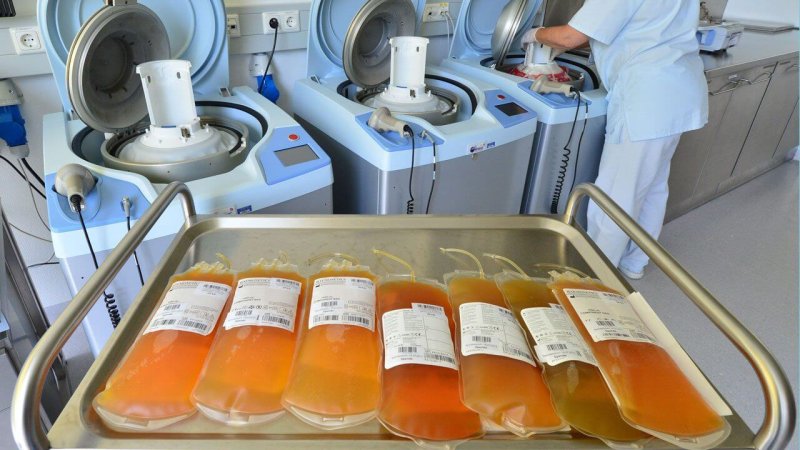
[I]n the past two decades, the idea of blood as an elixir of youth has leapt from the pages of storybooks and ancient folklore into the medical mainstream, with high-profile papers demonstrating the regenerative capacity of young blood in aged mice. Those have also led to the launch of several new biotech start-ups that aim to combat Alzheimer’s, Parkinson’s, stroke and other diseases of aging by revitalizing our most essential of bodily fluids.

Conceptually, the therapeutic strategies of… two front-runner start-ups could not be further apart. On the one extreme is Elevian’s reductionist approach, which attempts to recapitulate the benefits of young blood through supplementation with a single pro-youthful factor. On the other is Alkahest’s plasma formulations, created by pooling blood from multiple young donors and then sorting the contents to remove unwanted immune molecules.

Follow the latest news and policy debates on sustainable agriculture, biomedicine, and other ‘disruptive’ innovations. Subscribe to our newsletter.

“It’s probably not a single factor that drives aging or a single factor that can rejuvenate tissues,” says [molecular biologist] Paul Robbins… “It’s going to have to eventually be a cocktail of things that people take,” he says — but finding the ingredients that should go into that cocktail, and then creating relevant therapeutics, remains a tall order.


Read the original post

{{ reviewsTotal }}{{ options.labels.singularReviewCountLabel }}
{{ reviewsTotal }}{{ options.labels.pluralReviewCountLabel }}
{{ options.labels.newReviewButton }}
{{ userData.canReview.message }}

Related Articles

Infographic: Global regulatory and health research agencies on whether glyphosate causes cancer

Infographic: Global regulatory and health research agencies on whether glyphosate causes cancer

Does glyphosate—the world's most heavily-used herbicide—pose serious harm to humans? Is it carcinogenic? Those issues are of both legal and ...

Most Popular

Screenshot-2026-04-22-at-12.21.32-PM
Viewpoint: Why the retracted Monsanto glyphosate study doesn’t change the science—the world’s most popular herbicide is safe 
Picture1
The FDA couldn’t find a vaccine safety crisis, so it buried its own research
ChatGPT-Image-May-1-2026-11_42_59-AM-2
Viewpoint: NAD is the wellness grifters latest evidence-lite longevity fad. At least the mice are impressed.
global warming
‘Implausible’: Top climate scientists reject worst-case scenario—soaring temperatures and fast-rising sea levels
Screenshot-2026-05-21-at-12.15.17-PM
UK gene-editing milestone: Livestock barley that increases ruminant value and reduces methane emissions is first-approved CRISPR crop
vax-misinformation-main
Facts & Fallacies Podcast: Limit free speech to blunt social media misinfo?
ChatGPT-Image-Apr-16-2026-02_56_53-PM
Financial incentives, over diagnosis, and weak oversight: Autism claims are driving up Medicare costs
Screenshot-2026-05-21-at-3.15.53-PM
Chiropractors may no longer be modern-day snake oil salesmen, but the benefits of their therapy are limited–at best
ChatGPT-Image-May-12-2026-11_27_01-AM-2
AI likely to improve health care, research shows—but not for blacks and ethnic minorities
Screenshot-2026-05-20-at-5.11.17-PM
Viewpoint: No, sugar doesn’t ‘feed’ cancer — common cancer myths, debunked

Sorry. No data so far.

glp menu logo outlined

Get news on human & agricultural genetics and biotechnology delivered to your inbox.