‘Why is the US so retrograde when it comes to biotech?’ — ‘Supertrees’ engineered to capture more carbon stir anti-GMO backlash

The report suggests trialling of novel agri-tech products to allow the measurement of sustainability value alongside more traditional metrics
Credit: Money WeekCredit: Shutterstock
The report suggests trialling of novel agri-tech products to allow the measurement of sustainability value alongside more traditional metrics Credit: Money WeekCredit: Shutterstock

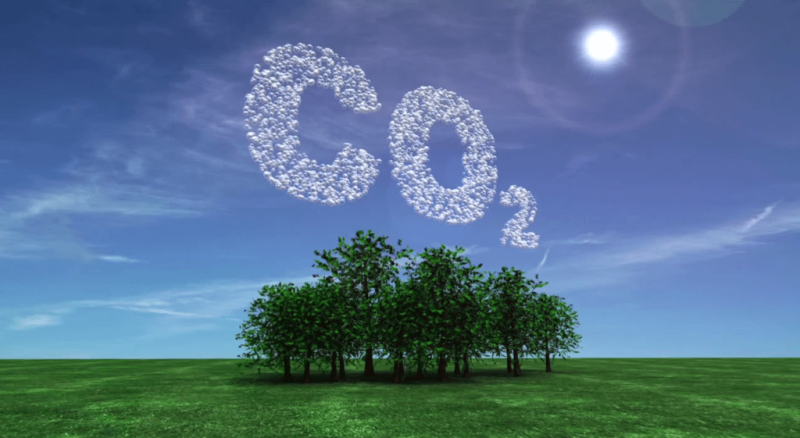
Capitalizing on trees’ ability to function as natural carbon capture machines, Reddit’s former CEO is now running a company that restores forests on degraded land… In the Bay Area, a company called Living Carbon is engineering trees that can capture and store more carbon than typical trees. 

The company plans to share more details about the technology later in the year, but it builds on previous research, including years of work from other scientists looking at how to enhance photosynthesis in other plants. 

Follow the latest news and policy debates on sustainable agriculture, biomedicine, and other ‘disruptive’ innovations. Subscribe to our newsletter.

[Forest biotechnology expert Steve] Strauss argues that prevailing attitudes about genetic engineering are holding back other innovations that could also be critical now, such as helping trees survive changing conditions because of the climate crisis. 

“Why is the United States of America so retrograde when it comes to biotech?” he asks. “Given the challenges, we should be testing heat tolerance in trees in the ground as we get hotter and hotter. And drought tolerance. There’s all kinds of promising genes that we could be testing and essentially almost none of that’s going on.” The U.S. government should be funding this research, he says—not just Silicon Valley.


Read the original post

{{ reviewsTotal }}{{ options.labels.singularReviewCountLabel }}
{{ reviewsTotal }}{{ options.labels.pluralReviewCountLabel }}
{{ options.labels.noReviewsLabel }}
{{ options.labels.newReviewButton }}
{{ userData.canReview.message }}

Related Articles

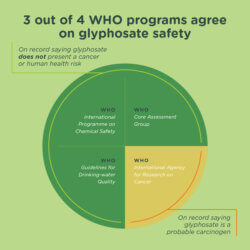
Infographic: Global regulatory and health research agencies on whether glyphosate causes cancer

Infographic: Global regulatory and health research agencies on whether glyphosate causes cancer

Does glyphosate—the world's most heavily-used herbicide—pose serious harm to humans? Is it carcinogenic? Those issues are of both legal and ...

Most Popular

ChatGPT-Image-Mar-10-2026-01_39_01-PM
Viewpoint—“Miracle molecule” debunked: Why acemannan supplements don’t work
Picture1
Hiroshima at 81: America’s new nuclear bomb, a buried Iranian target, and a question no one wants to ask
Screenshot-2026-07-09-at-1.09.25-PM
Anti-vaccine myths rattle health care
ChatGPT Image Jul 29, 2026, 06_26_01 PM 2
Facts & Fallacies podcast: Organic food myths make a comeback on Instagram, with Dr. Kevin Folta
ChatGPT-Image-Jul-10-2026-12_21_03-PM
Viewpoint: Is there new evidence that the animal deworming drug ivermectin decreases the risk of Covid and cancer? Don’t waste your money.
ChatGPT-Image-Jul-10-2026-09_42_12-AM-1
Peptides, patient autonomy, and the limits of medical freedom
ChatGPT-Image-Jun-25-2026-12_23_17-PM
No, Bill Gates did not secretly engineer ticks to promote veganism
ChatGPT-Image-Jul-22-2026-09_13_07-AM
Viewpoint—The Strategic Litigation boom: Understanding the tightening coalition among NGOs, foundations, journalists, and tort lawyers
leeteam
How Kennedy and his family could pocket millions from Merck’s $50 million vaccine injury settlement that he oversaw
organic scaled
Facts & Fallacies podcast: Organic food cuts pesticide exposure? A response to Dr. Rhonda Patrick

Sorry. No data so far.

glp menu logo outlined

Get news on human & agricultural genetics and biotechnology delivered to your inbox.