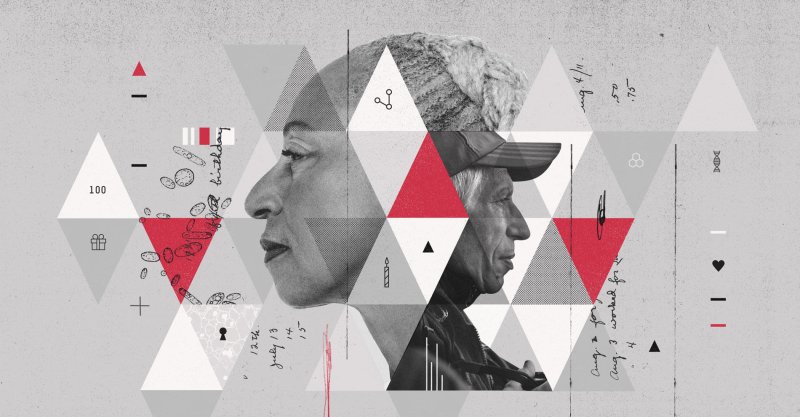
Despite breakthroughs in understanding why we age, slowing the inevitable is proving impossible

Credit: Harvard School of Public Health

Backed by governments, business, academics and investors in an industry worth $110bn (£82.5bn) – and estimated to be worth $610bn by 2025 – scientists have spent decades attempting to harness the power of genomics and artificial intelligence to find a way to prevent or even reverse ageing.

But an unprecedented study has now confirmed that we probably cannot slow the rate at which we get older because of biological constraints.

“Our findings support the theory that, rather than slowing down death, more people are living much longer due to a reduction in mortality at younger ages,” said José Manuel Aburto from Oxford’s Leverhulme Centre for Demographic Science, who analysed age-specific birth and death data spanning centuries and continents.

Follow the latest news and policy debates on sustainable agriculture, biomedicine, and other ‘disruptive’ innovations. Subscribe to our newsletter.

“Our findings confirm that, in historical populations, life expectancy was low because many people died young,” said Aburto. “But as medical, social, and environmental improvements continued, life expectancy increased.

“More and more people get to live much longer now. However, the trajectory towards death in old age has not changed,” he added. “This study suggests evolutionary biology trumps everything and, so far, medical advances have been unable to beat these biological constraints.”


Read the original post

{{ reviewsTotal }}{{ options.labels.singularReviewCountLabel }}
{{ reviewsTotal }}{{ options.labels.pluralReviewCountLabel }}
{{ options.labels.newReviewButton }}
{{ userData.canReview.message }}

Related Articles

Infographic: Global regulatory and health research agencies on whether glyphosate causes cancer

Infographic: Global regulatory and health research agencies on whether glyphosate causes cancer

Does glyphosate—the world's most heavily-used herbicide—pose serious harm to humans? Is it carcinogenic? Those issues are of both legal and ...

Most Popular

Screenshot-2026-05-01-at-11.56.24-AM
‘Science moves forward when people are willing to think differently’: Memories of DNA maverick Craig Venter
Screenshot-2026-04-03-at-11.15.51-AM
Paraben panic: How a flawed study, media hype, and chemophobia convinced the public of the danger of one of the safest classes of preservatives
Screenshot-2026-04-20-at-2.26.27-PM
Viewpoint — Food-fear world: The latest activist scientists campaign: Cancer-causing additives
Screenshot-2026-03-13-at-12.14.04-PM
The FDA wants to make many popular prescription drugs OTC—a great idea. Here’s why it’s unlikely to happen
ChatGPT-Image-May-1-2026-02_20_13-PM
How RFK, Jr.’s false vaccine claims are holding up $600 million to fight diseases in poor countries
viva-la-vida-watermelons
Misinformation and climate change are endangering summer watermelons
79d03212-2508-45d0-b427-8e9743ff6432
Viewpoint: The Casey Means hustle—Wellness woo opportunism dressed up as medical wisdom
ChatGPT-Image-Mar-27-2026-11_27_05-AM
The myths of “process”: What science says about the “dangers’ of synthetic products and ultra-processed foods
Drinking lots of water can help reduce the effects of aging
Nanoplastics in drinking water: MAHA activists forge science-based bipartisan coalition 
ChatGPT-Image-Apr-30-2026-12_21_05-PM-2
The tech billionaires behind the immortality movement
Screenshot-2026-04-30-at-2.19.37-PM
5 myths about summer dehydration that could damage your health — or even kill you
ChatGPT-Image-Mar-10-2026-01_39_01-PM
Viewpoint—“Miracle molecule” debunked: Why acemannan supplements don’t work
ChatGPT-Image-May-1-2026-03_16_32-PM
Viewpoint: How ‘health care guru’ Joe Rogan circumvented the FDA’s skepticism on psychedelics
glp menu logo outlined

Get news on human & agricultural genetics and biotechnology delivered to your inbox.