Neuroscience of free thinking: Political correctness, free speech and the biological functions of the brain

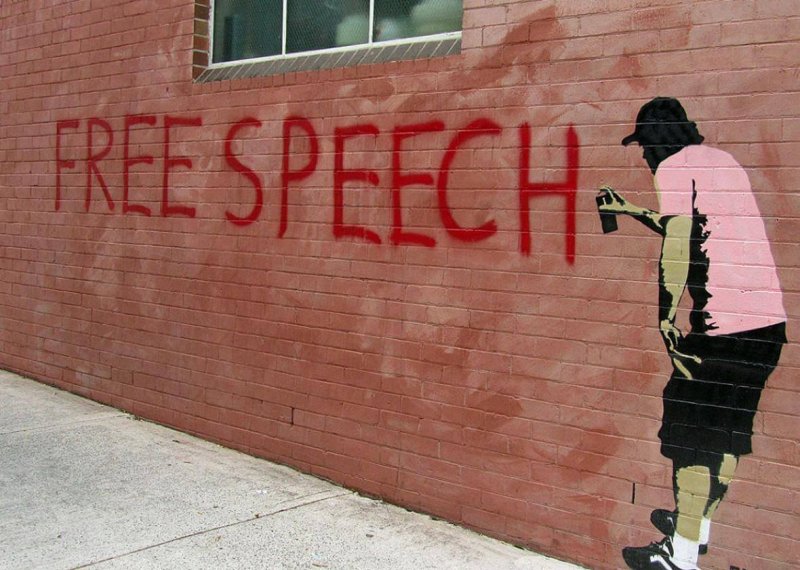
Credit: Newtown graffiti/Flickr

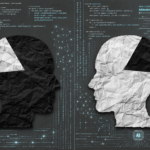
What if a person’s stance on free speech—her willingness to tolerate opinions she doesn’t like—is linked to her brain function, and how she perceives the world? Perhaps opposition to free speech is less based on malevolence than on mindset.

Follow the latest news and policy debates on sustainable agriculture, biomedicine, and other ‘disruptive’ innovations. Subscribe to our newsletter.

When something new and important is perceived, the right hemisphere tasks the left with mapping it out. The map it produces is often mistaken for the real world, although it contains isolated parts lacking in context ([psychiatrist Norman] Doidge believes that the map is experienced as a kind of virtual reality). So, while the right hemisphere experiences a dynamic and complex world of individuals, the left hemisphere sees a “re-presented version of reality,” containing “static, separable, bounded, but essentially fragmented entities, grouped into classes, on which predictions can be based.” The result is what Doidge calls a kind of “know-it-allism” and infallibility.

In debates over the role and limits of free speech, different sides of the political spectrum often appear to be perceiving alternate realities. While conservatives can’t understand how civil discussion can make someone feel unsafe, progressives can’t comprehend how somebody could tolerate hateful speech.


Read the original post

{{ reviewsTotal }}{{ options.labels.singularReviewCountLabel }}
{{ reviewsTotal }}{{ options.labels.pluralReviewCountLabel }}
{{ options.labels.newReviewButton }}
{{ userData.canReview.message }}

Related Articles

Infographic: Global regulatory and health research agencies on whether glyphosate causes cancer

Infographic: Global regulatory and health research agencies on whether glyphosate causes cancer

Does glyphosate—the world's most heavily-used herbicide—pose serious harm to humans? Is it carcinogenic? Those issues are of both legal and ...

Most Popular

Picture1
The FDA couldn’t find a vaccine safety crisis, so it buried its own research
ChatGPT-Image-Apr-16-2026-02_56_53-PM
Financial incentives, over diagnosis, and weak oversight: Autism claims are driving up Medicare costs
Screenshot-2026-05-08-at-11.55.47-AM
Anti-vax activists falsely blame COVID vaccines for the rising U.S. cancer rate among younger people.
Screenshot-2026-04-22-at-12.21.32-PM
Viewpoint: Why the retracted Monsanto glyphosate study doesn’t change the science—the world’s most popular herbicide is safe 
Screenshot-2026-05-19-at-11.23.34-AM
West-originated vaccine disinformation sparks murders of health care workers across Africa
ChatGPT-Image-May-7-2026-12_32_36-PM
Viewpoint: The state of U.S. vaccine policy? Dismal nationally, but some states are stepping up.
ChatGPT-Image-May-12-2026-11_27_01-AM-2
AI likely to improve health care, research shows—but not for blacks and ethnic minorities
modi visit sikkim
Viewpoint: Indian PM wants farmers to switch to 50% organic. It would take at least 10 years, likely won’t work, and isn’t more sustainable
Screenshot-2026-04-13-at-1.39.26-PM
Viewpoint: ‘Safer for children?’ Stonyfield yogurt under fire for deceptive organic marketing
placebo
Viewpoint — Alternative medicine and the placebo effect: Selling a reassuring illusion of health
glp menu logo outlined

Get news on human & agricultural genetics and biotechnology delivered to your inbox.