Viewpoint: ‘Greens’ around the world declare themselves ‘pro-science’. But on health and sustainability issues, from vaccines to energy to farming, they are anything but

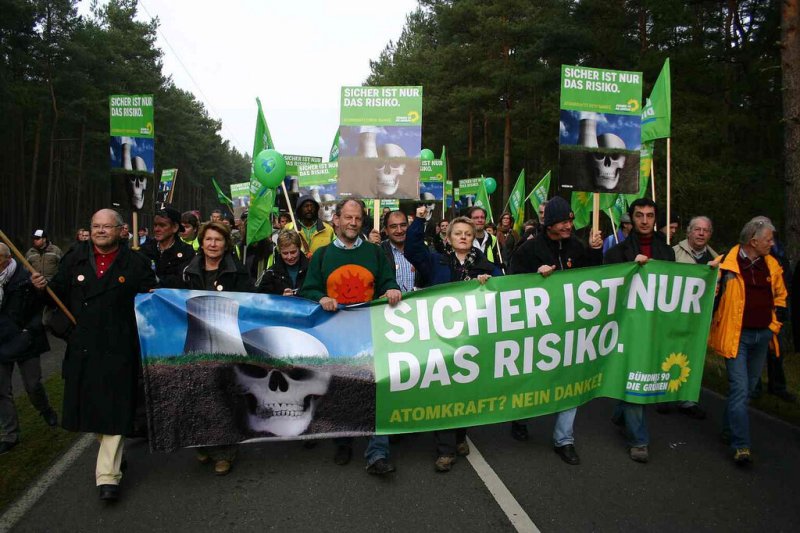
Anti-nuclear protest sign, saying "Only the risk is certain. Atomic power? No thanks!" Credit: Wikimedia

The Greens present themselves as the party of science.

In reality, the party traditionally stands for an anti-science course, despite claiming “follow science” on climate change. The Greens have an anti-intelligence core. Many of its founding members were recruited at the end of the 1970s from the struggle against big industry and against imperialism; hardly anyone was scientifically motivated. It is still like that today.

If it had been up to the Greens, significant advances in medicine would have been impossible – the Biontech vaccine against COVID, developed using genetic engineering, would not have existed either.

The fight of the Greens against genetic engineering has inhuman features with its anti-scientific furor. “This is why the Greens firmly reject genetic engineering in all of its areas of application”, the party headed a section of its election manifesto in 1987, in which it called for “an immediate stop to public and state funding of genetic engineering research and its applications in all areas.”

Follow the latest news and policy debates on sustainable agriculture, biomedicine, and other ‘disruptive’ innovations. Subscribe to our newsletter.

The fact that the Greens can succeed as a supposed party of science can be explained by the esoteric culture of Germany, where supposedly “drafts” make you sick, cold causes infections (“colds”) and vaccination skepticism and fear of nuclear power are greater than elsewhere. 

[Editor’s note: This article was originally published in German and has been translated and edited for clarity.]


Read the original post

{{ reviewsTotal }}{{ options.labels.singularReviewCountLabel }}
{{ reviewsTotal }}{{ options.labels.pluralReviewCountLabel }}
{{ options.labels.newReviewButton }}
{{ userData.canReview.message }}

Related Articles

Infographic: Global regulatory and health research agencies on whether glyphosate causes cancer

Infographic: Global regulatory and health research agencies on whether glyphosate causes cancer

Does glyphosate—the world's most heavily-used herbicide—pose serious harm to humans? Is it carcinogenic? Those issues are of both legal and ...

Most Popular

ChatGPT-Image-Mar-10-2026-01_39_01-PM
Viewpoint—“Miracle molecule” debunked: Why acemannan supplements don’t work
ChatGPT-Image-Jun-25-2026-12_23_17-PM
No, Bill Gates did not secretly engineer ticks to promote veganism
Screenshot-2026-06-05-at-2.12.30-PM
Some plants can poison you. So how did humans figure out what is safe to eat?
ChatGPT-Image-May-18-2026-12_06_18-PM-2
Defying death: The immortality movement goes mainstream
artificial intelligence brain think illustration md
Viewpoint — Digital gods and human extinction: Will we be the first species ever to design our own descendants?

Sorry. No data so far.

glp menu logo outlined

Get news on human & agricultural genetics and biotechnology delivered to your inbox.