Philadelphia zoo rolls out plan to vaccinate gorillas, big cats and other animals at risk of contracting COVID

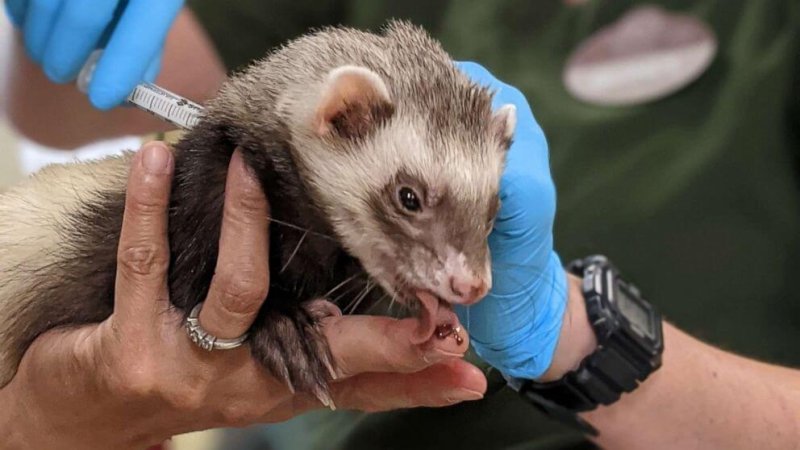
A ferret at the Oakland Zoo receives a COVID shot while enjoying a treat. Credit: Oakland Zoo

The Philadelphia Zoo is gearing up to vaccinate its highest-risk animals with an experimental vaccine developed by Zoetis, a former subsidiary of Pfizer that develops drugs for animals. While animals are not a major concern for spreading the virus to humans, according to the Centers for Disease Control and Prevention, they may still get infected. Cases have been reported in some big cats and gorillas at zoos, household pets, and farmed minks, motivating zoos nationwide to help their animals build up immune defenses.

Follow the latest news and policy debates on sustainable agriculture, biomedicine, and other ‘disruptive’ innovations. Subscribe to our newsletter.

“We can’t make a new vaccine for every species,” said Mahesh Kumar, senior vice president of global biologics at Zoetis. But the company thought its prototype, which seemed to be safe and effective in cats, dogs, and other species, might work for a wider menagerie.

Zoetis is donating more than 11,000 doses to more than 70 zoos and other animal organizations to be administered to everything from meerkats to orangutans. To maximize efficacy, Zoetis instructs zoos to administer two doses: the first to prime the immune system, then a second to boost the response weeks later, like human vaccines. 

Read the original post

{{ reviewsTotal }}{{ options.labels.singularReviewCountLabel }}
{{ reviewsTotal }}{{ options.labels.pluralReviewCountLabel }}
{{ options.labels.noReviewsLabel }}
{{ options.labels.newReviewButton }}
{{ userData.canReview.message }}

Related Articles

Infographic: Global regulatory and health research agencies on whether glyphosate causes cancer

Infographic: Global regulatory and health research agencies on whether glyphosate causes cancer

Does glyphosate—the world's most heavily-used herbicide—pose serious harm to humans? Is it carcinogenic? Those issues are of both legal and ...

Most Popular

ChatGPT-Image-Mar-10-2026-01_39_01-PM
Viewpoint—“Miracle molecule” debunked: Why acemannan supplements don’t work
ChatGPT-Image-Jul-10-2026-12_21_03-PM
Viewpoint: Is there new evidence that the animal deworming drug ivermectin decreases the risk of Covid and cancer? Don’t waste your money.
Picture1
Hiroshima at 81: America’s new nuclear bomb, a buried Iranian target, and a question no one wants to ask
Screenshot-2026-07-09-at-1.09.25-PM
Anti-vaccine myths rattle health care
leeteam
How Kennedy and his family could pocket millions from Merck’s $50 million vaccine injury settlement that he oversaw
Screenshot-2026-07-30-at-3.07.42-PM
Controversy over WNBA star Sophie Cunningham’s comment opposing trans females in women’s sports reinvigorates the culture wars
Screenshot-2026-07-30-at-2.30.35-PM
Climate scientists claim conservative activists are promoting ‘lies’ that Europe’s summer heatwaves are far from unusual
ChatGPT-Image-Jun-25-2026-12_23_17-PM
No, Bill Gates did not secretly engineer ticks to promote veganism
ChatGPT Image Jul 29, 2026, 05_50_04 PM
Fear, science, and the law: If talc powder is unlikely to cause cancer and J&J was winning in court, why did it pay more than $5.5 billion to settle?

Sorry. No data so far.

glp menu logo outlined

Get news on human & agricultural genetics and biotechnology delivered to your inbox.