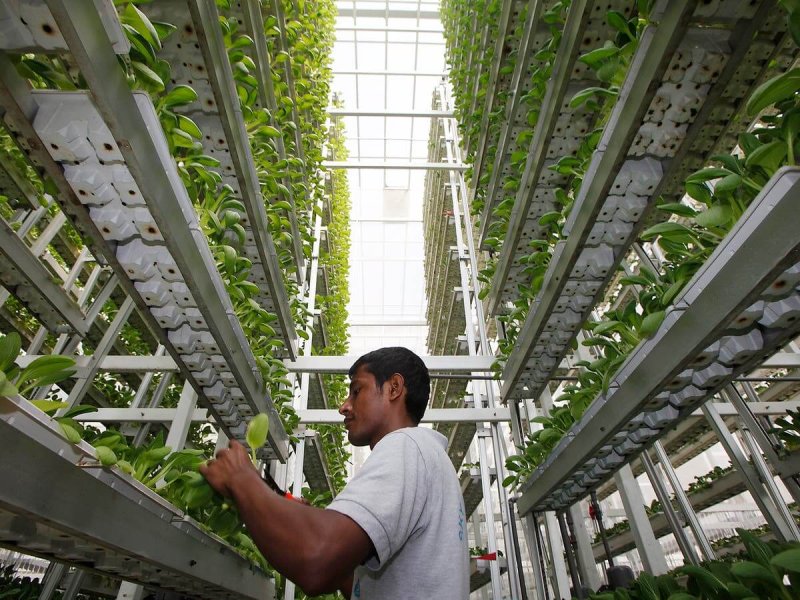
With 80% of the global population expected to live in urban areas by 2050, is vertical farming a viable way to increase sustainable food production?

Credit: Reuters
Credit: Reuters

The agriculture industry is facing a wide range of challenges, trying to keep up with ever-changing markets and, of course, climate change. To make things even more challenging, it is estimated that nearly 80% of the world population will be living in urban areas by 2050. Due to this urbanisation as well as industrial development, the number of arable lands — land used for the cultivation of crops — is decreasing day by day.

Follow the latest news and policy debates on sustainable agriculture, biomedicine, and other ‘disruptive’ innovations. Subscribe to our newsletter.

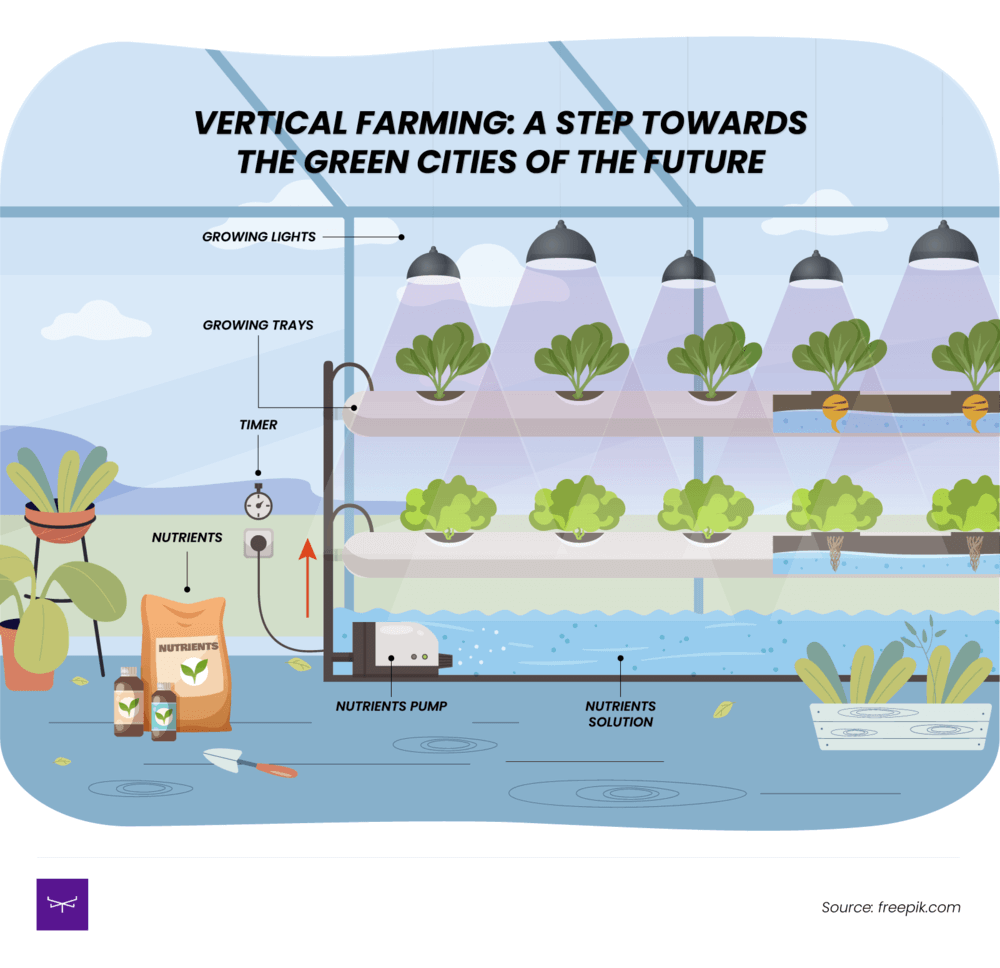
With its primary goal to produce more food per square metre, vertical farming cultivates crops in stacked layers in a tall, tower-like structure. According to Pr. Dickson Despommier, the mastermind behind the vertical farm, one acre of indoor farm is equivalent to 10 acres of outdoor farming.

Despommier explains that by growing things in closed spaces within these tall structures, we compress and maximise efficiency. 

Using only about 10% of the water that traditional agriculture uses, hydroponics allows vertical farmers to conserve a huge amount of water. This is especially beneficial considering the fact that water is set to become one of the most sought-after resources of the next century. 
This is an excerpt. Read the original post here.

{{ reviewsTotal }}{{ options.labels.singularReviewCountLabel }}
{{ reviewsTotal }}{{ options.labels.pluralReviewCountLabel }}
{{ options.labels.newReviewButton }}
{{ userData.canReview.message }}

Related Articles

Infographic: Global regulatory and health research agencies on whether glyphosate causes cancer

Infographic: Global regulatory and health research agencies on whether glyphosate causes cancer

Does glyphosate—the world's most heavily-used herbicide—pose serious harm to humans? Is it carcinogenic? Those issues are of both legal and ...

Most Popular

ChatGPT-Image-May-7-2026-12_16_37-PM-2
Viewpoint: Are cancer rates ‘skyrocketing’ as RFK, Jr. and MAHA claims? The evidence says mostly the opposite
Screenshot-2026-04-13-at-1.39.26-PM
Viewpoint: ‘Safer for children?’ Stonyfield yogurt under fire for deceptive organic marketing
Screenshot-2026-04-22-at-10.46.29-AM
Viewpoint: How to counter science disinformation? Science journalist offers 12 practical tips
png-pill-omega-Supp-fish-oil
Millions take omega-3 fish oil for brain health. New research suggests it may do the opposite.
ChatGPT Image May 14, 2026, 09_51_35 PM
Facebook swamped by hundreds of thousands of scam ads for illegal or dangerous medical products
Picture1-5
Science Disinformation Gap: The transatlantic battle over social media and censorship
Screenshot-2026-04-23-at-11.00.36-AM
Regulators' dilemma: Thalidomide, Metformin, and the cost of getting drug approvals wrong
ChatGPT Image May 12, 2026, 01_21_30 PM
How big health brands are funding online medical misinformation 
ChatGPT-Image-May-13-2026-12_43_37-PM-2
Longevity: Is cellular rejuvenation even possible?
glp menu logo outlined

Get news on human & agricultural genetics and biotechnology delivered to your inbox.