Infographic: What are medical abortions — and how accessible are they?

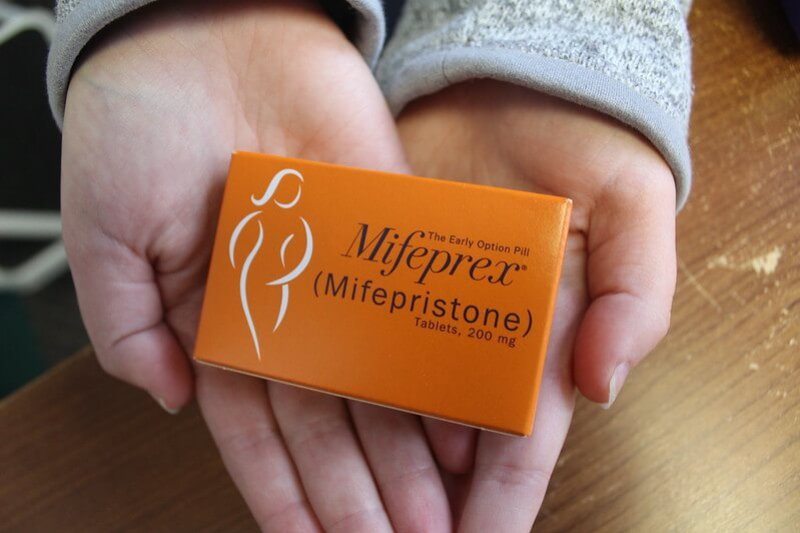
Credit: Robin Marty/Flickr

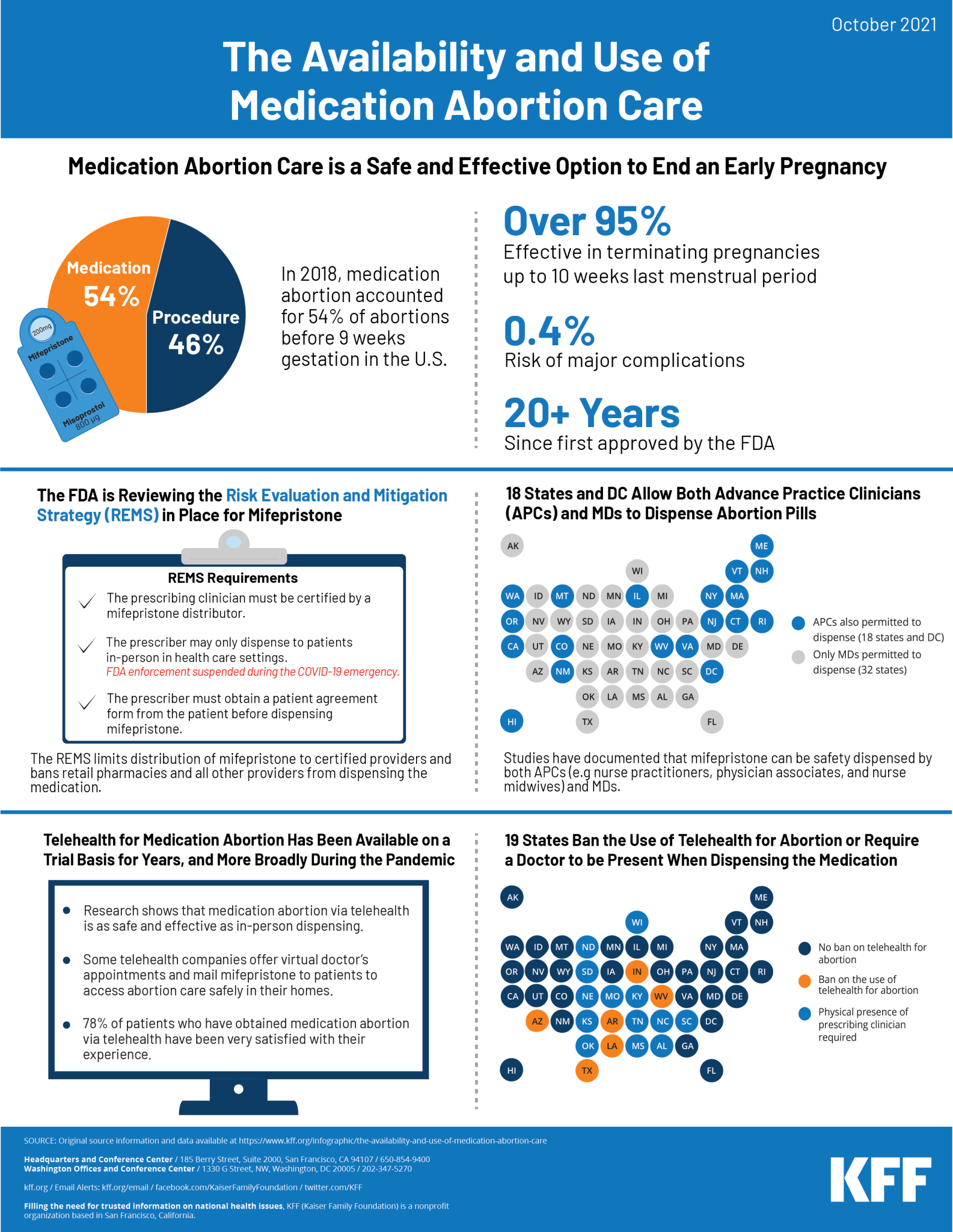
Medication abortion, also known as medical abortion or abortion with pills, is an FDA approved pregnancy termination protocol that involves taking two different drugs, mifepristone and misoprostol, for use up to the first 70 days (10 weeks) of pregnancy. Studies show that medication abortion care is safe and effective. This infographic highlights data and policies regarding the availability and effectiveness of medication abortion in the United States. Medication abortion accounts for more than half (54%) of all abortions before nine weeks gestation in the United States.

On April 12, 2021 , the FDA’s Center for Drug Evaluation and Research notified the American College of Obstetricians and Gynecologists (ACOG) that they are suspending enforcement of the Risk Evaluation and Mitigation Strategy (REMS) requirement for mifepristone that requires prescribers to dispense to patients in-person during the COVID-19 emergency. This temporarily allows providers in the 32 states and DC that do not have laws that otherwise ban this practice to dispense mifepristone using the telehealth protocol for medication abortion. The FDA has also undertaken a full review of the REMS for mifepristone and the results of that review are expected later in 2021.

Follow the latest news and policy debates on sustainable agriculture, biomedicine, and other ‘disruptive’ innovations. Subscribe to our newsletter.

Credit: Kaiser Family Foundation

Read the original post here.

{{ reviewsTotal }}{{ options.labels.singularReviewCountLabel }}
{{ reviewsTotal }}{{ options.labels.pluralReviewCountLabel }}
{{ options.labels.newReviewButton }}
{{ userData.canReview.message }}

Related Articles

Infographic: Global regulatory and health research agencies on whether glyphosate causes cancer

Infographic: Global regulatory and health research agencies on whether glyphosate causes cancer

Does glyphosate—the world's most heavily-used herbicide—pose serious harm to humans? Is it carcinogenic? Those issues are of both legal and ...

Most Popular

Screenshot-2026-06-05-at-2.12.30-PM
Some plants can poison you. So how did humans figure out what is safe to eat?
Credit: ACSH
Viewpoint: Who and what’s to blame for the surge in vaccine-preventable diseases?
Organic-Produce
Viewpoint: Why you should ignore organic food advocates’ advice to avoid ‘pesticide soaked’ conventional fruits and vegetables
ChatGPT-Image-Jun-5-2026-01_17_48-PM
GLP-1 weight-loss drugs may reshape our desires and emotions
ChatGPT-Image-Mar-10-2026-01_39_01-PM
Viewpoint—“Miracle molecule” debunked: Why acemannan supplements don’t work
Screenshot 2026-05-26 at 10.15
Viewpoint: Double standard—Why does the wellness industry get a free pass while Big Healthcare is treated as morally suspect?
ChatGPT-Image-May-26-2026-07_51_21-AM-2
Viewpoint: There are more than 1,000 chemicals in a cup of coffee—including many substances that can cause cancer. Why isn’t it banned?
Screenshot-2026-06-04-at-12.05.08-PM
Cases of brain inflammation surge as U.S. measles pandemic approaches 2000
Screenshot-2026-06-05-at-11.12.44-AM
‘Protecting religious liberty and parental authority’: Challenging expert guidance, Trump signs off on Kennedy’s gutting of childhood vaccine schedule
Picture1
Sounds we can’t hear — the hidden planetary signals behind science, fear, and misinformation
ChatGPT Image May 26, 2026, 08_42_17 AM (1)
Viewpoint: Greenpeace and poison: How environmental advocacy groups rely on compliant (and often ignorant) journalists to spread disinformation and spark litigation
Screenshot-2026-05-28-at-1.36.28-PM
Viewpoint: Can mRNA research survive the Trump administration?
edb7f6d7-2370-418f-9578-74e29678e35c
Facts & Fallacies Podcast: Nicotine vaping—public health miracle, or risk to children? Professor Cliff Douglas
glp menu logo outlined

Get news on human & agricultural genetics and biotechnology delivered to your inbox.