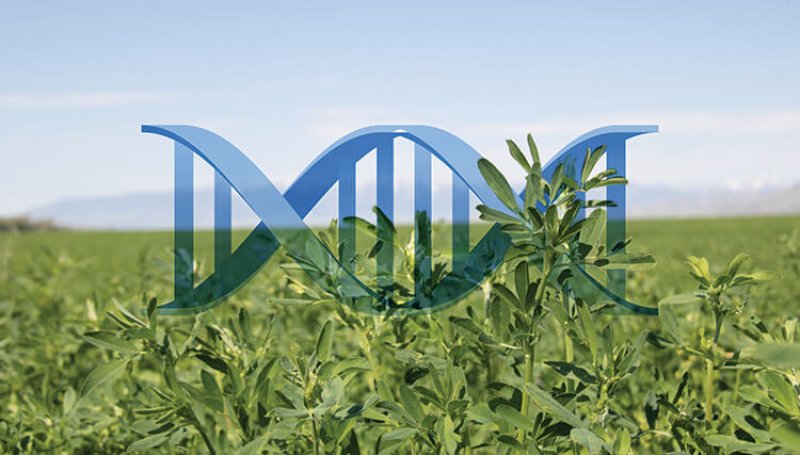
Viewpoint: Gene editing can transform crop and animal agriculture — but we need to encourage competition and prioritize ‘ethical innovation’ to realize gains

Credit: Hay & Forage Grower

[W]hile gene editing has had the potential to reduce inputs, improve nutrition, and “climate proof” our food supply, little has materialized in the way of technologies adopted at scale. The lack of progress is due to two factors. First, the seasonality of agriculture leads to long timelines to commercialization—making investment within this sector difficult. Second, strong consolidation around genetics for major industry players and the lack of substantial independent distribution channels have forced many startups to try to partner with an increasingly small pool of large corporations to gain market access.

The lack of competition has decreased incentives to acquire and develop new technologies and has wreaked havoc on investor interest in gene editing innovation within agriculture. What’s more, having very few gatekeepers to the market has dangerously hampered technology adoption and access for farmers.

Follow the latest news and policy debates on sustainable agriculture, biomedicine, and other ‘disruptive’ innovations. Subscribe to our newsletter.

As gene editing is deployed to tackle sustainability challenges, care should be taken to ensure that commercialization proceeds in a way that promotes competition. Care should also be taken to ensure that innovations in technologies and business models support equitable values, that is, values that are consistent with resilient markets and financial stability in farming.


This is an excerpt. Read the original post here.

{{ reviewsTotal }}{{ options.labels.singularReviewCountLabel }}
{{ reviewsTotal }}{{ options.labels.pluralReviewCountLabel }}
{{ options.labels.newReviewButton }}
{{ userData.canReview.message }}

Related Articles

Infographic: Global regulatory and health research agencies on whether glyphosate causes cancer

Infographic: Global regulatory and health research agencies on whether glyphosate causes cancer

Does glyphosate—the world's most heavily-used herbicide—pose serious harm to humans? Is it carcinogenic? Those issues are of both legal and ...

Most Popular

ChatGPT-Image-May-7-2026-12_32_36-PM
Viewpoint: The state of U.S. vaccine policy? Dismal nationally, but some states are stepping up.
Picture1
The FDA couldn’t find a vaccine safety crisis, so it buried its own research
Screenshot-2026-04-22-at-12.21.32-PM
Viewpoint: Why the retracted Monsanto glyphosate study doesn’t change the science—the world’s most popular herbicide is safe 
Screenshot-2026-04-22-at-10.46.29-AM
Viewpoint: How to counter science disinformation? Science journalist offers 12 practical tips
Screenshot-2026-04-13-at-1.39.26-PM
Viewpoint: ‘Safer for children?’ Stonyfield yogurt under fire for deceptive organic marketing
the magic of mRNA
Viewpoint: Anti-vax fake ‘turbo cancer’ claims threaten cancer treatment breakthroughs
ChatGPT-Image-May-7-2026-12_16_37-PM-2
Viewpoint: Are cancer rates ‘skyrocketing’ as RFK, Jr. and MAHA claim? The evidence says mostly the opposite
placebo
Viewpoint — Alternative medicine and the placebo effect: Selling a reassuring illusion of health
artificial intelligence brain think illustration md
Viewpoint — Digital gods and human extinction: Will we be the first species ever to design our own descendants?
Defense_Secretary_Ash_Carter_tours_the_Microsoft_Cybercrime_Center_in_Seattle_March_3_2016
How criminals are using AI to target social media users and steal their money and confidential data
ChatGPT-Image-May-18-2026-01_45_05-PM-2
Newest hantavirus conspiracy: Online disinformation turns outbreak into latest ivermectin grift
_20250221_nib_rfk_trump
Viewpoint: 'Crisis of public trust': Autism support community shocked RFK continues to peddle false claims about the danger of vaccines
glp menu logo outlined

Get news on human & agricultural genetics and biotechnology delivered to your inbox.