First CRISPR food hits market: Sicilian Rouge tomato with blood pressure-lowering GABA available in Japan

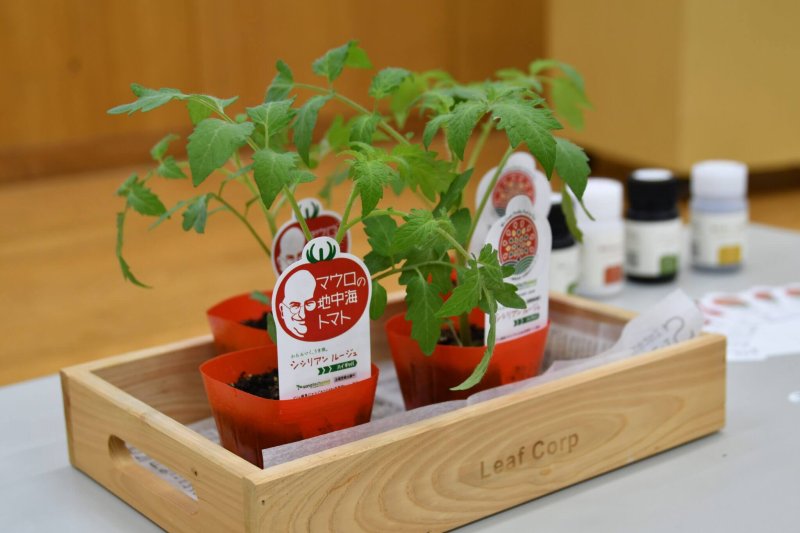
Commercially available gene-edited tomato plants. Credit: Sanatech

Genome-edited food made with CRISPR–Cas9 technology is being sold on the open market for the first time. Since September, the Sicilian Rouge tomatoes, which are genetically edited to contain high amounts of γ-aminobutyric acid (GABA), have been sold direct to consumers in Japan by Tokyo-based Sanatech Seed. The company claims oral intake of GABA can help support lower blood pressure and promote relaxation.

In Japan, dietary supplements and foods enriched for GABA are popular among the public, says Hiroshi Ezura, chief technology officer at Sanatech and a plant molecular biologist at the University of Tsukuba.

“GABA is a famous health-promoting compound in Japan. It’s like vitamin C,” he says. More than 400 GABA-enriched food and beverage products, such as chocolates, are already on the Japanese market, he says.
Follow the latest news and policy debates on sustainable agriculture, biomedicine, and other ‘disruptive’ innovations. Subscribe to our newsletter.

Sanatech’s high-GABA tomato, as a nutritionally enhanced crop, stands out. The fact that it was engineered using CRISPR seems to help with consumer acceptance, especially as such crops aren’t being called “GMOs,” or “genetically modified organisms.” Instead, they’re dubbed “genome-edited.” This change in nomenclature alone seems to have quelled a lot of the backlash historically launched against bioengineered plants.


This is an excerpt. Read the original post here.

{{ reviewsTotal }}{{ options.labels.singularReviewCountLabel }}
{{ reviewsTotal }}{{ options.labels.pluralReviewCountLabel }}
{{ options.labels.newReviewButton }}
{{ userData.canReview.message }}

Related Articles

Infographic: Global regulatory and health research agencies on whether glyphosate causes cancer

Infographic: Global regulatory and health research agencies on whether glyphosate causes cancer

Does glyphosate—the world's most heavily-used herbicide—pose serious harm to humans? Is it carcinogenic? Those issues are of both legal and ...

Most Popular

Screenshot-2026-04-13-at-1.39.26-PM
Viewpoint: ‘Safer for children?’ Stonyfield yogurt under fire for deceptive organic marketing
ChatGPT-Image-May-7-2026-12_32_36-PM
Viewpoint: The state of U.S. vaccine policy? Dismal nationally, but some states are stepping up.
Screenshot-2026-04-22-at-10.46.29-AM
Viewpoint: How to counter science disinformation? Science journalist offers 12 practical tips
ChatGPT-Image-May-7-2026-12_16_37-PM-2
Viewpoint: Are cancer rates ‘skyrocketing’ as RFK, Jr. and MAHA claim? The evidence says mostly the opposite
ChatGPT-Image-May-12-2026-08_39_41-PM
GLP podcast: Big Pharma, Big Ag, Big Food—health harming industries or life-saving innovators?
Screenshot-2026-04-23-at-11.00.36-AM
Regulators' dilemma: Thalidomide, Metformin, and the cost of getting drug approvals wrong
Picture1-1
Cooling the planet with balloons: Could a geoengineering gamble slow global warming?
Picture1-14
When superbugs threaten vulnerable children: Can AI help solve antibiotic resistance?
ChatGPT-Image-May-7-2026-01_23_27-PM-2
Viewpoint: Will AI democratize personalized cancer treatment or fuel medical misinformation?
the magic of mRNA
Viewpoint: Anti-vax fake ‘turbo cancer’ claims threaten cancer treatment breakthroughs
bigstock opioids on chalkboard with rol
GLP podcast: 'Safe injection sites': enabling drug addiction or saving lives?
Defense_Secretary_Ash_Carter_tours_the_Microsoft_Cybercrime_Center_in_Seattle_March_3_2016
How criminals are using AI to target social media users and steal their money and confidential data
glp menu logo outlined

Get news on human & agricultural genetics and biotechnology delivered to your inbox.