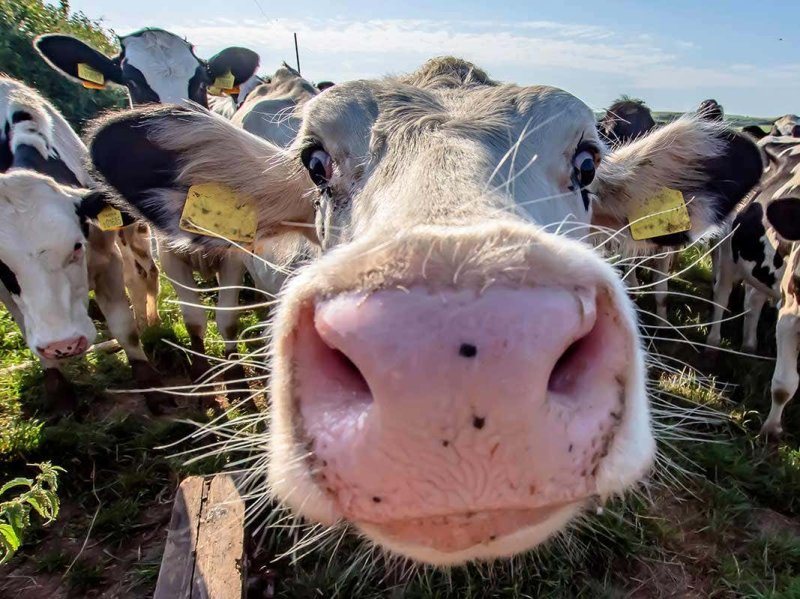
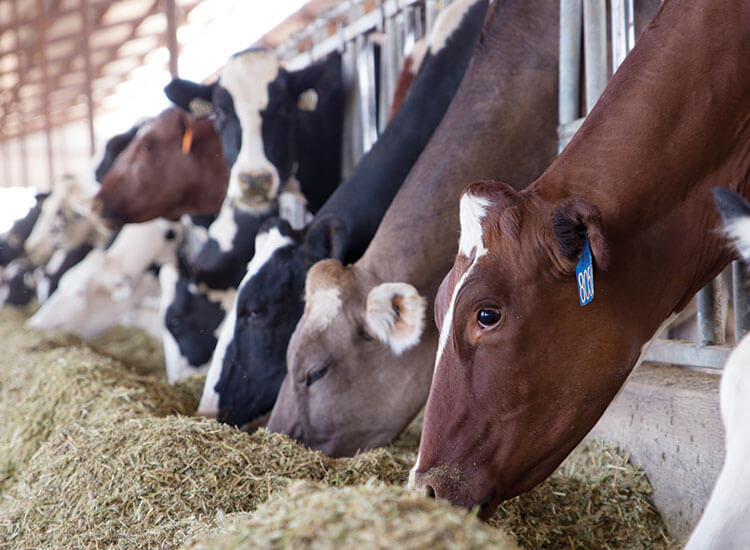
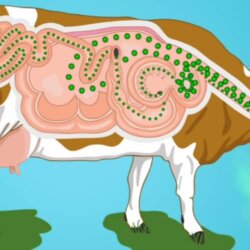
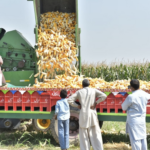
Even so, raising cattle for beef is also responsible for about 3.2 percent of US greenhouse gas emissions. The largest share of US beef emissions comes from enteric fermentation, a digestive process in which microbes release methane, which is a potent greenhouse gas. Production of feed, such as corn, and manure management generate smaller yet significant levels of emissions.
This report assesses the potential to reduce beef’s carbon footprint and identifies policies that could accelerate the decarbonization of the beef industry. Existing low-carbon technologies and practices include giving cattle in feedlots specialized feed additives that reduce methane emissions, composting manure, and changing how cattle are grazed. We find that full adoption of such practices by 2030, combined with business-as-usual reductions in emissions intensity, could reduce emissions from US beef production by 18 percent or 42 million metric tons of carbon dioxide equivalent per year.
We also identify a set of “breakthrough technologies,” such as feed additives that can be given to grazing cattle, enhanced root crops that sequester more carbon than conventional plants, and breeding low-methane cattle. These advances are technologically plausible but still in the early stages of research. If these technologies were fully adopted alongside existing practices by 2030, we estimate that the carbon footprint of beef production could fall by about 48 percent.
Achieving even a fraction of this reduction will require overcoming steep technological, scientific, and financial barriers. It will necessitate not just private, but also public sector research and development. It will also be critical to expand programs that help producers adopt sustainable practices, develop new forms of support such as tax incentives, and reform regulations that stymie the development and commercialization of feed additives and genetically modified crops. Such changes would have large climate benefits and, in some cases, reduce land use and improve water and air pollution, making “clean,” low-carbon beef possible.
To reach the goal of low-carbon beef, we recommend the following policies:


- Increase federal funding for research on enhanced root crops, methane-reducing feed additives, breeding for feed efficiency and animal health, and use of anaerobic digesters in beef operations
- Increase funding for federal farm conservation programs
- Establish a federal program to support beef manure composting
- Support pilot or experimental anaerobic digester projects
- Establish a rebate program to incentivize the purchase of precision farming equipment
- Update US Food and Drug Administration and Department of Agriculture regulations of methane-reducing feed additives and genetically modified crops and animals
Alex Smith is a food and agriculture analyst at the Breakthrough Institute. He has completed a dual MA/MSc in International and World History from Columbia University and the London School of Economics and Political Science. Find Alex on Twitter @alexjmssmith
Dan Blaustein-Rejto is a food and agriculture analyst at the Breakthrough Institute. He holds a Master’s in public policy from the University of California Berkeley. Find Dan on Twitter @danrejto
Emma Kovak is a food and agriculture analyst at the Breakthrough Institute. Follow her on Twitter @EmmaKovak
A version of this article was originally published at The Breakthrough Institute and has been republished here with permission. The Breakthrough Institute can be found on Twitter @TheBTI