Reversing deforestation and biodiversity loss: Can synthetic palm oil help protect the world’s tropical forests?

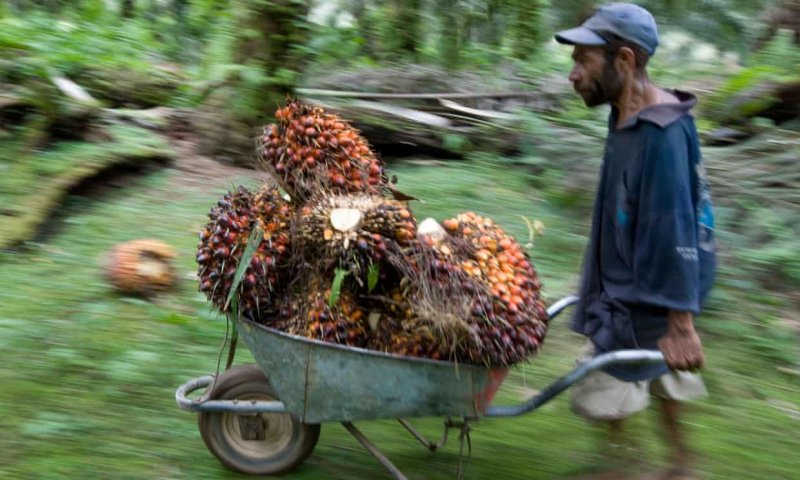
Palm oil production hurts the environment and laborers. Credit: Jeremy Sutton-Hibbert

The world’s cheapest and most widely used vegetable oil, palm oil production is a primary driver of deforestation and biodiversity loss in the tropics. These and other problems with the palm oil industry, such as exploitative labor practices, have for years driven interest in more sustainable options. But good alternatives have proven difficult to come by.

Follow the latest news and policy debates on sustainable agriculture, biomedicine, and other ‘disruptive’ innovations. Subscribe to our newsletter.

Last year, a startup called C16 Biosciences opened a gleaming new lab in Manhattan to develop a microbial palm oil alternative, backed by $20 million from Bill Gates’ climate solutions investment fund Breakthrough Energy Ventures.

A California-based startup called Kiverdi is also working to manufacture yeast oil using carbon captured from the atmosphere, and a team of bioengineers at the University of Bath is at work scaling up its own strain of oily yeast.

Jeffrey Linger, a bioengineer at the National Renewable Energy Laboratory, commented that development of such microbial oil alternatives is worth pursuing, though he thinks these companies have a difficult path ahead to develop workable strains that can be manufactured at large scale and that can use cellulosic feedstocks. “There are so many knobs you can turn, so I don’t want to say it’s impossible,” he said. “I also don’t want to say it’s easy.”


This is an excerpt. Read the original post here.

{{ reviewsTotal }}{{ options.labels.singularReviewCountLabel }}
{{ reviewsTotal }}{{ options.labels.pluralReviewCountLabel }}
{{ options.labels.newReviewButton }}
{{ userData.canReview.message }}

Related Articles

Infographic: Global regulatory and health research agencies on whether glyphosate causes cancer

Infographic: Global regulatory and health research agencies on whether glyphosate causes cancer

Does glyphosate—the world's most heavily-used herbicide—pose serious harm to humans? Is it carcinogenic? Those issues are of both legal and ...

Most Popular

ChatGPT-Image-Jun-25-2026-01_14_50-PM
Viewpoint: Disinformation grift: The wellness industry is a lucrative and mostly worthless marketplace of ‘balms, brews, and baloney’
ChatGPT-Image-Jun-25-2026-12_23_17-PM
No, Bill Gates did not secretly engineer ticks to promote veganism
ChatGPT-Image-Mar-10-2026-01_39_01-PM
Viewpoint—“Miracle molecule” debunked: Why acemannan supplements don’t work
ChatGPT-Image-Jun-30-2026-01_09_47-PM
Viewpoint: As MAHA blows up over Supreme Court ruling limiting glyphosate litigation, Trump offers toothless plan to reduce pesticides in food
Screenshot-2026-06-05-at-2.12.30-PM
Some plants can poison you. So how did humans figure out what is safe to eat?
ChatGPT-Image-May-18-2026-12_06_18-PM-2
Defying death: The immortality movement goes mainstream
marijuana-pot-in-hand-nveri-st-xpm-t-abq-fkifeos-s-rws-cmpx-
Facts & Fallacies podcast: Legalized weed drives drug addiction, psychosis?

Sorry. No data so far.

glp menu logo outlined

Get news on human & agricultural genetics and biotechnology delivered to your inbox.