Genetic cloning may be the only viable solution to biodiversity-threatening animal extinctions

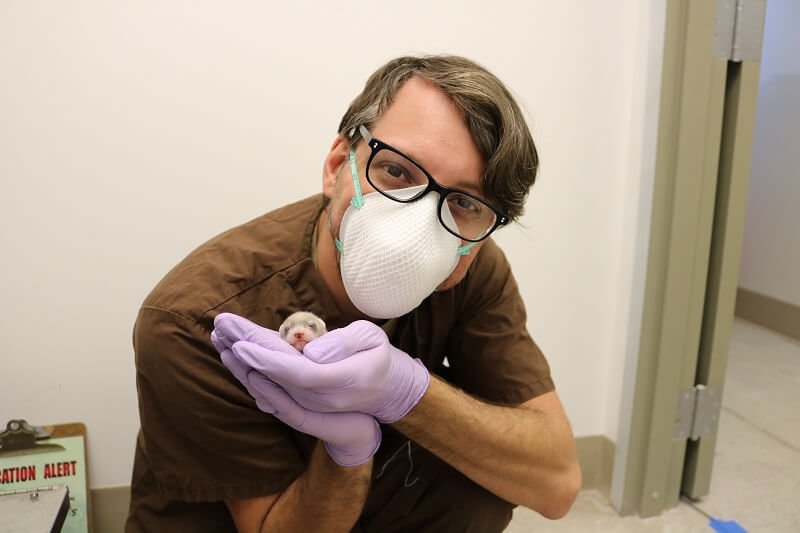
Revive & Restore Lead Scientist Ben Novak holds 3-week-old clone Elizabeth Ann at the National Black-footed Ferret Conservation Center. Credit: Revive & Restore

“Extinction is an abstract concept to many people. It was to me as a kid,” says Oliver Ryder, director of conservation genetics at the San Diego Zoo Wildlife Alliance.

But the planet us growing less biodiverse each year. And extinction is a very real and present crisis. In September 2021, the U.S. Fish and Wildlife Service declared 23 species to be newly extinct. And many species aren’t technically considered extinct because they live in captivity, even though they no longer exist in the wild. Where conventional conservation methods have stalled, there may be another option, one that’s highly contentious, to pull a species back from the brink: cloning.

Follow the latest news and policy debates on sustainable agriculture, biomedicine, and other ‘disruptive’ innovations. Subscribe to our newsletter.

“Right now, conventional conservation measures are struggling to keep up with the pace of the threats that face the world. We’ve crippled populations to such fragmented and small sizes,” says Ben Novak, lead scientist at Revive and Restore, a nonprofit organization that works to boost biodiversity through what’s known as genetic rescue of endangered and extinct animals.

“Biotechnologies, like cloning and gene editing, now give us a chance to accelerate the evolution of species so they can actually cope with change and survive it.”


This is an excerpt. Read the original post here. 

{{ reviewsTotal }}{{ options.labels.singularReviewCountLabel }}
{{ reviewsTotal }}{{ options.labels.pluralReviewCountLabel }}
{{ options.labels.noReviewsLabel }}
{{ options.labels.newReviewButton }}
{{ userData.canReview.message }}

Related Articles

Infographic: Global regulatory and health research agencies on whether glyphosate causes cancer

Infographic: Global regulatory and health research agencies on whether glyphosate causes cancer

Does glyphosate—the world's most heavily-used herbicide—pose serious harm to humans? Is it carcinogenic? Those issues are of both legal and ...

Most Popular

ChatGPT-Image-Jul-10-2026-12_21_03-PM
Viewpoint: Is there new evidence that the animal deworming drug ivermectin decreases the risk of Covid and cancer? Don’t waste your money.
ChatGPT-Image-Mar-10-2026-01_39_01-PM
Viewpoint—“Miracle molecule” debunked: Why acemannan supplements don’t work
Screenshot-2026-07-09-at-1.09.25-PM
Anti-vaccine myths rattle health care
Screenshot-2026-07-30-at-3.07.42-PM
Controversy over WNBA star Sophie Cunningham’s comment opposing trans females in women’s sports reinvigorates the culture wars
Picture1
Hiroshima at 81: America’s new nuclear bomb, a buried Iranian target, and a question no one wants to ask
leeteam
How Kennedy and his family could pocket millions from Merck’s $50 million vaccine injury settlement that he oversaw
Screenshot-2026-07-30-at-2.30.35-PM
Climate scientists claim conservative activists are promoting ‘lies’ that Europe’s summer heatwaves are far from unusual
ChatGPT-Image-Jun-25-2026-12_23_17-PM
No, Bill Gates did not secretly engineer ticks to promote veganism
ChatGPT Image Jul 29, 2026, 05_50_04 PM
Fear, science, and the law: If talc powder is unlikely to cause cancer and J&J was winning in court, why did it pay more than $5.5 billion to settle?
ChatGPT Image Jul 29, 2026, 10_14_27 PM
After muzzling RFK, Jr. over autism-vaccine conspiracy theories, Trump defies aides to push scares again

Sorry. No data so far.

glp menu logo outlined

Get news on human & agricultural genetics and biotechnology delivered to your inbox.