Can CRISPR gene edited seeds be grown organically? Organic farmers and advocates are split

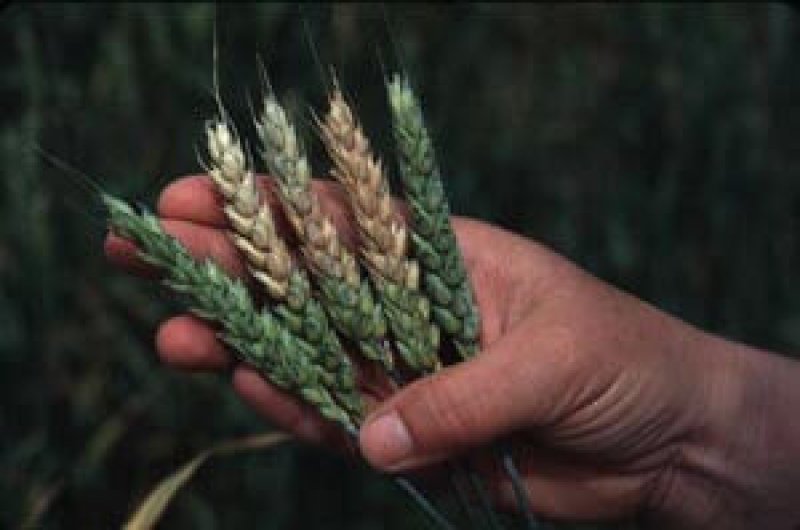
Fungal blights may be harmful to human health. As such, a safer, blight resistant wheat may win the hearts of organic farmers. Credit: American Phytopathological Society

The International Federation of Organic Agricultural Movements (IFOAM) said, in a paper, that “new genetic engineering technologies… are not compatible with organic farming and must not be used in organic breeding or organic production.”

That seems like a clear “no” around gene editing.

But the debate over gene-edited crops is not over in organics. Some farmers and industry leaders support gene editing.

Follow the latest news and policy debates on sustainable agriculture, biomedicine, and other ‘disruptive’ innovations. Subscribe to our newsletter.

“It is a very polarizing topic,” said Susanna Klassen, who is working on her PhD in sustainable food systems at the University of British Columbia.

“People tend to be on one side or other of this debate.”

Gene editing, or genome editing, is technology where scientists can delete or change specific genes in a plant to achieve desired traits. It’s different from the old transgenic technology, used to develop genetically modified crops.

Saskatchewan Crop Insurance Corp. data from 2019-20 shows the average yield from organic crops is about 40 to 50 percent of conventional crops.

If gene editing produced a wheat variety with better resistance to fusarium head blight, for example, organic growers could boost yields.

“You might get a slightly different answer (from farmers),” [researcher Sara] Nawaz said.

This is an excerpt. Read the original post here. 

{{ reviewsTotal }}{{ options.labels.singularReviewCountLabel }}
{{ reviewsTotal }}{{ options.labels.pluralReviewCountLabel }}
{{ options.labels.newReviewButton }}
{{ userData.canReview.message }}

Related Articles

Infographic: Global regulatory and health research agencies on whether glyphosate causes cancer

Infographic: Global regulatory and health research agencies on whether glyphosate causes cancer

Does glyphosate—the world's most heavily-used herbicide—pose serious harm to humans? Is it carcinogenic? Those issues are of both legal and ...

Most Popular

ChatGPT-Image-May-7-2026-12_16_37-PM-2
Viewpoint: Are cancer rates ‘skyrocketing’ as RFK, Jr. and MAHA claims? The evidence says mostly the opposite
Screenshot-2026-04-13-at-1.39.26-PM
Viewpoint: ‘Safer for children?’ Stonyfield yogurt under fire for deceptive organic marketing
Screenshot-2026-04-22-at-10.46.29-AM
Viewpoint: How to counter science disinformation? Science journalist offers 12 practical tips
png-pill-omega-Supp-fish-oil
Millions take omega-3 fish oil for brain health. New research suggests it may do the opposite.

Sorry. No data so far.

glp menu logo outlined

Get news on human & agricultural genetics and biotechnology delivered to your inbox.