Viewpoint: Slow Food movement claims two recent studies showing EU’s Green Deal Farm to Fork strategy would exacerbate climate change are flawed

Credit: Hootsuite Inc. via Twitter

The EU Farm to Fork Strategy has been repeatedly attacked and questioned by industrial farm lobbies, a number of conservative MEPs, and agri-business firms, which the publication of two controversial and incomplete “impact studies” has only kept fueling.

These studies published by the USDA (the United States Department of Agriculture) and Wageningen University & Research attempted to evaluate the Farm to Fork’s economic impact and concluded that the proposed changes would lay the ground for a significant reduction in EU agricultural productivity, competitiveness and farmers’ income.

Follow the latest news and policy debates on sustainable agriculture, biomedicine, and other ‘disruptive’ innovations. Subscribe to our newsletter.

What the critics of the Farm to Fork Strategy omit to say, is that these studies are partial and incomplete. Partial because, as noted by IPES-Food, Corporate Europe Observatory, and the European Consumer Organization (BEUC), the study published by Wageningen University was sponsored by CropLife Europe of the pesticide industry.

Incomplete, because they only consider the impacts the Strategy may have on food production, whilst ignoring the changes in consumer behaviour that would result from the strategies’ other objectives.
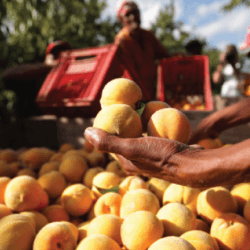
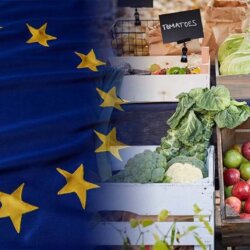
These studies refuse to acknowledge the changes already happening, from initiatives to tackle food waste to shifts in people’s diets and to farmers turning to nature-friendly agriculture.


This is an excerpt. Read the original post here.

{{ reviewsTotal }}{{ options.labels.singularReviewCountLabel }}
{{ reviewsTotal }}{{ options.labels.pluralReviewCountLabel }}
{{ options.labels.newReviewButton }}
{{ userData.canReview.message }}

Related Articles

Infographic: Global regulatory and health research agencies on whether glyphosate causes cancer

Infographic: Global regulatory and health research agencies on whether glyphosate causes cancer

Does glyphosate—the world's most heavily-used herbicide—pose serious harm to humans? Is it carcinogenic? Those issues are of both legal and ...

Most Popular

ChatGPT-Image-May-7-2026-12_32_36-PM
Viewpoint: The state of U.S. vaccine policy? Dismal nationally, but some states are stepping up.
Screenshot-2026-04-22-at-10.46.29-AM
Viewpoint: How to counter science disinformation? Science journalist offers 12 practical tips
Screenshot-2026-04-13-at-1.39.26-PM
Viewpoint: ‘Safer for children?’ Stonyfield yogurt under fire for deceptive organic marketing
the magic of mRNA
Viewpoint: Anti-vax fake ‘turbo cancer’ claims threaten cancer treatment breakthroughs
ChatGPT-Image-May-7-2026-12_16_37-PM-2
Viewpoint: Are cancer rates ‘skyrocketing’ as RFK, Jr. and MAHA claim? The evidence says mostly the opposite
Picture1-1
Cooling the planet with balloons: Could a geoengineering gamble slow global warming?
artificial intelligence brain think illustration md
Viewpoint — Digital gods and human extinction: Will we be the first species ever to design our own descendants?
Defense_Secretary_Ash_Carter_tours_the_Microsoft_Cybercrime_Center_in_Seattle_March_3_2016
How criminals are using AI to target social media users and steal their money and confidential data
ChatGPT-Image-May-7-2026-01_23_27-PM-2
Viewpoint: Will AI democratize personalized cancer treatment or fuel medical misinformation?
Picture1-14
When superbugs threaten vulnerable children: Can AI help solve antibiotic resistance?
glp menu logo outlined

Get news on human & agricultural genetics and biotechnology delivered to your inbox.