Genetics has come a long way since Gregor Mendel mapped inheritance using peas: Deconstructing the muddle of genetics and inheritance

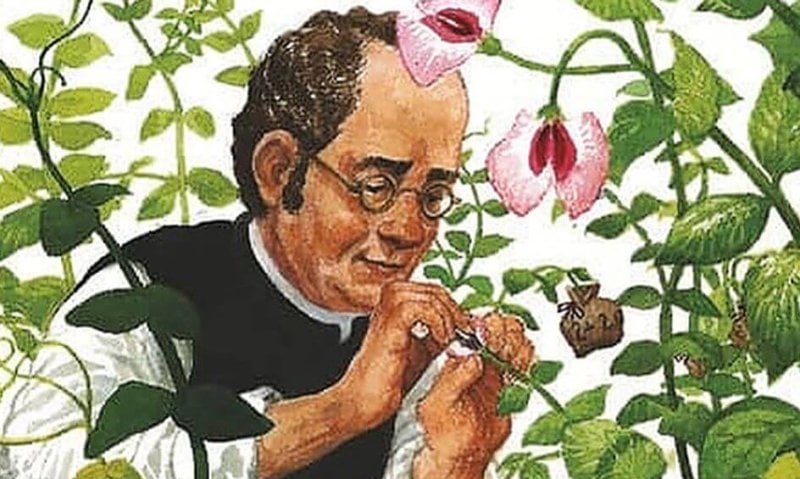
Artwork of Gregor Mendel working on pea plants. Credit: Outschool

The year was 1900. Three European botanists โ€” one Dutch, one German and one Austrian โ€” all reported results from breeding experiments in plants.

Each claimed that they had independently discovered some remarkable patterns in inheritance that had been noticed by Gregor Mendel decades earlier and reported in โ€œVersuche รผber Pflanzen-Hybriden,โ€ or โ€œExperiments in Plant Hybridization.โ€ย 

Follow the latest news and policy debates on sustainable agriculture, biomedicine, and other ‘disruptive’ innovations. Subscribe to our newsletter.

Yet at the time, โ€œthere was no such discipline as genetics, nor was there a concept of the gene,โ€ says Yafeng Shan, a philosopher of science at the University of Kent in England.ย 

โ€ฆ

From the muddle of ideas, Shan says, those three reports at the dawn of the 20th century helped introduce Mendelโ€™s work to other scientists in the fledgling field of heredity.

That set the stage for the development of Mendelian genetics as we know it today, and no doubt played into a centuryโ€™s worth of developments in molecular biology, from the discovery of the structure of DNA to the sequencing of the human genome and the rise of genetic engineering.

The path to our current understanding of the inheritance and variation at the heart of modern biology has been far more winding than most biology textbooks reveal.


This is an excerpt. Read the original post here.ย 

{{ reviewsTotal }}{{ options.labels.singularReviewCountLabel }}
{{ reviewsTotal }}{{ options.labels.pluralReviewCountLabel }}
{{ options.labels.newReviewButton }}
{{ userData.canReview.message }}

Related Articles

Infographic: Global regulatory and health research agencies on whether glyphosate causes cancer

Infographic: Global regulatory and health research agencies on whether glyphosate causes cancer

Does glyphosateโ€”the world's most heavily-used herbicideโ€”pose serious harm to humans? Is it carcinogenic? Those issues are of both legal and ...

Most Popular

newborn infant baby mother
Facts & Fallacies Podcast: The truth about vitamin K shots
Screenshot-2026-06-16-at-10.02.22-PM
Viewpoint: โ€˜Industrial foodโ€™ primerโ€”Challenging the dangerous delusions of the alternative food movement
ChatGPT-Image-Jun-9-2026-01_11_37-PM
Turmeric supplements: More risks than benefits
ChatGPT-Image-Jun-16-2026-10_29_11-AM
Whatโ€™s behind Anthropicโ€™s warning about the accelerating development of AI
ChatGPT Image Jun 16, 2026, 12_03_37 PM
Kennedy accused of trying to โ€˜bullyโ€™ science journal that retracted study linking vaccines to infant deaths
ChatGPT-Image-Jun-16-2026-10_01_45-AM-2
Viewpointโ€”Recursive self-improvement: AI leader Anthropic calls for AI slowdown
ChatGPT-Image-Jun-3-2026-04_29_13-PM
Viewpoint: While unvaccinated children are dying overseas, Congress challenges Trump and Kennedyโ€™s block on aid
Screenshot-2026-06-16-at-11.23.32-AM
In a rebuke to RFK, Jr.โ€™s anti-vax crusade, journal retracts study claiming hepatitis B vaccineโ€“autism link
Screen Shot at AM
Facts & Fallacies Podcast: Right-wing politics bad for your health? Separating speculation from science
ChatGPT-Image-Jun-15-2026-11_00_13-AM-2
Glucosamine alert: Alzheimerโ€™s progresses faster among those taking the popular supplement
Screenshot-2026-06-14-at-9.53.54-AM
Is the World Cup a perfect storm for the spread of infectious diseases?
Screenshot-2026-06-05-at-2.12.30-PM
Some plants can poison you. So how did humans figure out what is safe to eat?
ChatGPT-Image-Mar-10-2026-01_39_01-PM
Viewpointโ€”โ€œMiracle moleculeโ€ debunked: Why acemannan supplements donโ€™t work
glp menu logo outlined

Get news on human & agricultural genetics and biotechnology delivered to your inbox.