Purple tomatoes? Superfood genetically engineered tomato rich in antioxidants nearing United States rollout

Credit: John Innes Centre

The purple tomato was created by Cathie Martin at the John Innes Centre in the UK. In 2008, her team reported that mice whose diet was supplemented with purple tomato powder lived nearly 30 per cent longer than those on a standard diet or a diet supplemented with powder from normal tomatoes.

“A 30 per cent longer lifespan is incredible,” she said during the presentation, though of course the results of animal studies don’t necessarily apply to people.

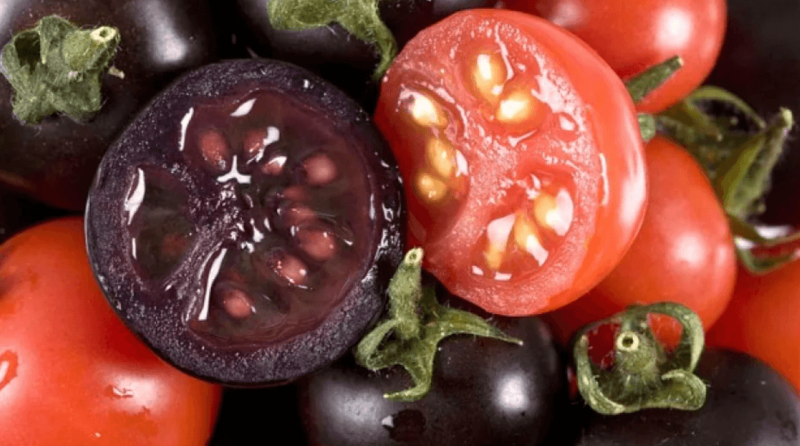
There are already tomato varieties with purple skins, but the genetically modified purple tomatoes have purple flesh as well. They contain around 10 times more anthocyanins, which are antioxidant pigments.

To achieve this, Martin added two genes from snapdragon (Antirrhinum) plants and one from thale cress (Arabidopsis). The added genes are active only in the fruits, where they boost the activity of the plants’ existing machinery for making anthocyanins.


Follow the latest news and policy debates on sustainable agriculture, biomedicine, and other ‘disruptive’ innovations. Subscribe to our newsletter.

“We aim to market these tomatoes as nutritionally enhanced, but not with any specific health claims,” said Nathan Pumplin at Norfolk Plant Sciences during the presentation.

The higher level of anthocyanins also doubles the shelf life of the tomatoes. That means the purple tomatoes should be more environmentally friendly than comparable varieties.

This is an excerpt. Read the original post here.

{{ reviewsTotal }}{{ options.labels.singularReviewCountLabel }}
{{ reviewsTotal }}{{ options.labels.pluralReviewCountLabel }}
{{ options.labels.newReviewButton }}
{{ userData.canReview.message }}

Related Articles

Infographic: Global regulatory and health research agencies on whether glyphosate causes cancer

Infographic: Global regulatory and health research agencies on whether glyphosate causes cancer

Does glyphosate—the world's most heavily-used herbicide—pose serious harm to humans? Is it carcinogenic? Those issues are of both legal and ...

Most Popular

Screenshot-2026-04-22-at-12.21.32-PM
Viewpoint: Why the retracted Monsanto glyphosate study doesn’t change the science—the world’s most popular herbicide is safe 
Picture1
The FDA couldn’t find a vaccine safety crisis, so it buried its own research
ChatGPT-Image-May-1-2026-11_42_59-AM-2
Viewpoint: NAD is the wellness grifters latest evidence-lite longevity fad. At least the mice are impressed.
ChatGPT-Image-Apr-16-2026-02_56_53-PM
Financial incentives, over diagnosis, and weak oversight: Autism claims are driving up Medicare costs
global warming
‘Implausible’: Top climate scientists reject worst-case scenario—soaring temperatures and fast-rising sea levels
Screenshot-2026-05-21-at-12.15.17-PM
UK gene-editing milestone: Livestock barley that increases ruminant value and reduces methane emissions is first-approved CRISPR crop
Screenshot-2026-05-21-at-3.15.53-PM
Chiropractors may no longer be modern-day snake oil salesmen, but the benefits of their therapy are limited–at best
ChatGPT-Image-May-12-2026-11_27_01-AM-2
AI likely to improve health care, research shows—but not for blacks and ethnic minorities

Sorry. No data so far.

glp menu logo outlined

Get news on human & agricultural genetics and biotechnology delivered to your inbox.