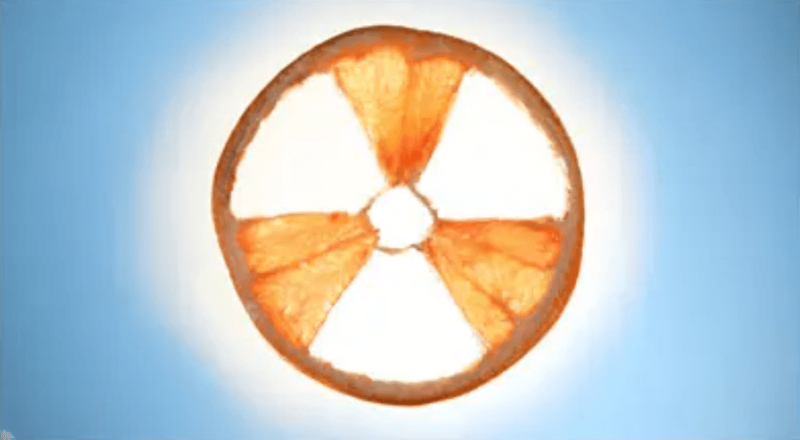
Love organic sweet Ruby Red grapefruits? Did you know it’s one of thousands of plants developed by shooting gamma rays at seeds?

Credit: New York Times

You may be amazed to hear that some of the ‘natural’ foodstuffs you eat today may have also originated from mutant plants — large atomic farms that expose growing seeds and pollen to radiation to mutate their DNA.

Follow the latest news and policy debates on sustainable agriculture, biomedicine, and other ‘disruptive’ innovations. Subscribe to our newsletter.

The world’s leading nuclear scientists initially conducted the experiments in giant atomic gardens on the grounds of national laboratories in the US and Europe.

In some instances, this extensive experimentation with genetic mutations led to traits in crops such as larger seeds, cold and disease resistance, new colors, or sweeter fruits never seen in nature or lost during evolution. However, the results from these expansive atomic facilities remain cloaked in secrecy, with the majority of statistics passed down via oral histories. Results went unpublished for the most part and the location of these gardens was shrouded in secrecy.

Still, reading the available literature, one can glean that the practice of plant irradiation resulted in over 2000 new varieties of plants – now rumored to be used in agricultural production by various publications. One solid example is the Rio Star Grapefruit, developed at the Texas A&M Citrus Center in the 1970s, now accounting for over 75% of all grapefruit produced in Texas.


This is an excerpt. Read the original post here.

{{ reviewsTotal }}{{ options.labels.singularReviewCountLabel }}
{{ reviewsTotal }}{{ options.labels.pluralReviewCountLabel }}
{{ options.labels.newReviewButton }}
{{ userData.canReview.message }}

Related Articles

Infographic: Global regulatory and health research agencies on whether glyphosate causes cancer

Infographic: Global regulatory and health research agencies on whether glyphosate causes cancer

Does glyphosate—the world's most heavily-used herbicide—pose serious harm to humans? Is it carcinogenic? Those issues are of both legal and ...

Most Popular

Picture1
The FDA couldn’t find a vaccine safety crisis, so it buried its own research
Screenshot-2026-04-22-at-12.21.32-PM
Viewpoint: Why the retracted Monsanto glyphosate study doesn’t change the science—the world’s most popular herbicide is safe 
ChatGPT-Image-May-7-2026-12_32_36-PM
Viewpoint: The state of U.S. vaccine policy? Dismal nationally, but some states are stepping up.
_20250221_nib_rfk_trump
Viewpoint: 'Crisis of public trust': Autism support community shocked RFK continues to peddle false claims about the danger of vaccines
placebo
Viewpoint — Alternative medicine and the placebo effect: Selling a reassuring illusion of health
ChatGPT-Image-May-18-2026-01_45_05-PM-2
Newest hantavirus conspiracy: Online disinformation turns outbreak into latest ivermectin grift
ChatGPT-Image-May-18-2026-12_06_18-PM-2
Defying death: The immortality movement goes mainstream
Screenshot-2026-04-13-at-1.39.26-PM
Viewpoint: ‘Safer for children?’ Stonyfield yogurt under fire for deceptive organic marketing
Screenshot-2026-04-22-at-10.46.29-AM
Viewpoint: How to counter science disinformation? Science journalist offers 12 practical tips
Defense_Secretary_Ash_Carter_tours_the_Microsoft_Cybercrime_Center_in_Seattle_March_3_2016
How criminals are using AI to target social media users and steal their money and confidential data
glp menu logo outlined

Get news on human & agricultural genetics and biotechnology delivered to your inbox.