Despite controversy and rising prices, farmers in Pennsylvania Amish country recommit to using glyphosate for no-till, reduced carbon-release farming

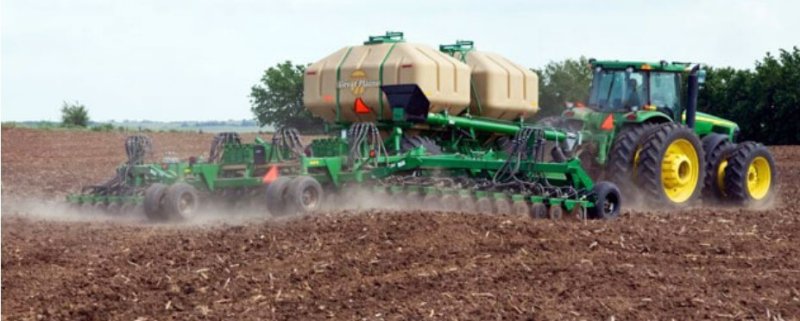
Herbicides are a critical component of no till operations. What alternatives are there for growers to succeed? Credit: John Deere

Sharpย price increases for glyphosateย and other chemicals, not to mention fears over shortages, will likely mean drastically higher input costs this year for those who practice no-till.

But that doesnโ€™t mean farmers are ready to turn to plows and other tillage equipment in order to lessen the need for chemicals with no-till.

โ€œWe havenโ€™t really heard of many people looking to tillage as an alternative to no-till this year, and Iโ€™m not encouraging people to use tillage as an alternative to glyphosate,โ€ said Eric Rosenbaum, executive director of the Pennsylvania Corn Growers Association.

Follow the latest news and policy debates on sustainable agriculture, biomedicine, and other ‘disruptive’ innovations. Subscribe to our newsletter.

Andrew Frankenfield, an agronomy educator with Penn State Extension, believes even though crop rotations could change, reliance on no-till wonโ€™t waiver this season. A switch to tillage will still come at a cost resulting from higher fuel prices, he said, and the benefits of no-till are just to great to give up.
โ€œI think farmers are going to pay whatever they have to in order to stay with no-till, but the question surrounding herbicides is can they get it?โ€ Frankenfield said. โ€œThere are farmers that paid for their Roundup and havenโ€™t gotten it yet. In a normal year you wouldnโ€™t be worried, but right now thereโ€™s a lot of anxiety about it.โ€

This is an excerpt. Read the original post here.

{{ reviewsTotal }}{{ options.labels.singularReviewCountLabel }}
{{ reviewsTotal }}{{ options.labels.pluralReviewCountLabel }}
{{ options.labels.newReviewButton }}
{{ userData.canReview.message }}

Related Articles

Infographic: Global regulatory and health research agencies on whether glyphosate causes cancer

Infographic: Global regulatory and health research agencies on whether glyphosate causes cancer

Does glyphosateโ€”the world's most heavily-used herbicideโ€”pose serious harm to humans? Is it carcinogenic? Those issues are of both legal and ...

Most Popular

Screenshot-2026-04-13-at-1.39.26-PM
Viewpoint: โ€˜Safer for children?โ€™ Stonyfield yogurt under fire for deceptive organic marketing
Screenshot-2026-04-22-at-10.46.29-AM
Viewpoint: How to counter science disinformation? Science journalist offers 12 practical tips
ChatGPT-Image-May-7-2026-12_16_37-PM-2
Viewpoint: Are cancer rates โ€˜skyrocketingโ€™ as RFK, Jr. and MAHA claim? The evidence says mostly the opposite
Picture1-14
When superbugs threaten vulnerable children: Can AI help solve antibiotic resistance?
ChatGPT-Image-May-12-2026-08_39_41-PM
GLP podcast: Big Pharma, Big Ag, Big Foodโ€”health harming industries or life-saving innovators?
Screenshot-2026-04-23-at-11.00.36-AM
Regulators' dilemma: Thalidomide, Metformin, and the cost of getting drug approvals wrong
Picture1-1
Cooling the planet with balloons: Could a geoengineering gamble slow global warming?
png-pill-omega-Supp-fish-oil
Millions take omega-3 fish oil for brain health. New research suggests it may do the opposite.
glp menu logo outlined

Get news on human & agricultural genetics and biotechnology delivered to your inbox.