Researchers have identified stem rust resistance in the wild cereal plant Aegilops sharonensis and successfully transferred the resistance gene into bread wheat.
Stem rust is a significant disease in wheat crops around the world, with outbreaks expected to become more common under future scenarios of climate change.
The reemergence of the disease over the past few decades highlights the importance of developing new wheat varieties with broad-spectrum ongoing resistance to stem rust, says KAUST researcher Brande Wulff.
An international research team, including Wulff and lead author Guotai Yu, have recently identified a stem rust resistance gene in Aegilops sharonensis and transferred it to common wheat. The new transgenic wheat lines show high levels of resistance to the stem rust pathogen.
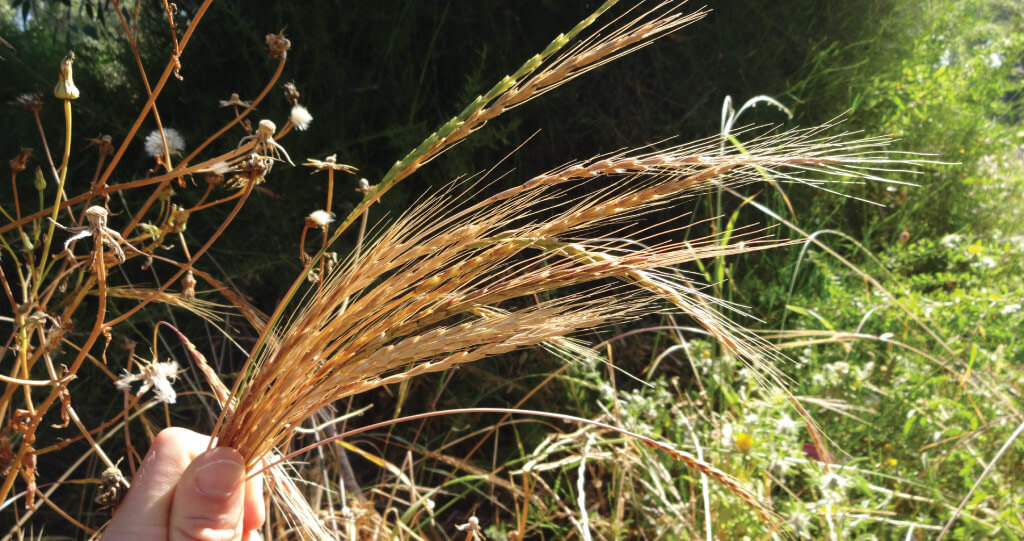
So far, 58 stem rust resistance genes have been identified in wheat, with almost half of these introduced from wild and domesticated species of wheat and other cereals. Ae. sharonensis is a wild relative of wheat found in Israel and southern Lebanon. The species possesses many traits of agricultural importance, including resistance to major wheat diseases such as rust, but its genetic potential remains largely untapped.
“Advances in genomics and bioinformatics are fueling an exponential growth in the discovery and cloning of disease resistance genes in wheat and its wild relatives,” says Yu. “This is providing exciting opportunities for engineering broad-spectrum and durable disease resistance into wheat.”

“The key advances that have allowed us to do this work are a steep fall in the cost of DNA sequence acquisition and improvements in data storage, computer power and bioinformatics,” adds Wulff.
Importantly, the team has published a “reference genome”, which will support ongoing efforts to clone other resistance genes.

“This means that most of the genome has been assembled into connecting stretches of DNA that, in turn, have been ordered according to their physical orientation in the genome,” explains Wulff.
This genome assembly will be useful in future studies aimed at cloning genes from Ae. sharonensis, understanding the evolution of wild grasses and domestication of wheat.
So far about 80 genes have been cloned in wheat, of which about 40 are disease-resistance genes and of these, 30 are resistant for the rusts (wheat stem rust, stripe rust and leaf rust).
Wulff says that now the raw material is available to engineer some formidable stacks containing multiple resistance genes for each rust gene.
“Such polygene stacks would be very difficult for the pathogen to overcome, potentially turning wheat into a nonhost for these devastating diseases,” predicts Wulff.
“If I were a wheat rust now, I would be shaking in my spore.”