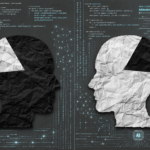
Scientists have discovered that humans, unlike our Neanderthal cousins, evolved the ability to meditate to deal with both past and future stresses.
Humans and Neanderthals share an important evolutionary stage with the development of parietal lobes.
The key progression awakened the capacity to pay attention and live in the moment, but it has emerged that only humans (Homo sapiens) went on to expand the advantage to the point where individuals had conscious control of their minds.
The study shows that changes in the brain’s parietal lobes were very subtle in Neanderthals who had a highly developed ability for attention.
This attention span reached maturity in modern humans who experienced a huge change in the size of their parietal lobes.

…
[Researcher Emiliano] Bruner explained that it is impossible to conclude that Neanderthals had the ability to meditate as they did not have the same stress and anxiety as modern humans because their attention was centered on the present and did not jump between the past and the future as it is the case with modern Homo sapiens.
Meditation or mindfulness trains the perceptual and attention system and is studied in neuroscience for its ability to keep attention focused on the present.