India debates new ways to make biofuels as sustainability threats rise

Credit: ThoughtCo
Credit: ThoughtCo

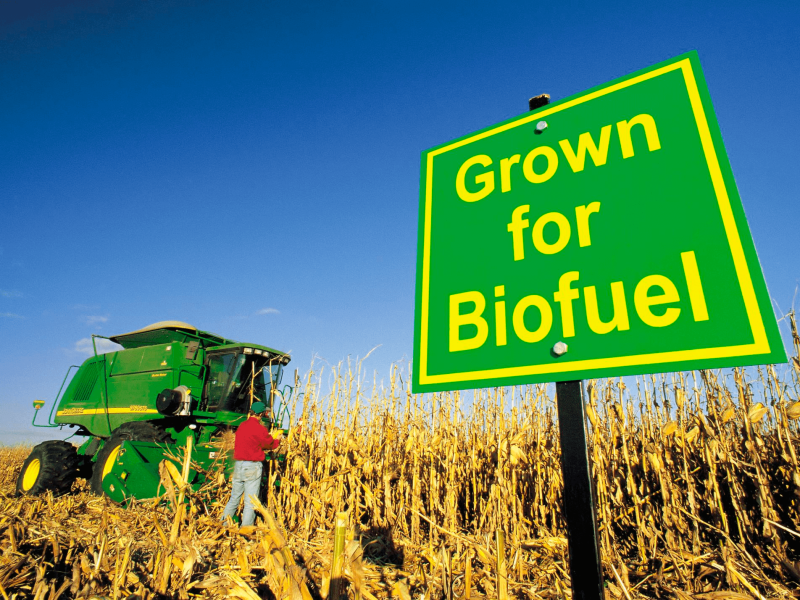
The main advantages of biofuels over conventional fossil fuels is that the world is unlikely to deplete its sources of biofuels, as they are renewable. In addition, most biofuels have lower greenhouse gas emissions than fossil fuels. For many countries such as India, domestic biofuel production can reduce the consumption of imported fossil fuels, which provides economic gains, in addition to shielding against supply disruptions and fuel price fluctuations. Despite these advantages, the environmental sustainability of biofuel production due to its negative effects on food security and land-use changes, remains unclear.

Follow the latest news and policy debates on sustainable agriculture, biomedicine, and other ‘disruptive’ innovations. Subscribe to our newsletter.
[Promit] Mookherjee says that these targets can have very serious effects on food security and the agricultural sector. “On one hand, it may benefit farmers who will have a ready market for their crops and receive higher prices for their products, but on the other hand, it could also lead to massive land-use changes that could negate the carbon reduction achieved by switching to biofuels.”

India needs to develop alternative feedstocks for biodiesel production. There are 11 Indian tree species that have been identified as having high oil-content seeds; these need to be investigated for their feasibility in biodiesel production. In addition, India produces around three million tonnes of used cooking oil, which could be an important feedstock for biodiesel production.


This is an excerpt. Read the original post here

{{ reviewsTotal }}{{ options.labels.singularReviewCountLabel }}
{{ reviewsTotal }}{{ options.labels.pluralReviewCountLabel }}
{{ options.labels.newReviewButton }}
{{ userData.canReview.message }}

Related Articles

Infographic: Global regulatory and health research agencies on whether glyphosate causes cancer

Infographic: Global regulatory and health research agencies on whether glyphosate causes cancer

Does glyphosate—the world's most heavily-used herbicide—pose serious harm to humans? Is it carcinogenic? Those issues are of both legal and ...

Most Popular

Screenshot-2026-04-14-at-11.11.06-AM
‘Turbo cancer’ or mRNA cancer cure? Strategies to counter misinformation
Picture1
The Orange Bowl without oranges: Can CRISPR save Florida citrus?
ChatGPT-Image-May-22-2026-10_26_09-AM
Gutting the National Science Board: How the Trump-RFK, Jr. crusade is erasing the separation of science and state
Screenshot 2025-11-12 at 3.28
GLP podcast: Evolutionary biologist debunks the 'sex spectrum'
Screenshot-2026-04-22-at-12.21.32-PM
Viewpoint: Why the retracted Monsanto glyphosate study doesn’t change the science—the world’s most popular herbicide is safe 
Screenshot 2026-05-22 at 3.28
Vagus nerve wellness grift: How to build a billion dollar business. Are you listening, Kelly Ripa?
ChatGPT-Image-May-26-2026-09_19_32-AM
Viewpoint— “A safe space to chat, flirt, and be intimate without sex”: Are new AI companies exploiting vulnerable asexuals?
ChatGPT-Image-Apr-16-2026-02_56_53-PM
Financial incentives, over diagnosis, and weak oversight: Autism claims are driving up Medicare costs
ChatGPT-Image-Mar-10-2026-01_39_01-PM
Viewpoint—“Miracle molecule” debunked: Why acemannan supplements don’t work
global warming
‘Implausible’: Top climate scientists reject worst-case scenario—soaring temperatures and fast-rising sea levels
ChatGPT-Image-May-26-2026-09_04_31-AM-2
Hantavirus revives COVID-era conspiracies and distrust in public health 
ChatGPT Image May 26, 2026, 12_06_53 PM
Fake Ebola cure promoters already cashing in as disinformation videos flood social media
glp menu logo outlined

Get news on human & agricultural genetics and biotechnology delivered to your inbox.