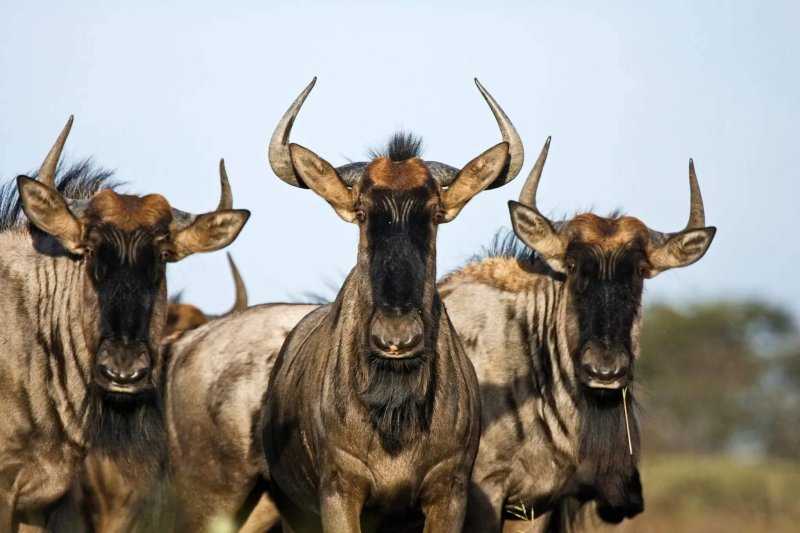
Next up on the lab-grown meat menu? Wild animals like wildebeest, springbok and impala

Wildebeest just look delicious. Credit: Vincent Grafhorst via Minden Pictures

The global push to develop lab-grown meat is taking an exotic twist in South Africa, where slaughter-free cuts of springbok, wildebeest and impala could soon be on the menu.

Mogale Meat Co has already produced Africa’s first cell-based chicken and is now developing a range of game meats without having to kill wildlife. While still in the research phase, the start-up says the first product could be ready this year, with commercial production planned within three years.

The company is targeting “the average meat consumer” who’s increasingly opting for free-range or organic products, but isn’t attracted to plant-based alternatives, said CEO Paul Bartels, a wildlife veterinarian who used his life savings to start the firm in 2020.

Follow the latest news and policy debates on sustainable agriculture, biomedicine, and other ‘disruptive’ innovations. Subscribe to our newsletter.

South African regulators haven’t kept pace with science, and there’s currently no classification for lab-grown meat, said Janusz Luterek, a lawyer specialising in food regulations at Pretoria-based Hahn & Hahn Attorneys. Meat is classified as “carcass” or part of an animal, rather than being “grown in a tank”, he said.

The department of agriculture, land reform & rural development said there was no timeframe for approval. “Once sufficient information is built around cultivated meat or cellular agriculture, the department will not stand in the way of crafting legislation that focuses on the sale of cultivated meat,” it said.


This is an excerpt. Read the original post here

{{ reviewsTotal }}{{ options.labels.singularReviewCountLabel }}
{{ reviewsTotal }}{{ options.labels.pluralReviewCountLabel }}
{{ options.labels.newReviewButton }}
{{ userData.canReview.message }}

Related Articles

Infographic: Global regulatory and health research agencies on whether glyphosate causes cancer

Infographic: Global regulatory and health research agencies on whether glyphosate causes cancer

Does glyphosate—the world's most heavily-used herbicide—pose serious harm to humans? Is it carcinogenic? Those issues are of both legal and ...

Most Popular

ChatGPT-Image-May-7-2026-12_16_37-PM-2
Viewpoint: Are cancer rates ‘skyrocketing’ as RFK, Jr. and MAHA claims? The evidence says mostly the opposite
Screenshot-2026-04-13-at-1.39.26-PM
Viewpoint: ‘Safer for children?’ Stonyfield yogurt under fire for deceptive organic marketing
Screenshot-2026-04-22-at-10.46.29-AM
Viewpoint: How to counter science disinformation? Science journalist offers 12 practical tips
png-pill-omega-Supp-fish-oil
Millions take omega-3 fish oil for brain health. New research suggests it may do the opposite.
ChatGPT Image May 14, 2026, 09_51_35 PM
Facebook swamped by hundreds of thousands of scam ads for illegal or dangerous medical products
Picture1-5
Science Disinformation Gap: The transatlantic battle over social media and censorship
Screenshot-2026-04-23-at-11.00.36-AM
Regulators' dilemma: Thalidomide, Metformin, and the cost of getting drug approvals wrong
ChatGPT Image May 12, 2026, 01_21_30 PM
How big health brands are funding online medical misinformation 
ChatGPT-Image-May-13-2026-12_43_37-PM-2
Longevity: Is cellular rejuvenation even possible?
glp menu logo outlined

Get news on human & agricultural genetics and biotechnology delivered to your inbox.