Do you sleep through the night? Your brain rhythmically oscillates between awake and asleep up to 100 times a night

Credit: Sleepopolis
Credit: Sleepopolis

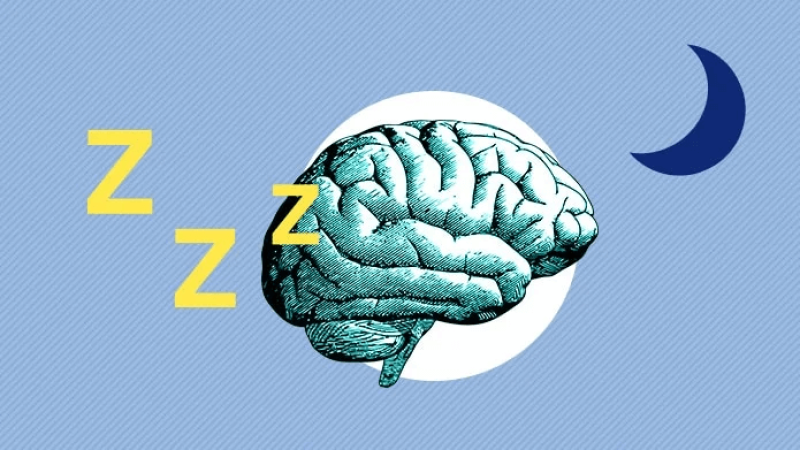
Sleep is a complex neurological process characterized by shifting brain patterns, fluids flushing in and out of the skull, and a drop in body temperature, all with the apparent aim of restoring the brain as its waking functions are disabled.

In this process, the hormone norepinephrine appears to play a significant role, even though it’s released at lower levels during sleep compared to when we’re awake. 

Follow the latest news and policy debates on sustainable agriculture, biomedicine, and other ‘disruptive’ innovations. Subscribe to our newsletter.

“We have learned that noradrenaline causes you to wake up more than 100 times a night,” co-first author Celia Kjærby, an assistant professor from the Center for Translational Neuromedicine, said in a statement.

“Neurologically, you do wake up, because your brain activity during these very brief moments is the same as when you are awake. But the moment is so brief that the sleeper will not notice,” PhD student Mie Andersen, the other co-first author of the study, added.

“You could say that the short awakenings reset the brain so that it is ready to store memory when you dive back into sleep,” Maiken Nedergaard, a Professor of Glial Cell Biology at the University of Copenhagen, speculated.

Indeed, when the researchers artificially reduced the amplitude of norepinephrine’s oscillation in mice’s sleeping brains, either through genetic engineering or pharmaceuticals, they found that the mice performed worse on memory tests compared to unaltered controls.


This is an excerpt. Read the original post here

{{ reviewsTotal }}{{ options.labels.singularReviewCountLabel }}
{{ reviewsTotal }}{{ options.labels.pluralReviewCountLabel }}
{{ options.labels.noReviewsLabel }}
{{ options.labels.newReviewButton }}
{{ userData.canReview.message }}

Related Articles

Infographic: Global regulatory and health research agencies on whether glyphosate causes cancer

Infographic: Global regulatory and health research agencies on whether glyphosate causes cancer

Does glyphosate—the world's most heavily-used herbicide—pose serious harm to humans? Is it carcinogenic? Those issues are of both legal and ...

Most Popular

organic scaled
Facts & Fallacies podcast: Organic food cuts pesticide exposure? A response to Dr. Rhonda Patrick
ChatGPT-Image-Mar-10-2026-01_39_01-PM
Viewpoint—“Miracle molecule” debunked: Why acemannan supplements don’t work
using genetics to reverse aging
Is the longevity obsession a new form of ageism?
Screenshot-2026-07-01-at-2.49.48-PM
Dr. TikTok and male fertility: Viral claims tout GLP-1 drugs as fertility boosters. What does the science say?

kratom
Viewpoint: Kratom ‘supplement’ crisis: DEA sits on its hands while patient addictions to this ineffective drug  rise
ChatGPT-Image-Jun-25-2026-02_53_56-PM
Embryo gene editing is on the horizon, stirring mixed emotions
ChatGPT-Image-Jul-6-2026-02_25_26-PM
40 million Americans take glucosamine. If you have memory loss, it could accelerate cognitive decline.
Screenshot 2026-07-22 at 10.25
Science brain drain escalates as Trump purge extends to USDA
a-mature-farmer-working-in-the-field-at-sunrise-harvesting-crops-generated-by-ai-photo
What’s the prospect of developing gene-altered crops that are more nutritious and resist climate disruption
Blood blockage
High cholesterol? FDA approves effective oral medication
Screenshot-2026-07-21-at-6.22.06-PM
The Indian physician’s one-woman battle against health disinformation on Wikipedia
png-upside-food-syn-bio-cultured-meat
Regulating cultured meat around the world
file-f-d-d-
Facts & Fallacies Podcast: Europe's AC debacle underscores fatal flaw in green activism
ChatGPT-Image-Jun-25-2026-12_23_17-PM
No, Bill Gates did not secretly engineer ticks to promote veganism
glp menu logo outlined

Get news on human & agricultural genetics and biotechnology delivered to your inbox.