Viewpoint: ‘Precipice of a food security catastrophe’ — Re-shaping agriculture to fit the prejudices of urban perspectives could have dire global consequence

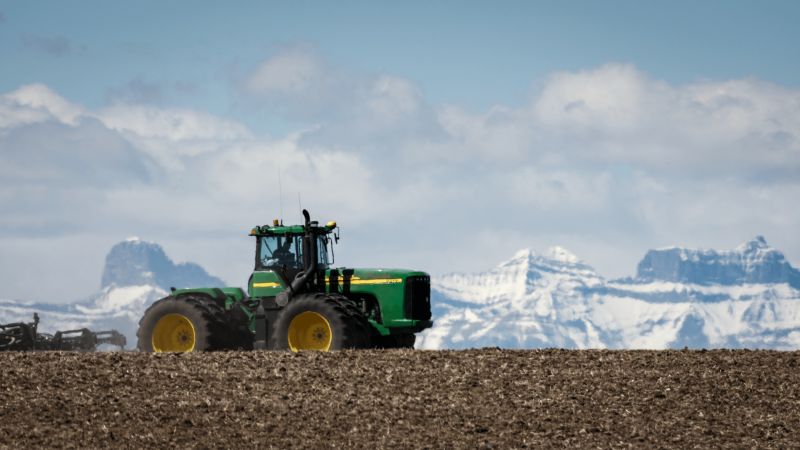
Credit: Jeff McIntosh/Canadian Press

For many Canadians, crop production is an unknown concept. Because of this, it’s relatively easy to use fear to influence public opinion on any food-related issue involving agriculture. Activists know this quite well.

Our great rural-urban divide has always fuelled our food politics and that’s not going to change anytime soon. But now, agri-food policies are increasingly becoming urbanized by an agenda that is pushing the entire western world toward the precipice of a food security catastrophe.

The Trudeau government wants a 30 per cent reduction in emissions by 2030, which doesn’t necessarily include fertilizer, but producers claim that reducing nitrous oxide emissions cannot be achieved without reducing fertilizer use.

Follow the latest news and policy debates on sustainable agriculture, biomedicine, and other ‘disruptive’ innovations. Subscribe to our newsletter.

Canada produces food for the world, not just for Canada. Aggressive emission targets will likely lead to more people, not fewer, experiencing famine around the world, none of whom will be Canadian. Since we trade with the rest of the world, and mostly with the United States, our crops would likely become less competitive as well.

With lower supplies, input costs for food manufacturers and grocers would likely increase significantly, pushing food prices higher. This is one aspect of the emission reduction issue in farming.


This is an excerpt. Read the original post here

{{ reviewsTotal }}{{ options.labels.singularReviewCountLabel }}
{{ reviewsTotal }}{{ options.labels.pluralReviewCountLabel }}
{{ options.labels.newReviewButton }}
{{ userData.canReview.message }}

Related Articles

Infographic: Global regulatory and health research agencies on whether glyphosate causes cancer

Infographic: Global regulatory and health research agencies on whether glyphosate causes cancer

Does glyphosate—the world's most heavily-used herbicide—pose serious harm to humans? Is it carcinogenic? Those issues are of both legal and ...

Most Popular

ChatGPT-Image-Jun-11-2026-01_15_03-PM
Selective Pressure, Selective Silence
ChatGPT Image Jun 3, 2026, 03_54_37 PM
Viewpoint: “Turn on, tune in, drop out”—Kennedy embraces the Timothy Leary psychedelic revolution
Screenshot 2026-05-26 at 10.15
Viewpoint: Double standard—Why does the wellness industry get a free pass while Big Healthcare is treated as morally suspect?
Screenshot-2026-06-11-at-3.40.06-PM
'Toxin' detox: A gastroenterologist weighs in on $71 billion health trend
Screenshot-2026-06-11-at-4.00.17-PM
Gen Z burned by sunscreen misinformation and tanning myths
Screenshot-2026-06-05-at-1.44.09-PM
Viewpoint: Scientists have scrapped the worst-case climate scenario. Is that proof that climate change is a hoax, as Trump claims?
Screenshot-2026-06-05-at-2.12.30-PM
Some plants can poison you. So how did humans figure out what is safe to eat?
Screenshot-2026-06-03-at-3.33.44-PM
Viewpoint: Vaccine deniers are attacking a life-saving Vitamin K shot for newborns that isn’t even a vaccine
ChatGPT-Image-Jun-11-2026-10_34_44-AM-2
Will hi-tech genetic fortune-telling really help parents make healthier children?
Screenshot-2026-06-08-at-1.35.30-PM
Viewpoint: Social media and fake natural health propaganda fuel surge in use of mostly useless supplements
ChatGPT-Image-Jun-10-2026-12_57_24-PM
Viewpoint: Why gene-editing babies is moral and certain to happen
Credit: ACSH
Viewpoint: Who and what’s to blame for the surge in vaccine-preventable diseases?
ChatGPT Image Jun 3, 2026, 03_14_43 PM
Viewpoint: How Earthjustice became the poster child for the abuse of special interest activist funding
glp menu logo outlined

Get news on human & agricultural genetics and biotechnology delivered to your inbox.