Viewpoint: Will late blight-proof GMO potatoes ever make it to Africa? Not if anti-biotech activists succeed in their scare campaigns

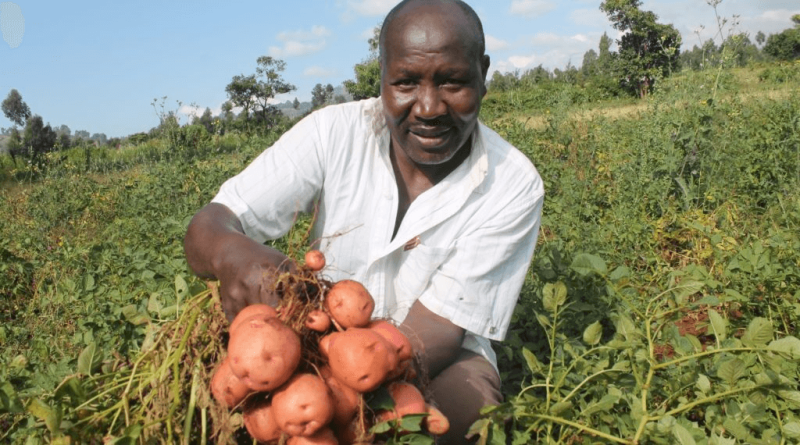
Credit: Potato News
Credit: Potato News

Despite increased potato production and high-yield potential, yields in developing countries have not reached their full potential. Smallholder farmers often lack access to quality seed and knowledge of effective disease management practices.

One of the most important potato diseases because of its effect on crop yield is late blight (the disease that caused the Irish potato famine in 19th century).

Mis- and disinformation are distorting science and public policy. Subscribe to our Daily and Weekly Digests for incisive coverage of ‘disruptive’ innovations in AI, agricultural biotechnology, food, chemicals, nuclear energy, vaccines, and other disruptive innovations.

The best way to overcome the problem of late blight is to produce a potato with durable resistance to the disease. An innovative solution to the grand challenge does exist, but the solution does not enjoy a consensus of support around the globe.

…

In agriculture, despite over 25 years of successful commercial production of many staple crops, GE crops still endure stiff criticism. The anti-GMO movement is well-funded and well-organized. [They claim harm] to human and environmental health; that GMOs are unnatural; and were developed by large multinational corporations looking to control the seed sector and farmers.
…

Many of those from the developed world can choose to select which organic, GE or conventionally bred food products to buy at a nearby store full of options. Billions of others are not afforded this choice. However, many GMO critics are making the choice for a farmer in Africa or Asia on which crops to grow and feed their communities by fighting against their use.


This is an excerpt. Read the original post here

Related Articles

Infographic: Global regulatory and health research agencies on whether glyphosate causes cancer

Infographic: Global regulatory and health research agencies on whether glyphosate causes cancer

Does glyphosate—the world's most heavily-used herbicide—pose serious harm to humans? Is it carcinogenic? Those issues are of both legal and ...

Most Popular

ChatGPT-Image-Mar-10-2026-01_39_01-PM
Viewpoint—“Miracle molecule” debunked: Why acemannan supplements don’t work
Screenshot-2026-09-28-at-2.41.21-PM
Viewpoint: 7-OH controversy: An opioid is available over-the-counter–even at gas stations. Should we be concerned?
Screenshot-2026-09-24-at-3.25.18-PM
No, organic eggs are not more nutritious or necessarily healthier than regular eggs. They are far more expensive.
Screenshot-2026-09-17-at-1.07.08-PM
'We are dangerously addicted to antidepressants': Should we heed RFK Jr.’s sobering warning?
ChatGPT-Image-Sep-25-2026-10_36_43-AM
New federal autism committee head has financial ties to leucovorin
ChatGPT-Image-Sep-25-2026-11_36_56-AM
Now AI almost started a war with China
ChatGPT-Image-Sep-22-2026-11_17_31-AM
The exploding controversy over AI’s built-in survival drive
ChatGPT-Image-Sep-2-2026-02_03_32-PM
How much of a problem is AI’s water use?
ChatGPT-Image-Sep-25-2026-11_57_15-AM
RFK, Jr. likely violated federal ethics guidelines in accepting more than $4,275,000 in gifts and book advances from MAHA allies
Screenshot-2026-09-16-at-10.27.33-AM
Viewpoint: SCOTUS poised to address First Amendment tension between mandatory vaccines, children’s health and religious freedom 
Woman_Vaping_Electronic_Cigarette_50687233623
Trump administration clears the way for speedy approvals of once-restricted tobacco vapes and pouches
glp menu logo outlined

Get news on human & agricultural genetics and biotechnology delivered to your inbox.