Viewpoint: Moderating agricultural pesticide use is a good idea — but only if it helps balance environmental and economic realities and is not just an ideological exercise

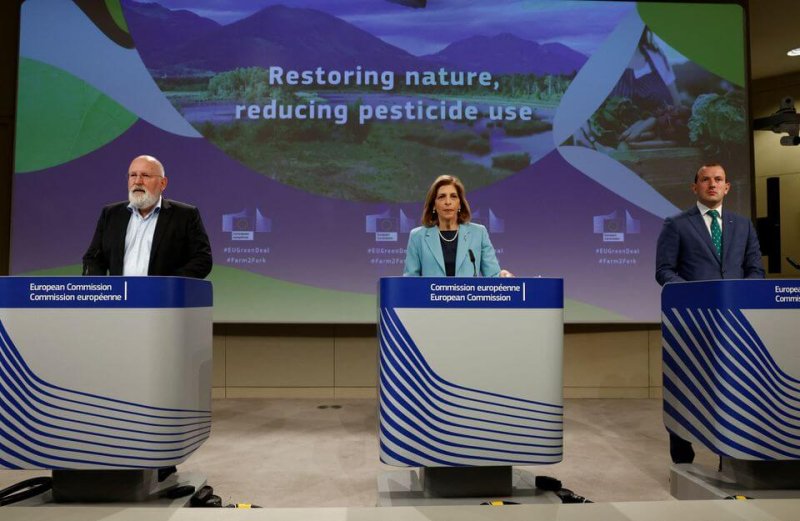
EU leaders meet in Belgium to discuss halving pesticide use. Credit: Yves Herman via Reuters

The EU is going too far in its control of pesticides. The Commission is updating the 2009 Sustainable Use Directive and upgrading it to a regulation.

So far so normal: more rules, more red tape around the use of pesticide.

In fairness, the use of pesticides does have an impact on the environment and it is right and proper that their use is monitored and controlled.

The issue with the proposals is how far they go in their desire to control and limit the use of pesticides.

Follow the latest news and policy debates on sustainable agriculture, biomedicine, and other ‘disruptive’ innovations. Subscribe to our newsletter.

It is also clear that any benefit from the regulation will be marginal and that habitat loss has a greater impact on the environment than pesticides have.

In summary, all pain with little or no gain. The proposals as they stand completely ignore 40 years of ongoing EU regulation into the availability and application of pesticides.

Pesticides available today are a completely different animal to the range available 40 years ago.

Regardless of how effective a pesticide is, its impact on the wider environment is the arbiter on whether it is available for use. This is as it should be, but the proposals ignore this.


This is an excerpt. Read the original post here

{{ reviewsTotal }}{{ options.labels.singularReviewCountLabel }}
{{ reviewsTotal }}{{ options.labels.pluralReviewCountLabel }}
{{ options.labels.newReviewButton }}
{{ userData.canReview.message }}

Related Articles

Infographic: Global regulatory and health research agencies on whether glyphosate causes cancer

Infographic: Global regulatory and health research agencies on whether glyphosate causes cancer

Does glyphosate—the world's most heavily-used herbicide—pose serious harm to humans? Is it carcinogenic? Those issues are of both legal and ...

Most Popular

ChatGPT-Image-May-7-2026-12_16_37-PM-2
Viewpoint: Are cancer rates ‘skyrocketing’ as RFK, Jr. and MAHA claim? The evidence says mostly the opposite
Screenshot-2026-04-22-at-10.46.29-AM
Viewpoint: How to counter science disinformation? Science journalist offers 12 practical tips
Screenshot-2026-04-13-at-1.39.26-PM
Viewpoint: ‘Safer for children?’ Stonyfield yogurt under fire for deceptive organic marketing
Picture1-14
When superbugs threaten vulnerable children: Can AI help solve antibiotic resistance?
Screenshot-2026-04-23-at-11.00.36-AM
Regulators' dilemma: Thalidomide, Metformin, and the cost of getting drug approvals wrong
Picture1-1
Cooling the planet with balloons: Could a geoengineering gamble slow global warming?
bigstock opioids on chalkboard with rol
GLP podcast: 'Safe injection sites': enabling drug addiction or saving lives?
ChatGPT-Image-May-12-2026-08_39_41-PM
GLP podcast: Big Pharma, Big Ag, Big Food—health harming industries or life-saving innovators?

Sorry. No data so far.

glp menu logo outlined

Get news on human & agricultural genetics and biotechnology delivered to your inbox.