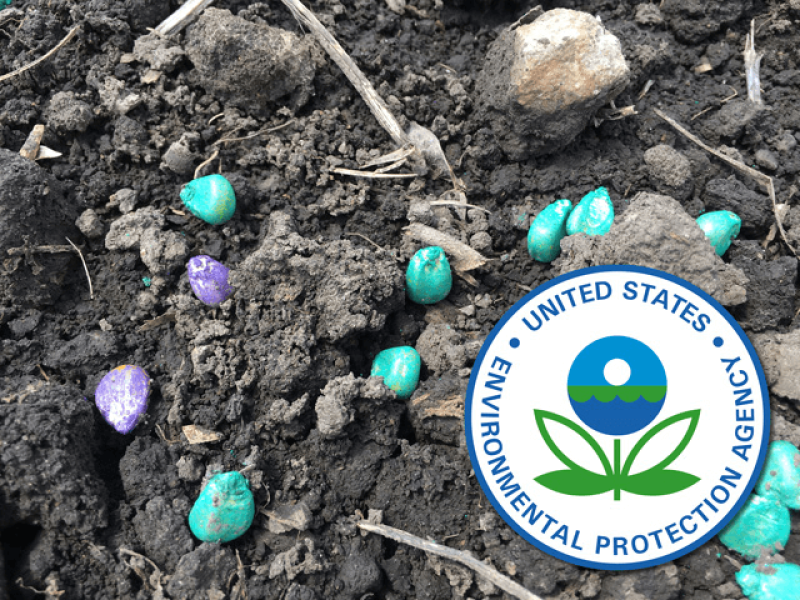
Environmental Protection Agency denies Center for Food Safety petition to ban neonicotinoid pesticides

Credit: DTN/Progressive Farmer

The Environmental Protection Agency denied a petition [September 28] that asked the federal agency to more closely regulate a group of chemicals used in pesticide-coated seeds, which are linked to killing pollinators such as hummingbirds and bumblebees.

The petition, filed in 2017 by nonprofits Center for Food SafetyPesticide Action Network of North America, and Pollinator Stewardship Council, among other groups, claimed that the EPA’s lack of regulation on the seeds “could precipitate an economic and ecological disaster.”

“We gave EPA a golden chance and a blueprint to fix a problem that has caused significant harm to people, bees, birds, and the environment — and it stubbornly refused,” said Amy van Saun, senior attorney with the Center for Food Safety, in a statement. “It’s extremely disappointing and we’ll be exploring all possible next steps to protect communities and the environment from the hazard of pesticide-coated seeds, including a lawsuit challenging this decision.”

Follow the latest news and policy debates on sustainable agriculture, biomedicine, and other ‘disruptive’ innovations. Subscribe to our newsletter.

In its responsive letter, the EPA said it does not agree with the request of the petitioners to “categorically exclude seed treated with systemic pesticides” from the Federal Insecticide, Fungicide, and Rodenticide Act. This EPA legislation limits the use of pesticides that “generally pose unreasonable risks to people, including agricultural workers, or the environment.”


This is an excerpt. Read the original post here

{{ reviewsTotal }}{{ options.labels.singularReviewCountLabel }}
{{ reviewsTotal }}{{ options.labels.pluralReviewCountLabel }}
{{ options.labels.newReviewButton }}
{{ userData.canReview.message }}

Related Articles

Infographic: Global regulatory and health research agencies on whether glyphosate causes cancer

Infographic: Global regulatory and health research agencies on whether glyphosate causes cancer

Does glyphosate—the world's most heavily-used herbicide—pose serious harm to humans? Is it carcinogenic? Those issues are of both legal and ...

Most Popular

ChatGPT-Image-Jun-25-2026-12_23_17-PM
No, Bill Gates did not secretly engineer ticks to promote veganism
ChatGPT-Image-Mar-10-2026-01_39_01-PM
Viewpoint—“Miracle molecule” debunked: Why acemannan supplements don’t work
Screenshot-2026-06-05-at-2.12.30-PM
Some plants can poison you. So how did humans figure out what is safe to eat?
ChatGPT-Image-Jun-17-2026-10_52_43-AM
Anguished parents, doctors in tears: Utah’s long measles outbreak takes a toll
ChatGPT-Image-Jun-23-2026-03_12_23-PM
Is cellular reprogramming junk science? Nearly 20 patients are getting eye injections in the first FDA-cleared cellular trial
ChatGPT-Image-May-18-2026-12_06_18-PM-2
Defying death: The immortality movement goes mainstream

Sorry. No data so far.

glp menu logo outlined

Get news on human & agricultural genetics and biotechnology delivered to your inbox.