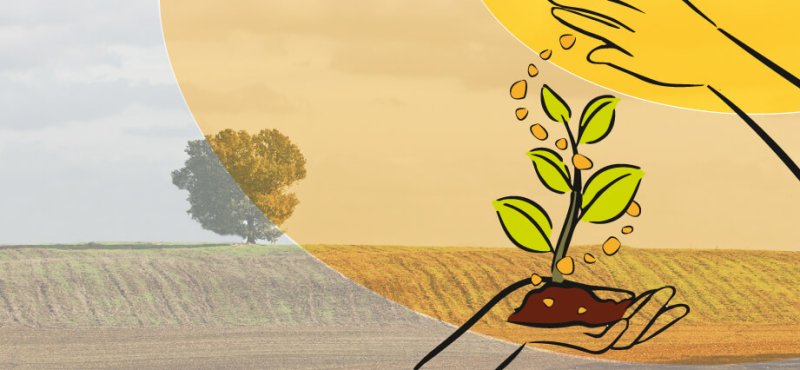
Challenging ‘green’ wisdom: Why Africa desperately needs more, not less, access to synthetic fertilizers

Rich countries and donors must reach a consensus on long-term financing for projects that boost developing countries’ capacities to produce food and fertilizer for themselves. Credit: FAO

The European Commission has opposed a plan to support expanding fertilizer production in Africa because it would clash with the European Union’s climate goals. (Fertilizer production and use account for about 5 percent of greenhouse gas emissions.) But as EU countries expand domestic and overseas fossil fuel infrastructure to reduce reliance on Russian energy, it is hypocritical to limit the agricultural potential of other countries to meet green goals.

Restricting aid to African countries for fertilizer production because it conflicts with climate goals, while also demanding natural gas from the continent, is absurd and unfair. Supporting these countries through a crisis requires increased financing for fertilizer production, getting back to the bread-and-butter business of development: large-scale resource and industrial development. Africa has untapped potential in both energy and agriculture, but without increasing fertilizer production, its food output will continue to lag behind other regions.

Mis- and disinformation are distorting science and public policy. Subscribe to our Daily and Weekly Digests for incisive coverage of ‘disruptive’ innovations in AI, agricultural biotechnology, food, chemicals, nuclear energy, vaccines, and other disruptive innovations.

Scaling up fertilizer production is a key step in strengthening regional input and agricultural value chains so that African countries can become more food-secure. In the long term, investing in production facilities, local and regional suppliers, and natural gas infrastructure would reduce dependence on imported fertilizers from Russia, China, and elsewhere—making the continent more resilient to a crisis like the one it now faces.
This is an excerpt. Read the original post here

Related Articles

Infographic: Global regulatory and health research agencies on whether glyphosate causes cancer

Infographic: Global regulatory and health research agencies on whether glyphosate causes cancer

Does glyphosate—the world's most heavily-used herbicide—pose serious harm to humans? Is it carcinogenic? Those issues are of both legal and ...

Most Popular

ChatGPT-Image-Mar-10-2026-01_39_01-PM
Viewpoint—“Miracle molecule” debunked: Why acemannan supplements don’t work
Neon Syringe Portrait with BPC-157
Viewpoint: Peptides and medical freedom: The MAHA obsession that can damage your health
Screenshot 2026-10-28 at 10.11
We're likely over-consuming the world's most profitable nutrient – and it’s wrecking our waistlines.
Screenshot 2026-07-29 at 10.40
The COVID vaccine turbo cancer scare is back. Science still proves it’s wrong.
Screenshot 2026-10-27 at 10.32
“Do your own research”: What Medicare’s annual open enrollment circus teaches us about the seductive trap of DIY health and science
Screenshot-2026-10-29-at-10.31.49-AM
Solar engineering to cool the planet might well work. Could it touch off a geoengineering arms race?
Screenshot 2026-10-20 at 1.37
Race against food rot: How AI and gene editing could slash fruit and vegetable waste
Diet Soda with Measuring Tape 2
Science challenges anti-soda activists: No, sodas won’t make you fat
glp menu logo outlined

Get news on human & agricultural genetics and biotechnology delivered to your inbox.