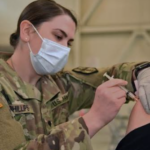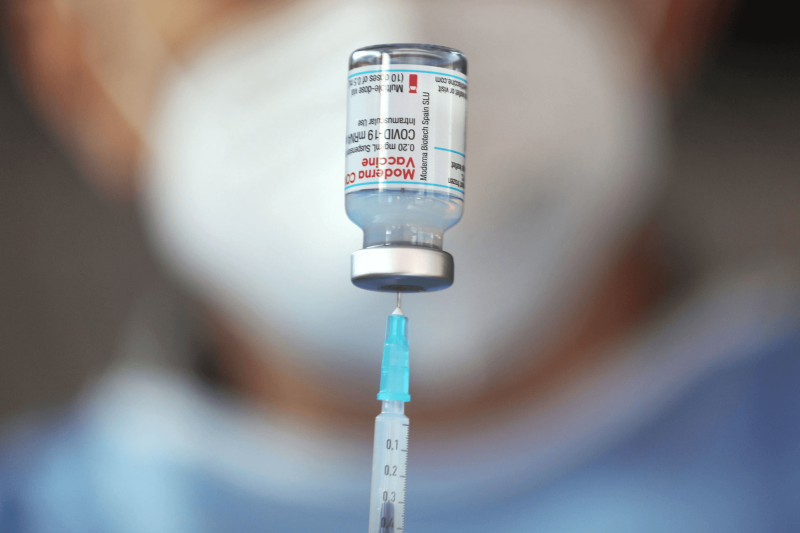

Boosters are a necessary part of COVID-19 mitigation because vaccine-induced and natural protection against disease have been shown to be transient. However, booster uptake in the United States has steadily declined since the initial wave of the Omicron variant, and federal financial support for vaccination campaigns has not been replenished, partly because of the perception that the pandemic is over. As of October 3, 68 percent of the total U.S. population has been vaccinated with a primary series, but fewer than half of fully vaccinated individuals have received a booster dose. Only 36 percent of people age 50 and older have received their second booster dose.
We examined three scenarios: a baseline scenario where daily vaccination rates remain unchanged and two vaccine campaign scenarios in which rates increased by the end of 2022.
…
The two vaccine campaign scenarios where rates increase differ in the level of coverage achieved:
- In the first scenario, we estimated COVID booster uptake for the eligible population based on age-specific influenza vaccination coverage in 2020–2021 by the end of 2022
- In the second, we assume 80 percent of eligible individuals age 5 and older receive their booster dose by the end of 2022.