As plants fight each other for access to sunlight, shorter crops with ‘unselfish’ genes could be more productive

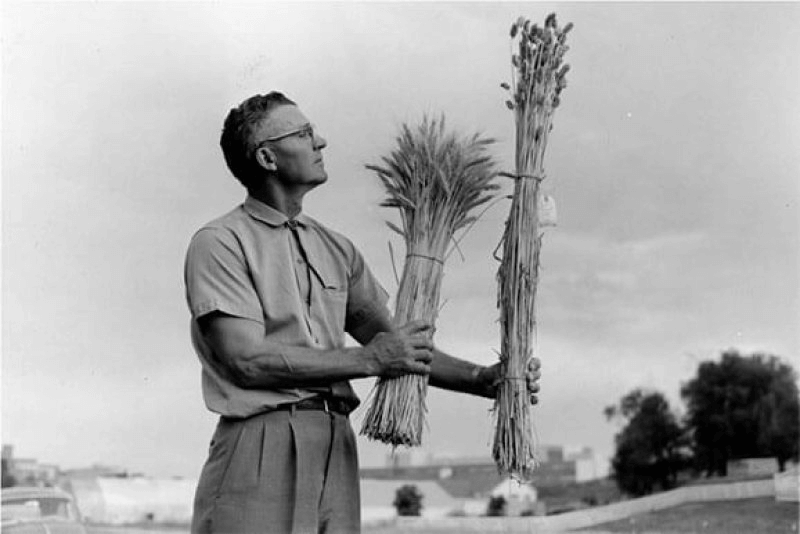
Orville Vogel compares dwarf wheat, which increased yields by 25 percent.

Identifying genes that make plants “cooperate” with their neighbours rather than compete with them could enable breeders to develop more productive crops. 

Natural selection usually favours “selfish” plants that beat their rivals in the competition for light, space and nutrients. But crop breeders can boost overall yield by selecting plants with traits that are helpful to nearby plants, such as shorter stems, less spread out leaves and compact roots.

Follow the latest news and policy debates on sustainable agriculture, biomedicine, and other ‘disruptive’ innovations. Subscribe to our newsletter.

Genetic analysis could be the key to discovering more of these cooperative traits that would enhance breeding programmes, says Samuel Wuest at the University of Zurich in Switzerland. “Optimising the collective performance of plant groups may be achieved relatively easily, once we know how to identify cooperative traits or genes.” 

Plants with this [cooperative] variant collectively produced 15 per cent more biomass when grown in high density situations than those carrying the other version of the gene. This could be because plants with the minor variant didn’t invade their neighbours’ root zones with their own roots as much, allowing more equitable access to nutrients.

Similar experiments with crop plants may help breeders find genes that promote cooperation and improve yields. 

This is an excerpt. Read the original post here

{{ reviewsTotal }}{{ options.labels.singularReviewCountLabel }}
{{ reviewsTotal }}{{ options.labels.pluralReviewCountLabel }}
{{ options.labels.newReviewButton }}
{{ userData.canReview.message }}

Related Articles

Infographic: Global regulatory and health research agencies on whether glyphosate causes cancer

Infographic: Global regulatory and health research agencies on whether glyphosate causes cancer

Does glyphosate—the world's most heavily-used herbicide—pose serious harm to humans? Is it carcinogenic? Those issues are of both legal and ...

Most Popular

ChatGPT-Image-May-7-2026-12_16_37-PM-2
Viewpoint: Are cancer rates ‘skyrocketing’ as RFK, Jr. and MAHA claims? The evidence says mostly the opposite
Screenshot-2026-04-13-at-1.39.26-PM
Viewpoint: ‘Safer for children?’ Stonyfield yogurt under fire for deceptive organic marketing
Screenshot-2026-04-22-at-10.46.29-AM
Viewpoint: How to counter science disinformation? Science journalist offers 12 practical tips
png-pill-omega-Supp-fish-oil
Millions take omega-3 fish oil for brain health. New research suggests it may do the opposite.

Sorry. No data so far.

glp menu logo outlined

Get news on human & agricultural genetics and biotechnology delivered to your inbox.