Perspectives on cultured meat: Differences driven by ethics, education, ethics and views on how to address climate change

Credit: Rawpixel (CC0 1.0)

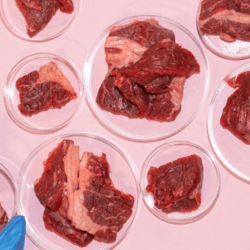
Last week I asked, “What do you think about meat grown in a lab? Would you eat it? Will your grandchildren?”

Matt expects a species-defining shift:

Evolutionary leaps in our development have been marked by the development of tools, farming, domesticated animals, and sadly and tragically, industrial farming and food processing. Lab-grown meat is the next evolution of our meat consumption as a species.

Follow the latest news and policy debates on sustainable agriculture, biomedicine, and other ‘disruptive’ innovations. Subscribe to our newsletter.
Meredith believes the technology will be widely embraced:
I stopped eating meat after being profoundly moved by an article in The Atlantic about nonhuman species having consciousness (“A Journey Into the Animal Mind,” by Ross Andersen). Meat grown in a lab is, so far as I can tell, ethical and humane. It can be produced in a more sanitary environment and saves animals and meat-production workers from the horror of meat slaughter. That is likely to encourage skeptics to try it. Given the choice between cruelty and kindness, I believe most humans will choose kindness.

John is a skeptic:
My spidey senses are telling me this is much ado about nothing. I doubt that the human population of Earth can be supported by lab-grown meat. If it tastes like chicken and costs a similar price, yes, I would eat it. But generally, I think putting our food in the hands of engineers, chemists, and industrialists is a bad, if unavoidable, plan.


This is an excerpt. Read the original post here

{{ reviewsTotal }}{{ options.labels.singularReviewCountLabel }}
{{ reviewsTotal }}{{ options.labels.pluralReviewCountLabel }}
{{ options.labels.newReviewButton }}
{{ userData.canReview.message }}

Related Articles

Infographic: Global regulatory and health research agencies on whether glyphosate causes cancer

Infographic: Global regulatory and health research agencies on whether glyphosate causes cancer

Does glyphosate—the world's most heavily-used herbicide—pose serious harm to humans? Is it carcinogenic? Those issues are of both legal and ...

Most Popular

Screenshot-PM-24
Viewpoint: The herbicide glyphosate isn’t perfect. Banning it would be far worse.
d-b
Blocked arteries, kidney stones, nausea, constipation, fatigue: Long list of health problems caused by too much vitamin D 
circular-bioeconomy-should-focus-on-sustainable-wellbeing
GLP podcast: What's wrong with 'doomsday' environmentalism? It's false.
Screenshot-2026-04-27-at-12.22.38-PM
Running ‘wild’: Last year, RFK, Jr. was given a green light to ‘reform’ chemical policies. Glyphosate illustrates how Trump now has him on a tight leash, and MAHA is furious
Screenshot 2026-02-25 at 11.20
Why the herbicide glyphosate is key to sustainable agriculture
bayer-supremecourt-lt
EPA concludes glyphosate is not carcinogenic. Missouri courts say Monsanto failed to warn it might be. SCOTUS weighs in.
ChatGPT-Image-Apr-22-2026-11_06_18-AM
Wellness influencer nonsense: No, nicotine does not boost cognition and productivity, but it can damage your health 
glp menu logo outlined

Get news on human & agricultural genetics and biotechnology delivered to your inbox.