
Viewpoint: ‘The Amazon Rainforest is not only a natural heritage, but also a biocultural heritage.’

Credit: James Martins via CC-BY-3.0

Until the turn of the 21st century, the ruling paradigm was that the soil in the Amazon was too poor to support agriculture. And, without enough food, it’s not suited for humankind. Today, there’s little doubt among archaeologists that the Amazon was, in fact, a hotspot for plant cultivation.

[Archaeologist] Eduardo Neves is well-versed in this paradigm shift in Amazonian archaeology and its consequences on our view of the past, present and future of the rainforest.

Mis- and disinformation are distorting science and public policy. Subscribe to our Daily and Weekly Digests for incisive coverage of ‘disruptive’ innovations in AI, agricultural biotechnology, food, chemicals, nuclear energy, vaccines, and other disruptive innovations.
[Neves]: What is the idea behind domestication? You take a wild plant and then select and manipulate its features in such a way that a new species comes into existence, which is dependent on human intervention for reproduction. In other words, genetic modification is essential for domestication and agriculture.

However, in the Amazon we also see many species that were never domesticated, such as the açaí tree, the Brazilian nut tree and the rubber tree. Not domesticated, yet very important, as they have been exploited as part of the rainforest for thousands of years.

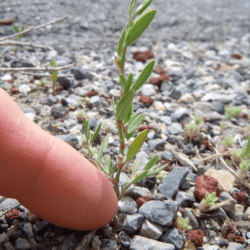
The conceptual shift, which archaeology has helped achieve, is that the Indigenous people who used to live in the Amazon did practice agriculture, yet they did so in a different way. What an archaeological survey of the Amazon teaches us is that man and nature were fully intertwined and impossible to untangle. Which leads us to perhaps the most important paradigm shift of all: the Amazon Rainforest is not so much, or not only a natural heritage, but a biocultural heritage.


This is an excerpt. Read the original post here

Related Articles

Infographic: Global regulatory and health research agencies on whether glyphosate causes cancer

Infographic: Global regulatory and health research agencies on whether glyphosate causes cancer

Does glyphosate—the world's most heavily-used herbicide—pose serious harm to humans? Is it carcinogenic? Those issues are of both legal and ...

Most Popular

ChatGPT-Image-Mar-10-2026-01_39_01-PM
Viewpoint—“Miracle molecule” debunked: Why acemannan supplements don’t work
AI Doctor with a Digital Neural Head
Utah becomes first state to empower AI to bypass doctors and prescribe certain drugs
Screenshot-2026-10-07-at-2.00.02-PM
9 wellness myths busted
Screenshot-2026-09-22-at-12.26.15-PM
‘Forever chemical’ concerns: Separating hysteria from reasonable concern in the debate over PFAS danger
Screenshot-2026-10-06-at-11.13.59-AM
RFK Jr.’s plan to curb America’s appetite for ultra-processed foods and artificial dyes blocked by the White House
AI-Force-Uniform-Insignia-Close-Up
Trump wants an AI Force like Space Force, but that could make AI’s risks harder to manage
Screenshot-2026-10-08-at-2.32.00-PM
Abortion rights opponents outraged after FDA says its “safety review” of the already-found-safe mifepristone abortion pill will continue into 2027
Concerned-Farmer-at-Golden-Hour
GAHA: The corporate-created “healthier America” movement challenging what it claims is MAHA misinformation about modern farming, chemicals, and food
Screenshot-2026-10-02-at-9.11.36-AM
The genetics of personality
glp menu logo outlined

Get news on human & agricultural genetics and biotechnology delivered to your inbox.