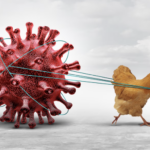
Why are there so few insects in the world’s oceans?

Credit: Pixabay (Public Domain)
Scientists from Tokyo Metropolitan University have proposed a hypothesis for why insects are so rare in marine environments. They previously showed that insects evolved a unique chemical mechanism to harden their shells which uses molecular oxygen and an enzyme called multicopper oxidase-2 (MCO2). Now, they argue that this gives them a disadvantage in the sea, while it confers advantages that help them on land, placing MCO2 at the heart of insect eco-evolution.

Insects are some of the most successful organisms on the planet. They are said to make up the most biomass of all terrestrial animals and have a significant impact on the global ecosystem. However, their abundance is matched by their startling rarity in the sea. Very few insects call the sea home, even though their biological ancestors came from there. It is a pervading mystery of science, one which scientists have been trying to answer for many years.

Mis- and disinformation are distorting science and public policy. Subscribe to our Daily and Weekly Digests for incisive coverage of ‘disruptive’ innovations in AI, agricultural biotechnology, food, chemicals, nuclear energy, vaccines, and other disruptive innovations.

Now, researchers from Tokyo Metropolitan University led by Assistant Professor Tsunaki Asano have proposed a solution based on evolutionary genetics. The latest in molecular phylogenetics has taught us that both crustaceans and insects are part of the same family, Pancrustacea, and that insects were a branch that left the sea and adapted to the land. They share an important feature, an exoskeleton consisting of a wax layer and hard cuticle. In previous work, the same team showed that when insects adapted to terrestrial environments, they evolved a unique gene that creates an enzyme called multicopper oxidase-2 (MCO2) that helps them harden their cuticles using oxygen. MCO2 mediates a reaction where molecular oxygen oxidizes compounds called catecholamines in the cuticle, turning them into agents that bind and harden the surface. This is in contrast to crustaceans who harden their cuticles using calcium from sea water instead. The team’s claim is that this makes the land far more suitable for insects due to the abundance of oxygen. The sea is now a harsh environment due to both the lack of oxygen and the abundance of better adapted organisms.

But it is not just that the sea is not as hospitable for insects anymore. The hardening and drying of the cuticle via the MCO2 pathway lead to a biomaterial which is not only protective, but also lightweight. They postulate that this may be why insects gained the ability to climb plants, glide, and eventually fly. This allowed them to migrate and occupy previously empty niches in the ecosystem, a strong driving force that led to their sheer numbers. Again, this is in contrast to crustaceans, whose shells are significantly denser, with a strong correlation between density and the degree of calcification.

Of course, insects are hardly the only arthropods to adapt to the land, so it’s clear that MCO2 is not strictly necessary for success in “terrestrial niches.” However, the nature of insect cuticles speaks volumes about their success in the terrestrial environment. In fact, the team believe that MCO2 might be a defining feature of insects: “no MCO2, no insects.” Their work promises an entirely new highlight on the role that cuticle hardening might play in insect evolution and terrestrialization.


See the original post here

Related Articles

Infographic: Global regulatory and health research agencies on whether glyphosate causes cancer

Infographic: Global regulatory and health research agencies on whether glyphosate causes cancer

Does glyphosate—the world's most heavily-used herbicide—pose serious harm to humans? Is it carcinogenic? Those issues are of both legal and ...

Most Popular

Strawberry Clamshell with Warning Sticker
Viewpoint: Activists hype ‘dangerous level’ of pesticide residues in Driscoll berries: Separating health concerns from fear-mongering
ChatGPT-Image-Mar-10-2026-01_39_01-PM
Viewpoint—“Miracle molecule” debunked: Why acemannan supplements don’t work
Generations United for Immunization
Police raid Guinea-Bissau offices of RFK Jr.-backed vaccine researchers, seize hepatitis B doses
Rustic Skillet of Raw Brains
‘Weird food’? Testicle- and brain-eating, supplement-gulping MAHA health food enthusiasts defend their ‘natural’ diets
Screenshot-2026-10-20-at-2.25.49-PM
RFK Jr.’s anti-vaccine obsession and fear of MAHA derailed bird flu containment plan
Nutrition and Supplements Infinity Collage
Drugs and supplements can extend life and five other longevity myths
Magnifying Glass Highlights NIH Logo
Latest Trump administration proposal to change NIH research grant system draws scientists’ ire
Screenshot 2026-10-16 at 5.38
PFAS in Agriculture: Science, Uncertainty, and Risk Communication
Golden-GM-Emblem-with-EU-Stars
As Europe inches forward in its embrace of gene-edited crops, hopes abound that opposition to GMOs might fade
png_cheese_Raw_milk
100% raw milk, 100% misguided: As MAHA-fueled demand for unpasteurized milk soars, American Academy of Pediatrics renews call for a ban on its sale and distribution
Screenshot-2026-10-19-at-12.04.51-PM
Victims of their own success: As memories of killer diseases fade, vaccine rejectionism soars
Government Briefing on Autism Trends
Viewpoint: ‘Statistical murder’: Kennedy’s expanding record of “duplicity and mendacity”
Serene Mature Woman in Abstract Waves
Testosterone’s growing appeal to women: It anecdotally mildly improves sex life, but are there any other potential benefits—or red flags?
glp menu logo outlined

Get news on human & agricultural genetics and biotechnology delivered to your inbox.