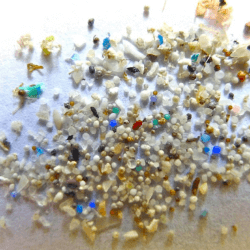
Microplastics are widespread across our food supply. Are they a health hazard?

fa a d b
Credit: Florida Sea Grant/Flickr (CC BY-NC-ND 2.0)

A new study by CSIRO, Australia’s national science agency, is one of the first to analyze the available academic literature about microplastics and their effect on food safety and security.

There are many ways [micro- and nanoplastics, or] MNPs can enter the human food chain. The most well-known way is by a process called trophic transfer. Animals carry microplastics in their bodies, so when other animals eat them, the microplastics are ingested too and transferred up the food chain to humans.

But recently, food processing and packaging processes have been identified as a source of MNPs.

Mis- and disinformation are distorting science and public policy. Subscribe to our Daily and Weekly Digests for incisive coverage of ‘disruptive’ innovations in AI, agricultural biotechnology, food, chemicals, nuclear energy, vaccines, and other disruptive innovations.

The researchers considered past studies on MNP toxicity in human cells and model organisms. Some effects included mitochondrial dysfunction, inflammation, cell death, and toxicity in the heart, lungs and reproductive organs. Other studies showed that plastic nanoparticles can pass through the blood-brain barrier in fish and mice, causing brain toxicity.
…

Diverse microbes can attach themselves to plastic particles, forming colonies that can be transferred through the environment from wastewater to the human gut, affecting food safety. Moreover, studies have shown that MNPs can lead to antibiotic resistance.

This is an excerpt. Read the original post here

Related Articles

Infographic: Global regulatory and health research agencies on whether glyphosate causes cancer

Infographic: Global regulatory and health research agencies on whether glyphosate causes cancer

Does glyphosate—the world's most heavily-used herbicide—pose serious harm to humans? Is it carcinogenic? Those issues are of both legal and ...

Most Popular

Diet Soda with Measuring Tape 2
Science challenges anti-soda activists: No, sodas won’t make you fat
ChatGPT-Image-Mar-10-2026-01_39_01-PM
Viewpoint—“Miracle molecule” debunked: Why acemannan supplements don’t work
Silhouettes Beneath the Mosquito Nets
Guinea-Bissau halts widely condemned RFK Jr.-backed vaccine trial that would have withheld life-saving vaccines from thousands of newborns
Strawberry Clamshell with Warning Sticker
Viewpoint: Activists hype ‘dangerous level’ of pesticide residues in Driscoll berries: Separating health concerns from fear-mongering
Rustic Skillet of Raw Brains
‘Weird food’? Testicle- and brain-eating, supplement-gulping MAHA health food enthusiasts defend their ‘natural’ diets
Author-Presenting-Good-Energy
'Disillusioned': Controversial RFK Jr. ally and MAHA leader Calley Means quits Trump advisory role
Generations United for Immunization
Police raid Guinea-Bissau offices of RFK Jr.-backed vaccine researchers, seize hepatitis B doses
Justice Under Prideful Skies
Supreme Court blocks Trump’s order halting transgender surgeries and hormone treatments for inmates
Vibrant Social Media Confetti Explosion
Health misinformation minefield: Countering online deluge by copying its style
Screenshot-2026-10-21-at-10.38.39-AM
Viewpoint: The libertarian case for getting the government out of the business of regulating food choices
Prescription Capsules Scattered on Twenty-Dollar Bills
Facts & Fallacies podcast: America's health care system is broken. A doctor explains how to fix it, Part 2
Screenshot-2026-10-19-at-12.04.51-PM
Victims of their own success: As memories of killer diseases fade, vaccine rejectionism soars
psychedelics ptsd neurosciencnews public
Chaos or at peace with the world: The complex ways psychedelics transform the brain
glp menu logo outlined

Get news on human & agricultural genetics and biotechnology delivered to your inbox.