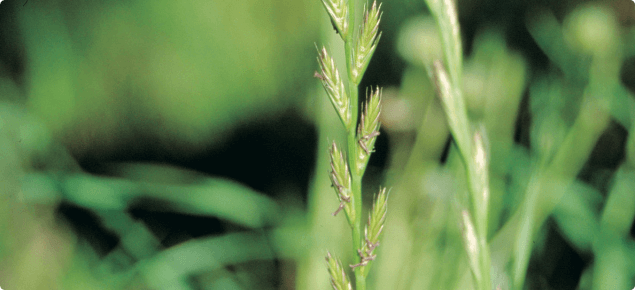
While the failed antibiotic wasn’t fit for its original purpose, scientists at the University of Adelaide discovered that by tweaking its structure, the molecule became effective at killing two of the most problematic weeds in Australia, annual ryegrass and wild radish, without harming bacterial and human cells.
“This discovery is a potential game changer for the agricultural industry. Many weeds are now resistant to the existing herbicides on the market, costing farmers billions of dollars each year,” said lead researcher Dr Tatiana Soares da Costa from the University of Adelaide’s Waite Research Institute.
“Using failed antibiotics as herbicides provides a short-cut for faster development of new, more effective weed killers that target damaging and invasive weeds that farmers find hard to control.”
Researchers at the University’s Herbicide and Antibiotic Innovation Lab discovered there were similarities between bacterial superbugs and weeds at a molecular level.
They exploited these similarities and, by chemically modifying the structure of a failed antibiotic, they were able to block the production of amino acid lysine, which is essential for weed growth.

“There are no commercially available herbicides on the market that work in this way. In fact, in the past 40 years, there have been hardly any new herbicides with new mechanisms of action that have entered the market,” said Dr Andrew Barrow, a postdoctoral researcher in Dr Soares da Costa’s team at the University of Adelaide’s Waite Research Institute.
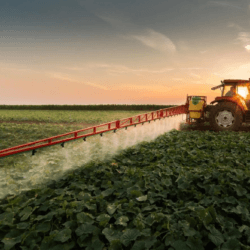
It’s estimated that weeds cost the Australian agriculture industry more than $5 billion each year.
“Using failed antibiotics as herbicides provides a short-cut for faster development of new, more effective weed killers that target damaging and invasive weeds that farmers find hard to control.”
—Dr Tatiana Soares da Costa from the University of Adelaide’s Waite Research Institute.
Annual ryegrass in particular is one of the most serious and costly weeds in southern Australia.
“The short-cut strategy saves valuable time and resources, and therefore could expedite the commercialisation of much needed new herbicides,” said Dr Soares da Costa.




“It’s also important to note that using failed antibiotics won’t drive antibiotic resistance because the herbicidal molecules we discovered don’t kill bacteria. They specifically target weeds, with no effects on human cells,” she said.
It’s not just farmers who could reap the benefits of this discovery. Researchers say it could also lead to the development of new weed killers to target pesky weeds growing in our backyards and driveways.
“Our re-purposing approach has the potential to discover herbicides with broad applications that can kill a variety of weeds,” said Dr Barrow.
This research has been published in the journal of Communications Biology .
Dr Tatiana Soares da Costa and her team are now looking at discovering more herbicidal molecules by re-purposing other failed antibiotics and partnering up with industry to introduce new and safe herbicides to the market.
Funding for this research was provided by the Australian Research Council through a DECRA Fellowship and a Discovery Project awarded to Dr Tatiana Soares da Costa.
The first author on the paper is Emily Mackie, a PhD student in Dr Soares da Costa’s team, who is supported by scholarships from the Grains and Research Development Corporation and Research Training Program. Co-authors include Dr Andrew Barrow, Dr Marie-Claire Giel, Dr Anthony Gendall and Dr Santosh Panjikar.
The Waite Research Institute stimulates and supports research and innovation across the University of Adelaide and its partners that builds capacity for Australia’s agriculture, food, and wine sectors.