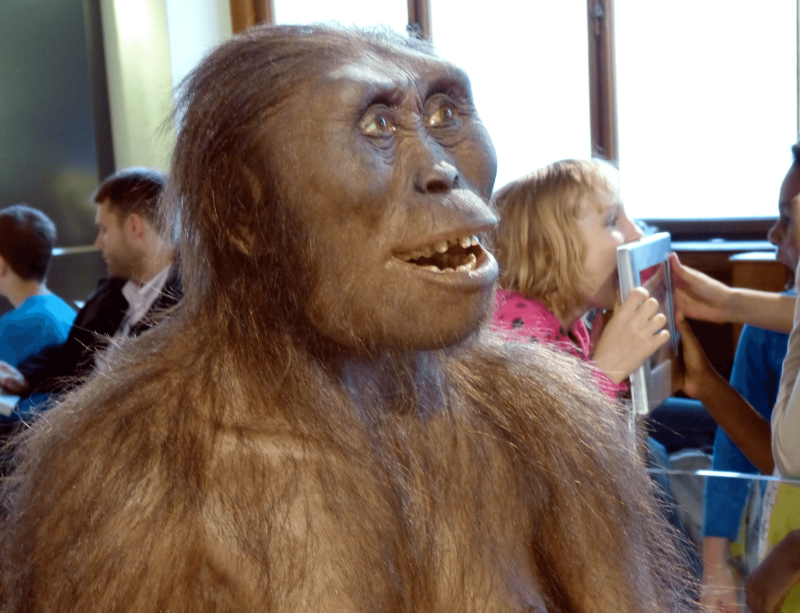
‘Half-land, half-tree lifestyle’: This 3D computer model of Lucy the Australopithecus afarensis reveals a powerful body

nhm australopithecus afarensis modell a
Credit: Wikimedia Commons (CC BY-SA 4.0)

We may only ever have 47 of the 207 bones that made up the skeleton of this 3.18-million-year-old Australopithecus afarensis specimen known affectionately and widely as Lucy, but it’s been enough to make some incredible discoveries (and stir up more than a few controversies) that have informed human evolution.

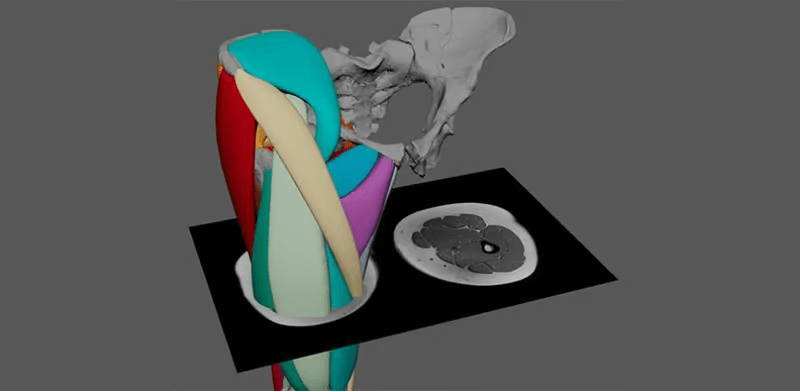
The latest comes out of the University of Cambridge, where researcher Ashleigh Wiseman digitally reconstructed Lucy’s soft tissue in a 3D computer model for the first time. Recreating the musculature of the leg and pelvis, the imagery supports the supposition that this part-time tree-dwelling hominin walked completely erect, like humans, but more than three million years earlier.

Follow the latest news and policy debates on sustainable agriculture, biomedicine, and other ‘disruptive’ innovations. Subscribe to our newsletter.

Starting with human MRI and CT scans to map muscle pathways, Wiseman next focused on virtual reconstructions of Lucy’s bones and joints, and then married up cues from muscle “scarring” on the bones.

The resulting model shows how Lucy was capable of upright, erect locomotion but also possessed powerful leg muscles that facilitated her species’ half-land, half-arboreal lifestyle. Researchers believe the extra muscle power in the legs – 74% of the total mass compared to around 50% for humans – enabled A. afarensis to exploit both land and tree habitats.
newatlas brightspot s amazonaws
Credit: A cross-section of the polygonal muscle approachAshleigh Wiseman/University of Cambridge

This is an excerpt. Read the original post here

{{ reviewsTotal }}{{ options.labels.singularReviewCountLabel }}
{{ reviewsTotal }}{{ options.labels.pluralReviewCountLabel }}
{{ options.labels.noReviewsLabel }}
{{ options.labels.newReviewButton }}
{{ userData.canReview.message }}

Related Articles

Infographic: Global regulatory and health research agencies on whether glyphosate causes cancer

Infographic: Global regulatory and health research agencies on whether glyphosate causes cancer

Does glyphosate—the world's most heavily-used herbicide—pose serious harm to humans? Is it carcinogenic? Those issues are of both legal and ...

Most Popular

ChatGPT-Image-Mar-10-2026-01_39_01-PM
Viewpoint—“Miracle molecule” debunked: Why acemannan supplements don’t work
Screenshot 2025-09-17 at 12.41
Misinformation alert: No, glyphosate use in Canadian forests is not spurring more wildfires
Screenshot 2026-07-11 094410
Growing animal muscle and fat cells inside rice grains and calling it beef: One of numerous genetically engineered products shaking up our ecosystem
ChatGPT-Image-Jun-25-2026-12_23_17-PM
No, Bill Gates did not secretly engineer ticks to promote veganism
Screenshot 2026-07-16 at 8.49
Pete Hegseth’s bizarre Viagra commercial as Trump administration endorses ‘hormone replacement therapy’
file-f-d-d-
Facts & Fallacies Podcast: Europe's AC debacle underscores fatal flaw in green activism
Screenshot-2026-07-16-at-11.32.12-AM
Viewpoint: Trump appoints climate change hoax promoter to head influential government policy project
ChatGPT-Image-Jul-9-2026-02_39_22-PM
Viewpoint: Polyphenols or NAD+ supplements to combat aging: No, Gwenyth Paltrow and followers, don’t waste your money.

Sorry. No data so far.

glp menu logo outlined

Get news on human & agricultural genetics and biotechnology delivered to your inbox.