When does our atmosphere end and space begin? The answer is — up in the air

When does our atmosphere end and space begin? The answer is — up in the air
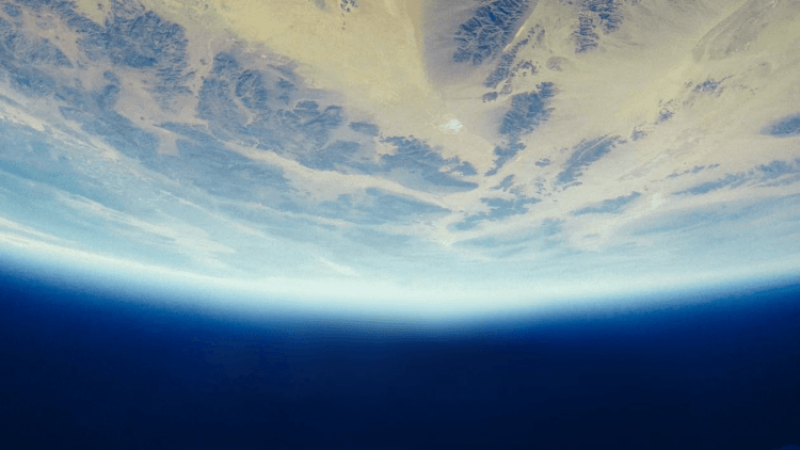
Credit: Pexels/ Jaymantri

Outer space is fundamentally different from what we experience down here, isn’t it?

But is there a boundary? Is there a place above our heads where you clearly transition to being in outer space?

This is a question that has been debated for decades and to which there is still no good answer, according to the United Nations Office for Outer Space Affairs.

Follow the latest news and policy debates on sustainable agriculture, biomedicine, and other ‘disruptive’ innovations. Subscribe to our newsletter.

Our atmosphere is made up of different layers, but these layers show no clear transition point to outer space, either. The second highest layer is called the thermosphere, which extends from about 70 to 700 kilometres, according to NASA.

The International Space Station, which orbits about 400 kilometres above our heads, is located in the thermosphere.

Intuitively, this seems like outer space, but there is still some air here. The distance between the air molecules is much, much farther apart than in the atmosphere lower down, but it is enough for the space station to be slowed down a little by the air.

The atmosphere continues far above the space station. The outermost part of the atmosphere is called the exosphere, and it continues all the way up to about 10 000 kilometres above the Earth’s surface. The atmosphere becomes less and less dense until it becomes almost impossible to distinguish it from what is called outer space.


This is an excerpt. Read the full article here

{{ reviewsTotal }}{{ options.labels.singularReviewCountLabel }}
{{ reviewsTotal }}{{ options.labels.pluralReviewCountLabel }}
{{ options.labels.newReviewButton }}
{{ userData.canReview.message }}

Related Articles

Infographic: Global regulatory and health research agencies on whether glyphosate causes cancer

Infographic: Global regulatory and health research agencies on whether glyphosate causes cancer

Does glyphosate—the world's most heavily-used herbicide—pose serious harm to humans? Is it carcinogenic? Those issues are of both legal and ...

Most Popular

Screenshot-2026-05-01-at-1.29.41-PM
Viewpoint: What happens when whole grains meet modern food manufacturing? Labels don’t tell the whole story.
S
As vaccine rejectionism spreads, measles may be taking a more dangerous turn
Screenshot 2026-05-06 at 2.56
Singularity crisis ahead? Can super babies save us from rogue AI geniuses?
Screenshot-2026-05-06-at-2.07.43-PM
Manufacturing a conspiracy: The timeline of how  the White House embraced the fringe claim that scientists are being mysteriously murdered
Screenshot-2026-04-20-at-2.26.27-PM
Viewpoint — Food-fear world: The latest activist scientists campaign: Cancer-causing additives
Screenshot-2026-03-13-at-12.14.04-PM
The FDA wants to make many popular prescription drugs OTC—a great idea. Here’s why it’s unlikely to happen
Screenshot-2026-04-30-at-2.19.37-PM
5 myths about summer dehydration that could damage your health — or even kill you
ChatGPT-Image-May-6-2026-03_41_05-PM
‘Protecting the integrity of science’: Kennedy’s FDA blocks release of taxpayer-funded studies finding COVID and shingles vaccines safe
Screenshot-2026-05-01-at-11.56.24-AM
‘Science moves forward when people are willing to think differently’: Memories of DNA maverick Craig Venter
Screenshot 2026-05-06 at 12.49
Immortal dragons: The quest to ‘make death optional’
79d03212-2508-45d0-b427-8e9743ff6432
Viewpoint: The Casey Means hustle—Wellness woo opportunism dressed up as medical wisdom
glp menu logo outlined

Get news on human & agricultural genetics and biotechnology delivered to your inbox.