ChatGPT has just had a major update. What can it do now?

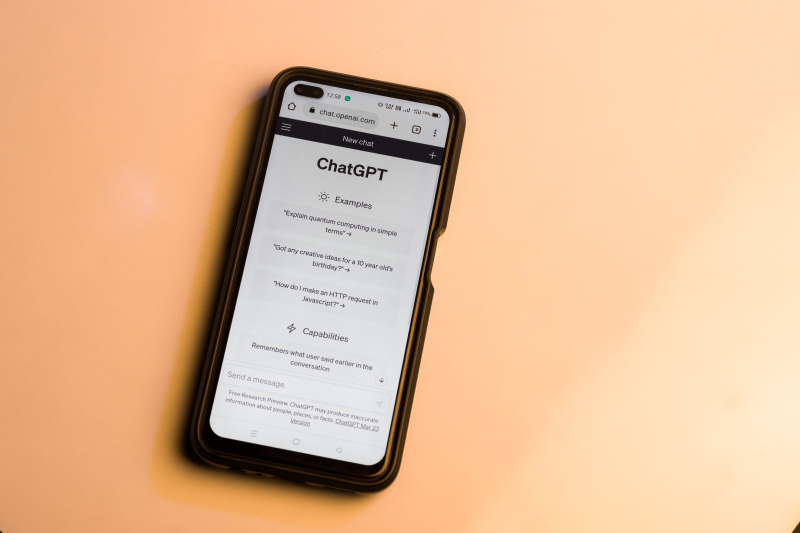
free photo of webpage of chatgpt a prototype ai chatbot is seen on the website of openai on a smartphone examples capabilities and limitations are shown
Credit: Pexels (Public Domain)

Tech research company OpenAI has just released an updated version of its text-generating artificial intelligence program, called GPT-4, and demonstrated some of the language model’s new abilities. Not only can GPT-4 produce more natural-sounding text and solve problems more accurately than its predecessor. It can also process images in addition to text. But the AI is still vulnerable to some of the same problems that plagued earlier GPT models: displaying bias, overstepping the guardrails intended to prevent it from saying offensive or dangerous things and “hallucinating,” or confidently making up falsehoods not found in its training data.

Mis- and disinformation are distorting science and public policy. Subscribe to our Daily and Weekly Digests for incisive coverage of ‘disruptive’ innovations in AI, agricultural biotechnology, food, chemicals, nuclear energy, vaccines, and other disruptive innovations.

OpenAI says it has run both GPT-3.5 and GPT-4 through a variety of tests designed for humans, including a simulation of a lawyer’s bar exam, the SAT and Advanced Placement tests for high schoolers, the GRE for college graduates and even a couple of sommelier exams. GPT-4 achieved human-level scores on many of these benchmarks and consistently outperformed its predecessor, although it did not ace everything: it performed poorly on English language and literature exams, for example. Still, its extensive problem-solving ability could be applied to any number of real-world applications—such as managing a complex schedule, finding errors in a block of code, explaining grammatical nuances to foreign-language learners or identifying security vulnerabilities.

This is an excerpt. Read the full article here

Related Articles

Infographic: Global regulatory and health research agencies on whether glyphosate causes cancer

Infographic: Global regulatory and health research agencies on whether glyphosate causes cancer

Does glyphosate—the world's most heavily-used herbicide—pose serious harm to humans? Is it carcinogenic? Those issues are of both legal and ...

Most Popular

ChatGPT-Image-Mar-10-2026-01_39_01-PM
Viewpoint—“Miracle molecule” debunked: Why acemannan supplements don’t work
ChatGPT-Image-Sep-23-2026-02_36_39-PM
Viewpoint: After firing the entire National Science Board, Trump reshapes funding initiatives. Here’s the good and the bad.
ChatGPT-Image-Sep-2-2026-02_03_32-PM
How much of a problem is AI’s water use?
Screenshot-2026-09-17-at-1.07.08-PM
'We are dangerously addicted to antidepressants': Should we heed RFK Jr.’s sobering warning?
Screenshot-2026-09-24-at-3.25.18-PM
No, organic eggs are not more nutritious or necessarily healthier than regular eggs. They are far more expensive.
Screenshot-2026-09-28-at-2.41.21-PM
Viewpoint: 7-OH controversy: An opioid is available over-the-counter–even at gas stations. Should we be concerned?
Screenshot-2026-09-25-at-9.24.04-AM
What constitutes a measles death? RFK, Jr. maneuvers to restrict definition to make pandemic seem less dire
Screenshot-2026-09-29-at-11.06.43-AM
Astrology, homeopathy, vaccine rejectionism, creationism: Why pseudoscience thrives as science advances
ChatGPT-Image-Sep-25-2026-11_36_56-AM
Now AI almost started a war with China
generated-1790707585414
Facts & Fallacies podcast: America's health care system is broken. A doctor explains how to fix it
glp menu logo outlined

Get news on human & agricultural genetics and biotechnology delivered to your inbox.