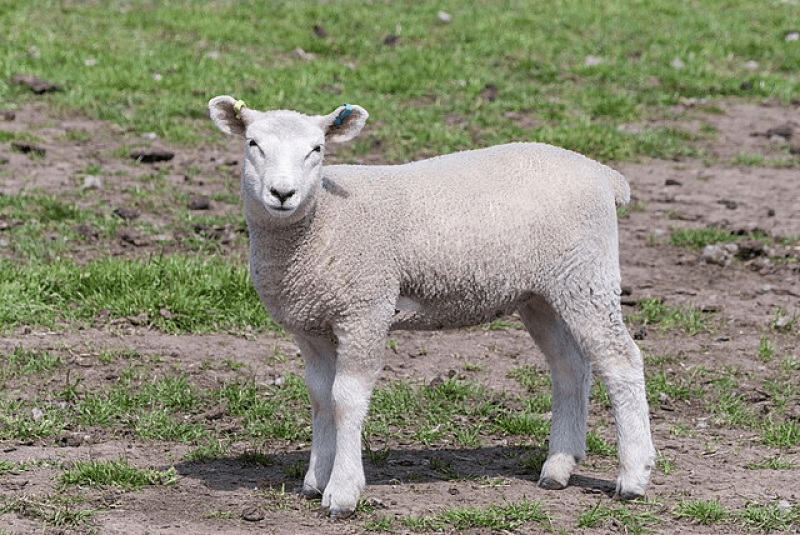
Sheep bred to be pathogen-free protect farmers from disease and could be a source of customized human organ replacements

Credit: Dominic Nelson via CC-BY-SA-4.0
[Specific pathogen-free, or] SPF sheep sell for roughly $3,400 per head, compared to the $200 or so a sheep would be worth in the meat market. And that kind of dollar spread gets attention from farmers and agricultural officials.

The animals are specially bred and raised to be free from 54 common livestock illnesses. The company that produces them in New Hampshire, New England Ovis, bills the sheep as the world’s healthiest.

The animals’ health is what makes them especially valuable to medical researchers. Not infrequently, scientists have to cancel animal studies already underway when animals become sick. By eliminating most of those variables, SPF sheep greatly reduce the chances of a study being shut down halfway through.

But the really big excitement is focused on the not-too distant future, perhaps five to 10 years down the road. Those same SPF sheep could be a source of customized organ replacements for humans.

Follow the latest news and policy debates on sustainable agriculture, biomedicine, and other ‘disruptive’ innovations. Subscribe to our newsletter.

“The results for people can be extraordinary, like helping to provide a new ear to a wounded veteran or providing the tissue for a heart transplant,” [Virginia Agriculture Secretary Joseph] Guthrie said. “We are interested in having more discussions and learning more about how this new venture can enhance agriculture in Southwest Virginia.”


This is an excerpt. Read the original post here

{{ reviewsTotal }}{{ options.labels.singularReviewCountLabel }}
{{ reviewsTotal }}{{ options.labels.pluralReviewCountLabel }}
{{ options.labels.newReviewButton }}
{{ userData.canReview.message }}

Related Articles

Infographic: Global regulatory and health research agencies on whether glyphosate causes cancer

Infographic: Global regulatory and health research agencies on whether glyphosate causes cancer

Does glyphosate—the world's most heavily-used herbicide—pose serious harm to humans? Is it carcinogenic? Those issues are of both legal and ...

Most Popular

Screenshot-2026-05-01-at-1.29.41-PM
Viewpoint: What happens when whole grains meet modern food manufacturing? Labels don’t tell the whole story.
S
As vaccine rejectionism spreads, measles may be taking a more dangerous turn
Screenshot 2026-05-06 at 2.56
Singularity crisis ahead? Can super babies save us from rogue AI geniuses?
Screenshot-2026-05-06-at-2.07.43-PM
Manufacturing a conspiracy: The timeline of how  the White House embraced the fringe claim that scientists are being mysteriously murdered
ChatGPT-Image-Mar-27-2026-11_47_30-AM-2
FDA’s expedited drug reviews are hailed in some quarters but other approval practices are problematic
Screenshot-2026-04-20-at-2.26.27-PM
Viewpoint — Food-fear world: The latest activist scientists campaign: Cancer-causing additives
Screenshot-2026-04-30-at-2.19.37-PM
5 myths about summer dehydration that could damage your health — or even kill you
Farmers can talk to plants
Farmers are a major source of misinformation—about farming
Screenshot-2026-03-13-at-12.14.04-PM
The FDA wants to make many popular prescription drugs OTC—a great idea. Here’s why it’s unlikely to happen
Screenshot 2026-05-06 at 2.19
Vaccine shootout at the CDC 
Screenshot-2026-04-12-135256
Bixonimania: The fake disease scam that AI swallowed whole
glp menu logo outlined

Get news on human & agricultural genetics and biotechnology delivered to your inbox.