Dozens of countries are planning to open their markets to agricultural gene editing. Here are the current regulatory status and opportunities for harmonization

Credit: William Kieckhofel and National Gallery of Art via CC0-1.0

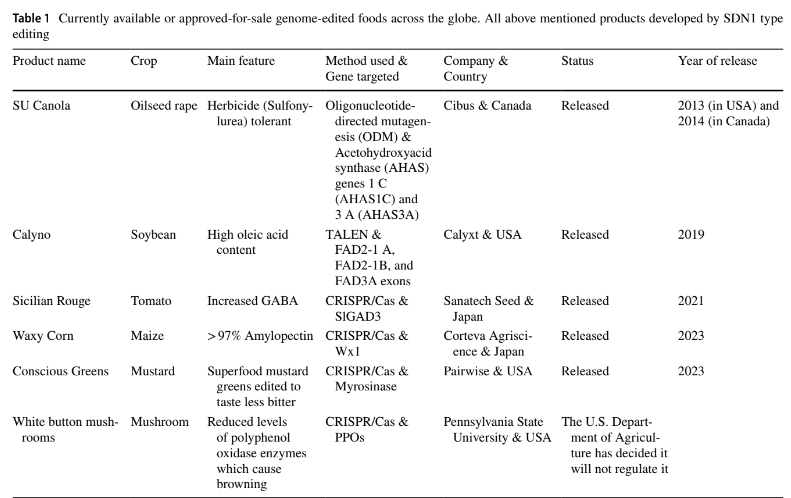
Despite the absence of foreign genetic material in crops developed through CRISPR/Cas mediated genome editing, there is an ongoing and intense debate surrounding the regulation of these crops prior to their release into the market. While certain CRISPR-edited crops have already been introduced in Japan, their legal status remains a point of contention in several nations, including the EU and New Zealand. This review paper serves as a comprehensive guide to the worldwide regulatory framework for CRISPR-edited crops, as well as provide insights into the future prospects of this transformative technology. By examining the current landscape of regulations and exploring potential avenues for harmonization, we can better understand the challenges and opportunities that lie ahead for CRISPR-edited crops.

Follow the latest news and policy debates on sustainable agriculture, biomedicine, and other ‘disruptive’ innovations. Subscribe to our newsletter.

Up until now, CRISPR crops have managed to steer clear of the societal stigma and outright legal bans that GMO crops have encountered. Many countries have different regulatory standards for biosafety laws. It’s essential to differentiate CRISPR technology from earlier GMO technology. The open and unbiased debate is needed among scientists, governments, business interests, consumers, and media In order to create a special global regulatory framework for genome-edited crops.
screenshot pm

This is an excerpt. Read the original post here

{{ reviewsTotal }}{{ options.labels.singularReviewCountLabel }}
{{ reviewsTotal }}{{ options.labels.pluralReviewCountLabel }}
{{ options.labels.newReviewButton }}
{{ userData.canReview.message }}

Related Articles

Infographic: Global regulatory and health research agencies on whether glyphosate causes cancer

Infographic: Global regulatory and health research agencies on whether glyphosate causes cancer

Does glyphosate—the world's most heavily-used herbicide—pose serious harm to humans? Is it carcinogenic? Those issues are of both legal and ...

Most Popular

ChatGPT-Image-Jun-25-2026-12_23_17-PM
No, Bill Gates did not secretly engineer ticks to promote veganism
ChatGPT-Image-Jun-23-2026-03_12_23-PM
Is cellular reprogramming junk science? Nearly 20 patients are getting eye injections in the first FDA-cleared cellular trial
Screenshot-2026-06-15-at-1.55.27-PM
America's trust in Trump-Kennedy's CDC health recommendations is plunging
ChatGPT-Image-Mar-10-2026-01_39_01-PM
Viewpoint—“Miracle molecule” debunked: Why acemannan supplements don’t work
ChatGPT-Image-Jun-24-2026-11_36_47-AM
Why the human genome is less a script than a puzzle
ChatGPT-Image-Jun-17-2026-10_52_43-AM
Anguished parents, doctors in tears: Utah’s long measles outbreak takes a toll
Screenshot 2026-06-25 at 10.55
Leading OB-GYN group challenges RFK, Jr. gutting of maternal vaccine schedule
Screenshot-2026-06-24-at-2.57.41-PM
Viewpoint: Trump’s Reflecting Pool algae fiasco points to a bigger culprit: Climate change
Screenshot-2026-06-24-at-2.40.46-PM
Hegseth reversal: As Air Force flu outbreak continues to surge, military reinstitutes mandatory vaccines for recruits
ChatGPT-Image-May-18-2026-12_06_18-PM-2
Defying death: The immortality movement goes mainstream

Sorry. No data so far.

glp menu logo outlined

Get news on human & agricultural genetics and biotechnology delivered to your inbox.