Viewpoint: Indian farmers urged to learn from Sri Lanka’s failed environmentalist-led movement to abandon science

e aa b
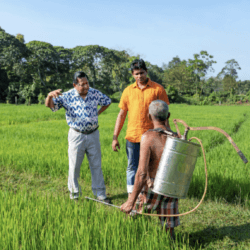
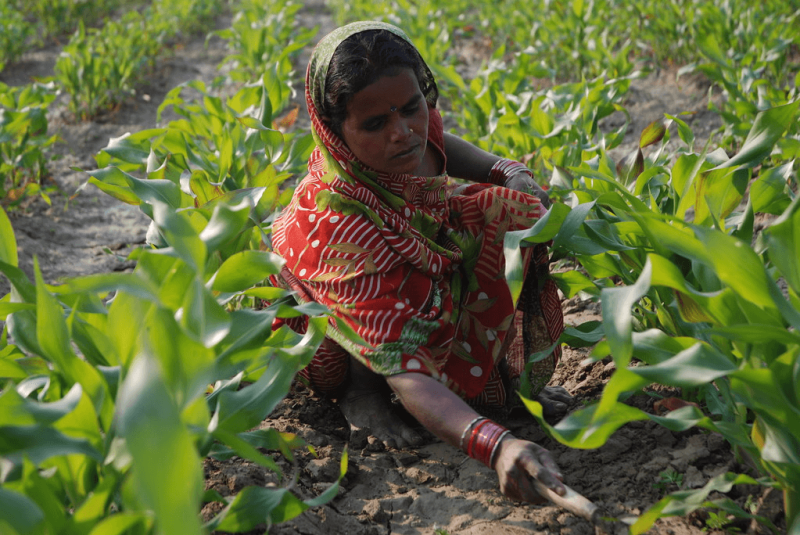
Credit: CIMMYT/Flickr (CC BY-NC-SA 2.0)

One important lesson that Indian farmers must learn is never to believe without trying and applying what others are imposing on them. They will understand this more once they know what happened in Sri Lanka for which farmers and the citizens of Sri Lanka had to pay a massive price.

Follow the latest news and policy debates on sustainable agriculture, biomedicine, and other ‘disruptive’ innovations. Subscribe to our newsletter.

As a result of the sudden ban [on chemical fertilizer in May 2021], overall food production in Sri Lanka in the 2021 season was 40%-50% lower than last year, the United Nations Food and Agriculture Organization said. Rice productivity dropped by about 33%. A similar 35% percent productivity drop in the tea crop.

Farmers as well as the local population struggled with low food grain availability through the season until the ban was revoked in November 2021.

Indian farmer must understand that they cannot replace chemical fertilizer completely with organic fertilizer without reducing their yield and income. What they can do is to increase the organic content of soil which will help them increase yield. Organic farming is a rich farmer’s concept that is not applicable in India as 80% of the 14 crore [140 million] farmers have small land holdings. They can do organic farming on 1/3 of your land but must not expect good returns. They must also be ready to bear losses in case the crop gives a bad yield or you don’t get good prices for the produce in the market.


This is an excerpt. Read the original post here

{{ reviewsTotal }}{{ options.labels.singularReviewCountLabel }}
{{ reviewsTotal }}{{ options.labels.pluralReviewCountLabel }}
{{ options.labels.newReviewButton }}
{{ userData.canReview.message }}

Related Articles

Infographic: Global regulatory and health research agencies on whether glyphosate causes cancer

Infographic: Global regulatory and health research agencies on whether glyphosate causes cancer

Does glyphosate—the world's most heavily-used herbicide—pose serious harm to humans? Is it carcinogenic? Those issues are of both legal and ...

Most Popular

d-b
Blocked arteries, kidney stones, nausea, constipation, fatigue: Long list of health problems caused by too much vitamin D 
Screenshot-PM-24
Viewpoint: The herbicide glyphosate isn’t perfect. Banning it would be far worse.
79d03212-2508-45d0-b427-8e9743ff6432
Viewpoint: The Casey Means hustle—Wellness woo opportunism dressed up as medical wisdom
ChatGPT-Image-Mar-27-2026-11_27_05-AM
The myths of “process”: What science says about the “dangers’ of synthetic products and ultra-processed foods
ChatGPT-Image-Apr-30-2026-12_21_05-PM-2
The tech billionaires behind the immortality movement
ChatGPT-Image-Apr-30-2026-05_00_48-PM
Wellness grifter physician turned wellness influencer out as surgeon general nominee

Sorry. No data so far.

glp menu logo outlined

Get news on human & agricultural genetics and biotechnology delivered to your inbox.